
Living on a cruise ship is the dream, right? Picture yourself swapping a daily grind for sunrises at sea, a new exotic destination every few days, and a life free from the usual responsibilities. Nothing would be better, right? Well it turns out – that’s not always the case.

Lynnelle is a solo traveller who sold her belongings to embrace life at sea, reveals in her YouTube video Exposing the Dark Side of Living on a Cruise Ship that the reality isn’t as dreamy as it seems.
Don’t worry – she still loves her unique lifestyle. But there are some important challenges that come with it, and if you were ever considering this as an option then you’ll definitely want to heed her advice…
The Noise Nightmare
One of the most interesting revelations from Lynnelle’s experience is around the noise level in cruise ship cabins.

The walls, she warns, are incredibly thin. From the sounds of chairs scraping across the pool deck to rowdy late-night entertainment or noisy neighbours, finding peace and quiet can be tough. If you’ve cruised before then you might already be aware of this.
On a week-long cruise it’s something you can usually deal with, but living on a ship? That lack of peace could be much more impactful – something you might not realise until you live it every day.
Cabins close to high-traffic areas, such as theatres or the pool, are especially prone to noise. If you’re hoping for serene quiet in your cabin, Lynnelle suggests doing thorough research to choose a quieter location.
Suggested read: 12 Things You Must ALWAYS Check On The Deck Plan Before Booking A Cruise
And don’t forget earplugs, a white noise machine, or even noise-cancelling headphones to help drown out the unwanted sounds. Still, complete silence is a rarity.
Cramped Living Spaces
Living in a cruise ship cabin can be a major adjustment, especially when it comes to space.
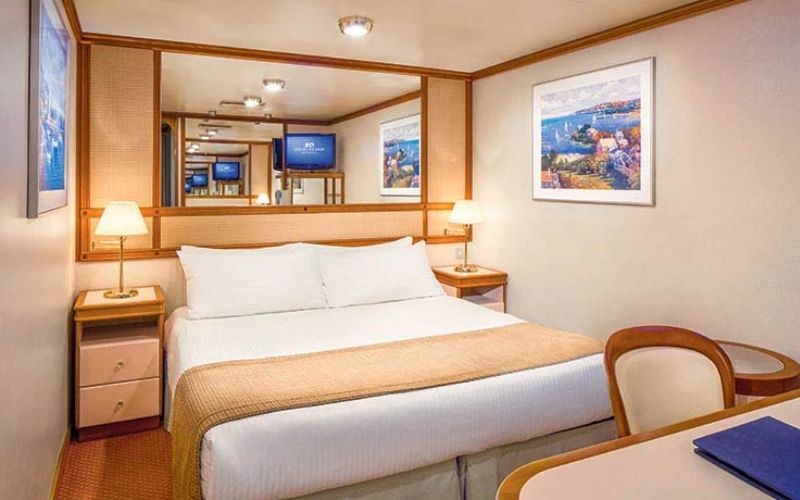
Imagine taking your bedroom, halving it, and then squeezing in a queen-sized bed, nightstands, and everything else you need. That’s how Lynnelle describes life in a cruise cabin.
For those who enjoy wide-open spaces or need room to spread out, cruise cabins can feel cramped. Bathrooms are even smaller, so organization is key.
Lynnelle recommends minimalist packing and creative storage solutions, but even then, expect to feel the squeeze if you’re living in a cabin long-term.
Of course, you could always book a suite, but that’ll cost you…
Repetitive Meal Options
While the food on cruise ships is generally good, Lynnelle acknowledges that it can get repetitive after a while.

Menus tend to cycle every week, and for picky eaters, options may be limited. However, the variety offered across specialty restaurants and themed dining nights can still be exciting for food lovers.
Cruisers often break up the monotony by dining onshore during port stops, sampling local cuisine, and giving themselves a break from the onboard offerings.
Unreliable WiFi
For digital nomads or those who rely on constant internet access, Lynnelle has some frustrating news: WiFi on cruise ships can be spotty.

The satellite connections can be slow or unavailable in remote areas or poor weather conditions. Streaming, uploading large files, or even casual browsing can become a challenge.
Lynnelle suggests downloading content in advance and using offline tools when possible. If you need to get work done, try to time it when the ship is docked, as the WiFi tends to be more reliable in port.
Some cruise lines are getting better, with more advanced forms of Starlink WiFi being installed, but reliability can still be an issue.
Suggested read: How to Stay Connected At Sea For Less
The Introvert’s Dilemma
Cruising is all about socialising, and that can be a challenge for introverts.

Lynnelle, who values her alone time, explains that it’s tough to get true solitude on a cruise ship. The same faces appear everywhere – at meals, in the elevators, and on deck.
If you’re someone who recharges through isolation, this lifestyle might be draining.
While some quiet zones like adults-only areas or libraries are available, they’re not always as peaceful as they seem. Social activities are abundant, from group dinners to spontaneous chats, and introverts may find it hard to escape the constant interaction.
To make it work, some introverted cruisers wake up early to take quiet walks on deck or schedule solo exploration during port days. But be prepared for social encounters wherever you go.
Extroverted? You’ll have no problem.
Seasickness Struggles
The “motion of the ocean” is something even the most seasoned travellers have to contend with. Although Lynnelle has never been seasick, she admits that rough weather or the ship’s location can make the experience more intense.

For newcomers to the cruise life, Lynnelle advises choosing a cabin in the middle of the ship and on a lower deck to minimize the effects of waves.
If seasickness is a concern, remedies like acupressure wristbands, ginger supplements, or prescription drugs can help. And don’t forget about staying hydrated and enjoying the fresh air on deck to ease the discomfort.
Suggested read: My Top Tips To Prevent Seasickness When Cruising
Healthcare on the High Seas
While having access to onboard medical services is a major perk, Lynnelle points out that the ship’s medical centre isn’t equipped to handle serious health issues.
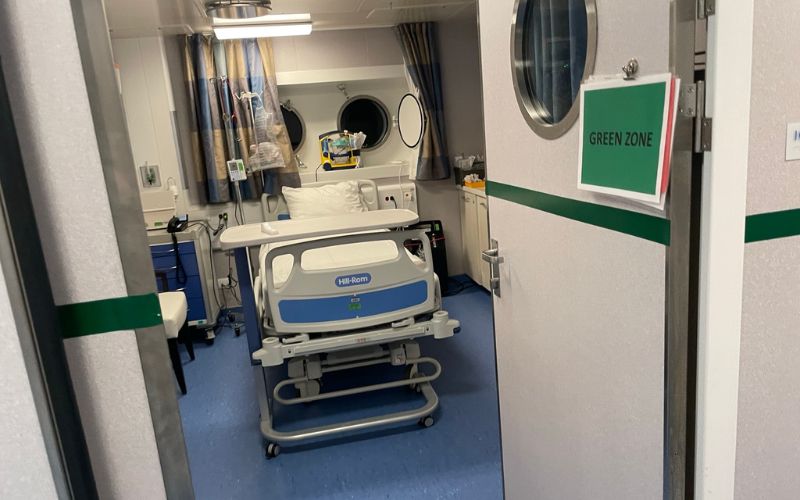
Routine doctor visits or treatments for minor conditions might set you back a few hundred dollars, but more serious health issues could require an expensive evacuation to a land-based hospital.
If you’re someone with ongoing health concerns or need regular check-ups, living on a cruise ship can present challenges.
It’s crucial to have emergency healthcare insurance, plan for land-based check-ups (including dentist visits – don’t forget those!), and keep a well-stocked medical kit onboard.
The Price Tag
Guess what? Turns out living on a cruise ship isn’t exactly super-cheap.

Lynnelle explains that the annual cost of an inside cabin can run around $88,000, and if you opt for a balcony, the cost can easily exceed $100,000.
And that’s just for the cabin. Speciality dining, excursions, onboard activities, and souvenirs add up quickly.
For example, specialty meals can cost $50 or more, and excursions range from $100 to $300.
When you add in extras like spa treatments or photography packages, the cost of living on a cruise can become a significant financial commitment.
You’ll earn a number of bonus perks with most cruise lines, as you rise through the loyalty program rankings, but there’ll still be things you’ll need to budget for.
Suggested read: How Much It Costs To Cruise Full-Time – Revealed!
Things Can Get Emotional…
While life on a cruise ship offers adventure and new experiences, Lynnelle shares one of the more poignant aspects of the lifestyle: the fleeting nature of relationships.

Fellow travellers are typically on board for a short time, meaning friendships can feel temporary. Though she makes connections with crew members, the professional boundaries often limit deeper friendships.
Despite this, Lynnelle embraces the opportunity to meet new people from around the world and has maintained connections with a few passengers through social media.
While it can be isolating at times, she finds joy in the ever-changing community of fellow cruisers.
I love that she’s given this perspective as it’s not something you’d normally think about when planning a life on a cruise ship – and yet it is something that can be overcome.
It’s Not All Bad
Despite all the challenges, Lynnelle wouldn’t trade her cruise life for anything. For her, the freedom from daily chores, constant travel, and ever-changing destinations make the drawbacks worth it.
She describes her lifestyle as a “soft life” and appreciates the simplicity it offers.
Every week brings new cultures, experiences, and adventures – without the hassle of packing and unpacking. And while the occasional struggle may arise, the rewards of the journey outweigh the discomforts.
If you’re considering this lifestyle, it’s wise to take a few short cruises first to see if it’s a good fit for you. If you can handle the noise, the small spaces, and the costs, you might just find your own version of paradise at sea.
Make sure you check our Lynelle’s video on the dark side of cruising, and the rest of her YouTube channel.
Want To Live on a Cruise Ship? Here’s How Much It Costs…
Believe it or not, living permanently on a cruise ship isn’t just a fantasy for the ultra-rich – it’s something more and more people are actually doing.
Next, let’s discover what life at sea full-time really costs, the ships that make it possible, and what you’ll need to consider before trading your house keys for a cabin key.
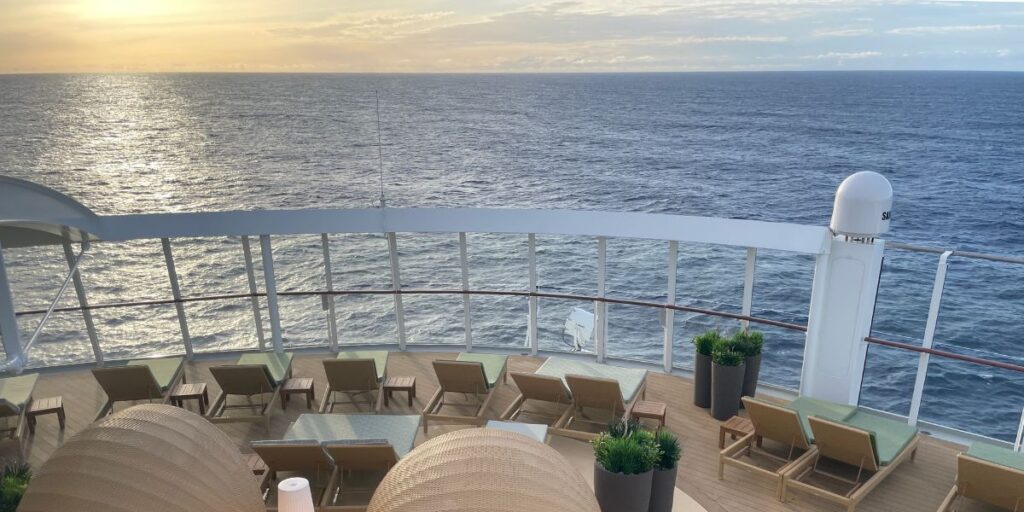
There are several cruise lines that allow you to purchase an apartment on board. Alternatively, you could book a series of short cruises on a mainstream cruise line.
It’s better to choose a cruise ship designed for long-term living than one from a mainstream cruise line. Logistically, booking back-to-back cruises with a standard cruise line is often not possible and you may have to change rooms regularly or even switch ships.
Cruise Ships You Can Live On Permanently
Technically, you could live on any cruise ship, but it might not be possible. Cruises don’t always sell out, but the most popular staterooms and cabins book up far in advance. You would have to constantly look at booking cruises to make sure you have somewhere to stay.
Let’s look at your options in a little more detail…
Traditional Cruises
You can book yourself onto a traditional cruise ship for the long term. You would need to book each itinerary, one after the other.
If you wanted the same cabin on every cruise, it’s wise to make sure that you’re first in line when bookings open. That’s the only way to make sure you can secure the same room for the long term. Otherwise, someone could book your room and essentially kick you out.
Cruises are available to book around 18 to 24 months in advance, so you’ll need to plan ahead.
Moving cabins might not be the end of the world – but it would be a lot easier if you didn’t have to pack and unpack at the start of every new itinerary.
Note: Some cruise lines might make you leave the ship and re-board between itineraries

World Cruises
The easiest way to enjoy living on a cruise ship for the long term would be to look for world cruises. These itineraries can last a long time. Some of the longest run for six months, but three months is more common.
However, don’t expect world cruises to run back-to-back. Typically, a cruise ship that is offering a world cruise will go back to offering more regular sailings for the rest of the year, so you would need to keep booking new cruises every time.
These cruises are often expensive too, so the cost of booking world cruises as frequently as possible may not be something you can afford to do.
I was keen to see what a world cruise ship was like, and I managed to book myself a place on board just for the first two days. You can see what the ship was like in my video…
Ship-Hopping
Another option is to ship-hop every few weeks. This may work out cheaper, especially on some cruise lines that offer cheap nightly rates and one-way repositioning cruises.
You should bear in mind how much work would be involved in constantly booking your next cruise, plus the added stress of worrying about whether you’d miss your chance and end up without a cabin.
It can be done, though. One person who’s doing just that is Fraser from the YouTube channel Fraser At Sea. Check out this video where he announced his plans to live on cruise ships in 2023:
I’ve taken cruises that cost as little as £40 ($50) per night with all meals included. So if you’re savvy, living on cruise ships can be pretty cheap.
Below you can see examples of some of the best cruise deals available right now…
Cruise Ships Designed for Permanent Living
Arguably the better way to live on a cruise ship is to choose one that’s designed for permanent living.
There aren’t too many of these in existence, but there are some ships that are planned with full-time living in mind, removing all of the worry about making sure you stay booked onto the ship.
Here are the ships that are designed for full-time living:
| Ship Name | Operated By | Year of Launch |
|---|---|---|
| The World | Residences at Sea | 2002 |
| Victoria Majestic | Victoria Cruise Line | Currently Unknown |
| Somnio | Somnio Superyachts | Currently Unknown |
| Villa Vie Residences | Villa Vie | 2024 |
| Njord | Ocean Residences | 2026 |
| MS Utopia | Utopia Residences | 2027 |
| MV Narrative | Storyline Cruises | 2027 |
| MS Dark Island | Clydebuilt Dark Island Residences | 2028 |
It’s important to note that these are all planned launch dates. Already, some have been pushed back – MS Utopia was originally scheduled for 2023. If you’re interested in living on a cruise ship, you probably need to be flexible on your start year, as plans can change.
1. The World

The World is the largest private residential ship on the planet with 165 residences. It has 106 two- and three-bedroom apartments, 19 one- and two-bedroom studio apartments and 40 studios.
Instead of booking individual cruises, people purchase one of the residences on the ship and are then free to use it as and when they want. Some people live on the ship full-time while others come and go, using it as a vacation home or an alternative to owning a yacht.
The World tries to distance itself in some ways from comparisons to a traditional cruise ship, but there are a lot of similarities, including in the onboard experience.
Take a look at this video to see what you can expect from life on board…
The ship features guest speakers, musicians, and cultural performances to entertain guests, similar to those which would feature on traditional luxury world cruises.
Daytime activities are available too, with two swimming pools as well as a tennis court, and a gym offering exercise classes like yoga and cardio. This is good, considering there are six gourmet restaurants on the ship!
The residences also have their own kitchens, and there’s a grocery store on the ship, if you want to cook for yourself.
The World has a spa, just like you would find on a cruise ship. So really, the experience is very comparable to a typical cruise ship – the only difference is that you have your own kitchen area and that you’re able to stay on the ship long term.
Although one more difference is the option to host guests. You own your residence, and so you’re able to welcome guests onto the ship if you wish.
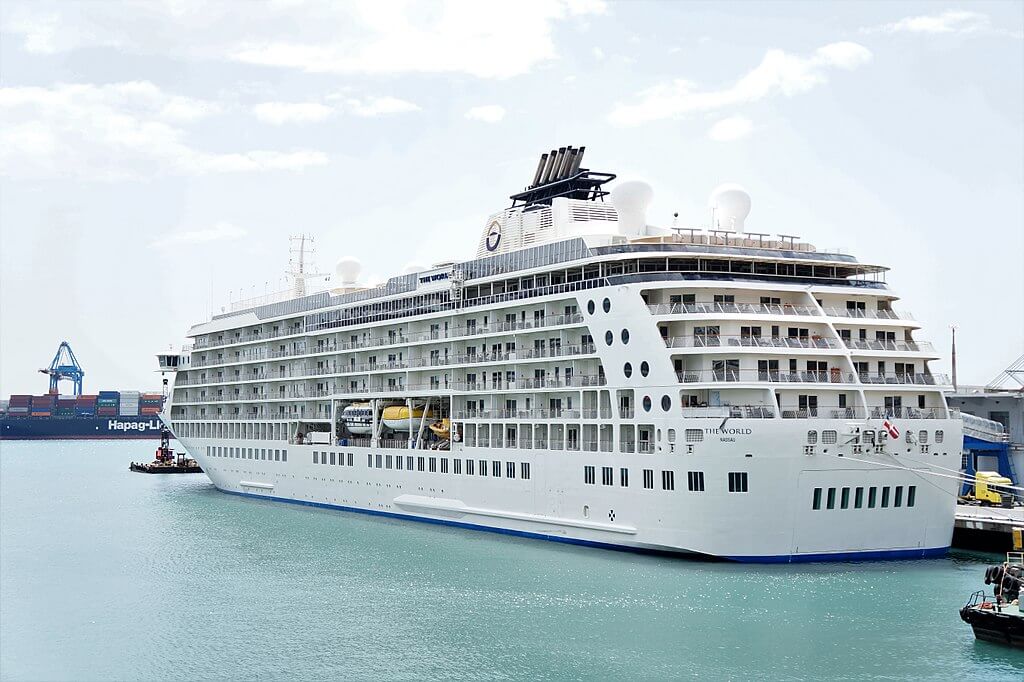
The ship isn’t particularly family-friendly – kids are welcome, but there isn’t much for them to do. Understandably, the ship is primarily aimed at a mature audience, as it’s likely to be retirees who wish to live on a cruise ship.
But that doesn’t mean your family won’t want to visit every now and then, and they will be permitted onto the ship to say hello, although you may be charged if they use some of the facilities, including the restaurants.
2. MS Utopia
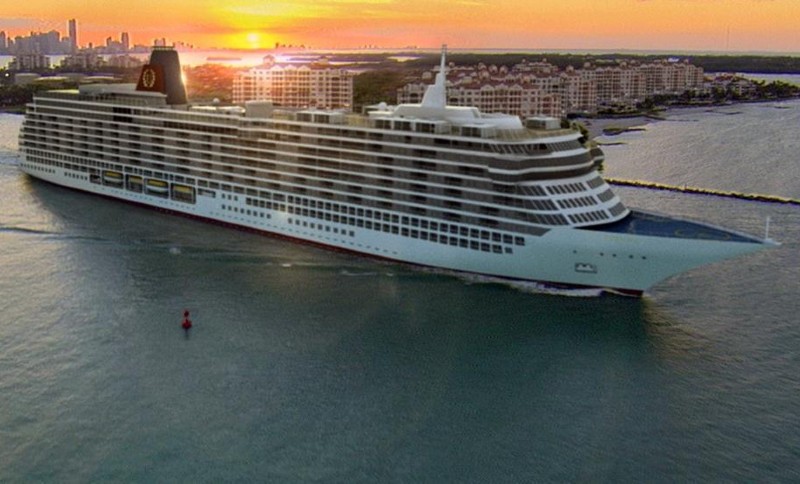
The MS Utopia is a planned billion-dollar residential ocean liner by Utopia Residences. It’s been in the works for years, having first been announced back in 2009.
It’s been billed as the ultimate floating community, with around 190 private residences, a 175-room hotel, a casino, a huge spa and all the luxury extras you’d expect from a ship of that scale.
But despite plenty of buzz and several promised launch dates, including a more recent target of 2027, things have gone pretty quiet. The project has faced repeated delays and still doesn’t have a confirmed construction or delivery date.
So while the idea of living aboard Utopia sounds incredible, it’s one to file under “watch this space” for now rather than something you can plan for just yet.
3. Victoria Majestic
The former MS Veendam for Holland America Line, Victoria Majestic, has now been turned into a residential ship and will soon set sail with.
The Victoria Majestic (once the MS Veendam for Holland America Line) has been repurposed as a floating residential ship by Victoria Cruises Line. Marketed as the “world’s first affordable residential ship”, cabins aren’t sold – they’re rented under long-term leases.

The longer you rent a cabin, the bigger the discount you’ll get. According to Victoria Cruises, an Inside Cabin costs between $4,799 and $7,999 per month for two people, with a $10,000 refundable deposit. That works out at around US $2,400 per person per month on the longest lease – still one of the cheapest ways to live full-time on a cruise ship.
The vessel promises a comprehensive lifestyle at sea – three meals daily, drink service, Wi-Fi and a global itinerary covering 200+ destinations.

But a word of caution – the ship’s launch has been delayed several times, most recently, its planned July 2025 sailing was postponed due to low occupancy, with Victoria Cruises stating they need 80% occupancy in order to set sail. A new departure date hasn’t yet been confirmed, so for now, it remains an exciting idea rather than a ready-to-book reality.
4. Somnio
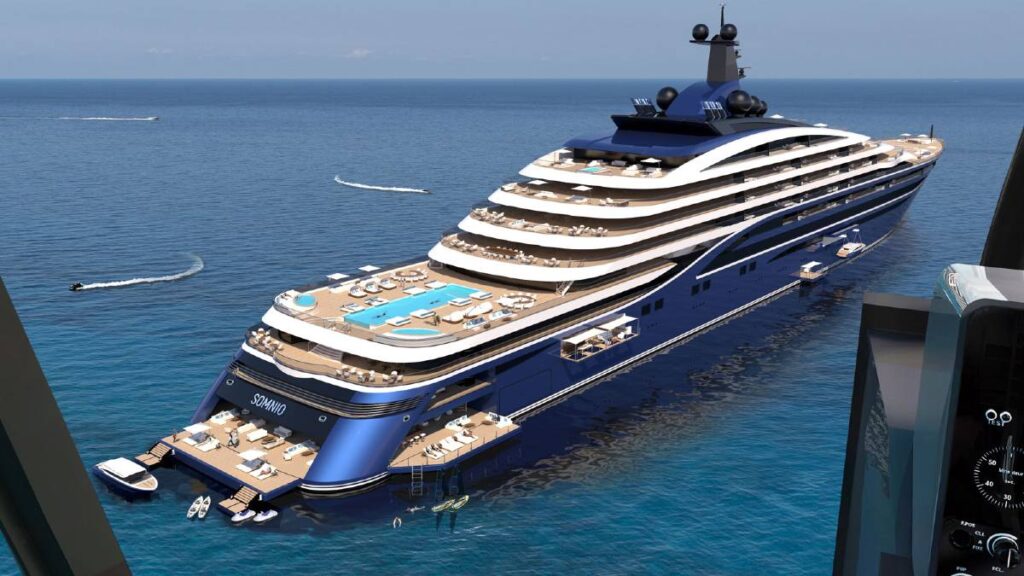
Not much is known about Somnio – this ultra-exclusive superyacht remains shrouded in secrecy, with access strictly by invitation only. But here’s what we can tell you.
With just 39 private residences, each fully custom-designed, the apartments start at around $11 million (and likely above). On top of that, maintenance fees are expected to run at least $100,000 per year.
The vessel promises serious luxury: an aft-deck hub with a lap pool, twin spa pools, and bars and seating areas; watersports equipment; tenders for fishing and diving. And its itinerary is designed to cruise the globe leisurely, allowing guests to savour ports rather than simply pass through.
While Somnio was initially projected for launch in mid-2024, the schedule has since slipped, and there is no confirmed delivery date. The project faces legal and financial hurdles, so it remains better treated as a “may-happen” rather than a “book-now” opportunity.
5. Villa Vie Residences
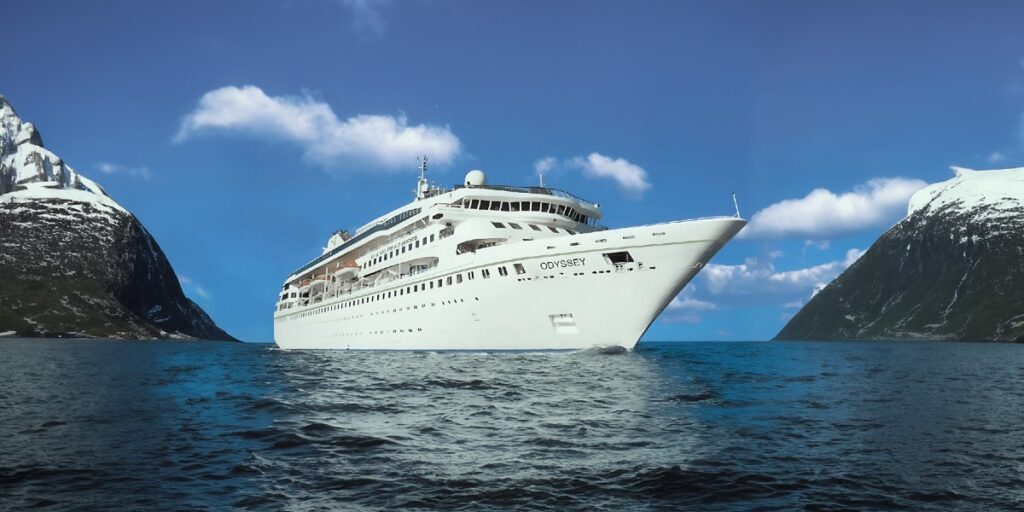
Villa Vie Residences is one of the most exciting options for anyone dreaming of a life at sea. You can own your cabin, rent one for a set period, or even take advantage of their unique rent-to-buy option.
The ship is sailing on a continuous 3.5-year voyage that visits more than 425 ports across 140 countries, before starting the whole journey again.
If you choose to buy, cabins start from around $129,999, with a monthly fee to cover running costs. You can also rent out your cabin when you’re not onboard, helping to offset your costs. Guests are welcome too – you’ll just pay their daily port fees and gratuities.
Prefer to test the waters first? The Voyagers Programme lets you book shorter segments starting from about US $119 per person, per night, so you can try life at sea without committing long-term.

The cruise is all-inclusive, covering beer and wine with meals, complimentary healthcare, high-speed WiFi, selected shore excursions, and even free laundry – making day-to-day life at sea surprisingly easy.
When you factor in those inclusions alongside the monthly fees, it remains one of the best-value ways to live full-time on a cruise ship.
I was lucky enough to be able to interview one of the guests who has purchased a cabin on the Odyssey. You can read that interview here: One Man’s Plan to Live Full-Time on a Cruise Ship.
And if you want to see what life is like on the ship now that it has (finally!) set sail, there are several YouTubers living on board who will keep you updated.
Suggested read: This ‘Golden Passport’ Lets You Live On A Cruise Ship Forever
6. MV Narrative
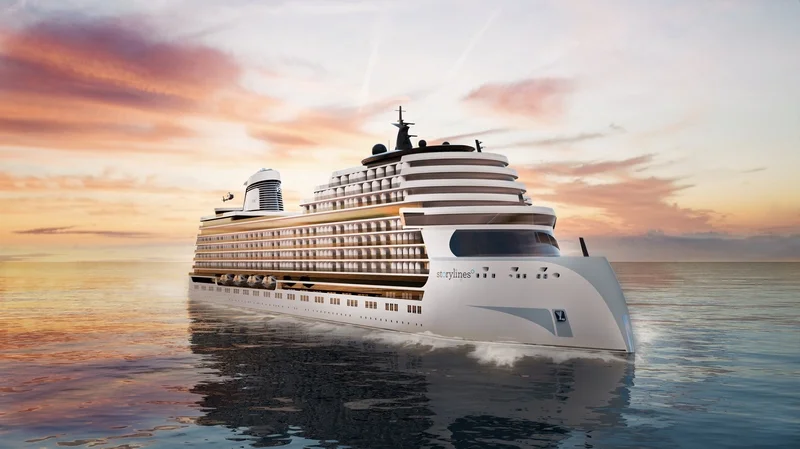
The MV Narrative is billed as a contemporary super-yacht offering a luxury residential community at sea, operated by Storylines. It’s pitched as a more affordable way to live on board compared with some of the ultra-premium options, with residences starting from around $1 million and ranging up toward several million for larger units.
There’s still the option to lease a residence rather than buy, which means you pay yearly fees (in the five-figure sum) but don’t take ownership at the end of the term.
The yacht is designed with plenty of wow-factor amenities: multiple swimming pools, around 20 dining venues, a microbrewery onboard, plus a dedicated library, watersports marina and a global learning programme for families.
Several British people have already bought residences on board, one of these is mindset coach Mimi Bland. You can read her story here: British Woman Embarks On New Life Working Remotely From A Cruise Ship.
However – and this is important – despite the grand vision, construction is still underway, the maiden voyage hasn’t yet launched, and the start date has been pushed to 2027 or later. That means this also remains an aspirational option rather than an immediately bookable lifestyle.
7. Njord
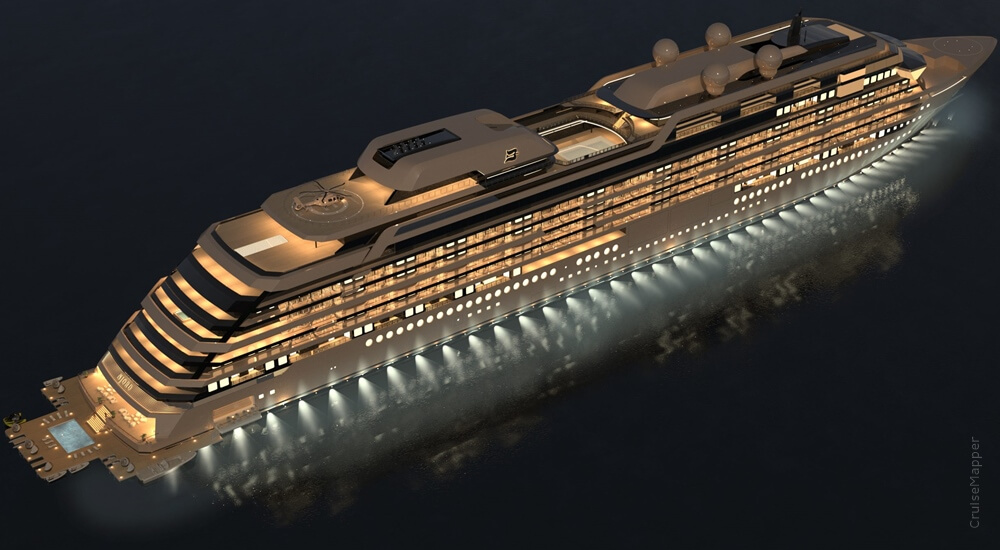
The Njord by Ocean Residences is a high-end superyacht-style residence ship under development, aimed at luxury buyers. The vessel will feature around 117 private residences, with two- to six-bedroom layouts and sizes up to 9,000 sq ft. Prices start from about US $8.5 million.
The yacht is packed with features: smart-home tech, designer furnishings, multiple dining venues, pools, wellness facilities, and even onboard scientific research amenities.
It was initially slated for delivery in 2025, but current information shows a revised target of 2026, and the build is still subject to financing and final approvals. So, while it remains one of the most lavish opportunities to live at sea, it’s still very much in the planning/construction phase rather than move-in ready.
8. MS Dark Island
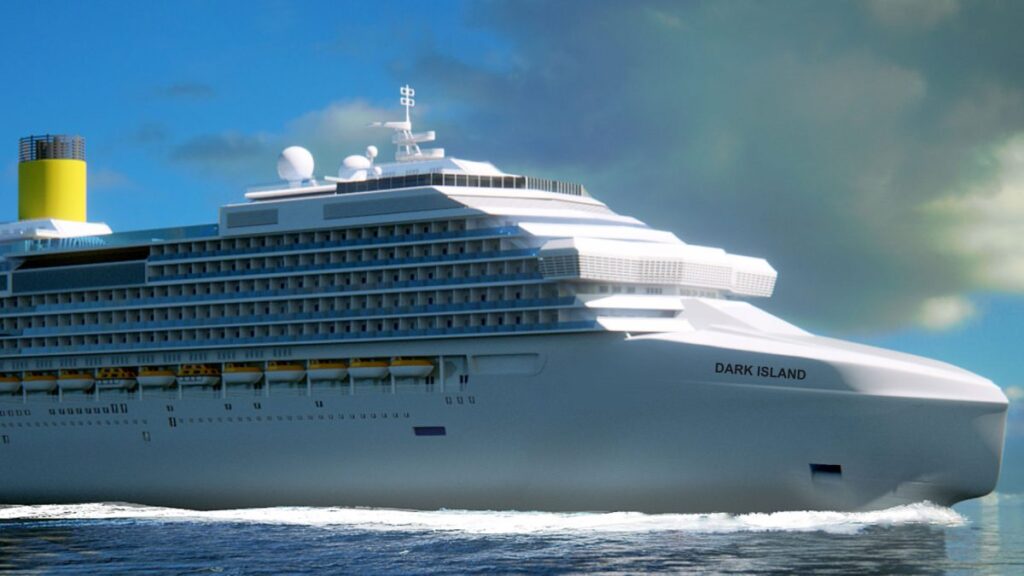
Dark Island is another ambitious residential ship project, planned for delivery in 2026. Designed for travellers who crave adventure with a touch of luxury, it will combine global exploration with enrichment – offering expert-led lectures, forums and field trips that bring each destination to life before guests even arrive.
The ship takes its name from the Hebridean island of Benbecula – known in Gaelic as The Dark Island – a name that symbolises peace and serenity rather than anything gloomy.
There will be 101 ultra-luxurious suites, all with private balconies and a choice of one, two or three bedrooms. Every detail is being designed with sustainability in mind, from eco-friendly technologies to energy-efficient systems, ensuring the ship leaves as light a footprint on the planet as possible.
Dark Island aims to offer a life at sea that’s not just indulgent, but meaningful too.
The Three-Year World Cruise
There was one more option – and this was designed as a middle option between traditional cruising and residential cruising. That’s the ultra-long-term world cruise option announced by Life At Sea Cruises.
However, just as the ship was due to launch on her three-year itinerary in November 2023, the company cancelled the cruise after revealing they had not been able to secure a suitable ship. Read about the cancellation here.
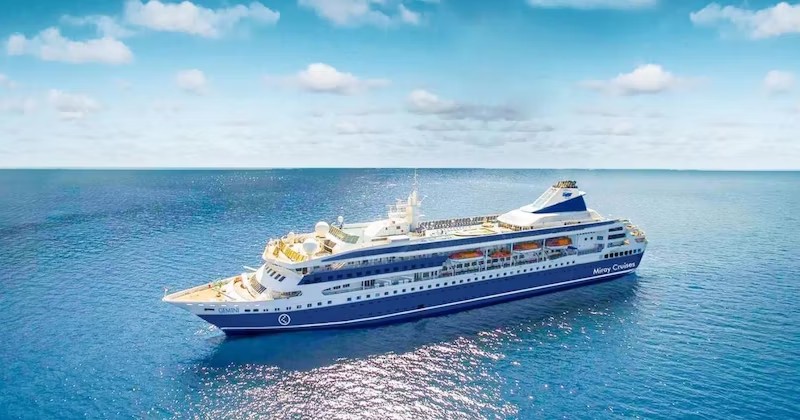
The company had originally announced a three-year itinerary on their ship MV Gemini, with all-inclusive fares starting at $29,999 per person, per year. At the time, this looked like one of the most affordable long-term options for anyone interested in living on a cruise ship.
But then there were challenges about whether the ship was seaworthy, and so a second ship was sought. But with a deal lined up, the cruise line didn’t pay for the AIDAaura when it came up for sale, and instead it was purchased by Celestyal Cruises.
The cruise was due to set sail on 1st November 2023 and visit 135 countries until late 2026, covering 130,000 miles.
Guests had already travelled to Istanbul for the departure, and are now facing a wait for refunds. The company has promised to repay guests using monthly instalments, which suggests the money may have been spent. By early 2024, only a handful of passengers had received partial refunds, while most were still waiting and beginning to take legal action. Hopefully, everyone eventually gets their money back.
How Much It Costs to Live on a Cruise Ship
The cost of buying an apartment on a residential cruise ship is between $1 million and $14 million. There are also annual fees of between $60,000 and $300,000 to pay. In theory, you could cruise on traditional cruise ships for around $35,000 per year if you choose a basic cruise.
There’s no getting away from the fact that residential cruise ships are expensive. That’s because they’re more like luxury ships, and they’re very exclusive. Plus, you’re buying an asset, which can be sold on at a later date.
It’s difficult to compare costs directly since ships include different levels of service within their fares, plus you don’t know how long you’re going to want to live on a cruise ship.
But for the sake of comparison, let’s look at the estimated costs of living aboard three residential cruise ships, three traditional cruise lines and the new three-year world cruise.
Table Comparing the Cost of Living on Cruise Ships for 10 Years
| Type | Cruise line/ship | Purchase price | Cruise Fare / Fees (10 years) | Taxes (10 years) | Tips (10 years) | Drinks (10 years) | Estimated WiFi cost | Total cost for 10 years (for 2 people) | Asset value after 10 years |
|---|---|---|---|---|---|---|---|---|---|
| Cheap cruise | Carnival | n/a | $156,000 | $127,750 | $52,925 | $219,000 | $70,000 | $1,251,340 | $0 |
| Mainstream cruise | Royal Caribbean | n/a | $360,000 | $58,400 | $56,300 | $325,000 | $66,000 | $1,731,400 | $0 |
| Luxury cruise | Regent Seven Seas | n/a | $2,190,000 | $0 | $0 | $0 | $0 | $4,380,000 | $0 |
| Residential | MS The World | $3,000,000 | $1,000,000* | Included | Included | Included | Included | $4,000,000 | $3,000,000 |
| Residential | Somnio | $11,000,000 | $1,000,000* | Included | Included | Included | Included | $12,000,000 | $11,000,000 |
| Residential | Villa Vie | $99,999 | $419,880 | Included | Included | Included | Included | $519,879 | $99,999 |
| Residential (lease) | Victoria Majestic | $10,000 deposit | $576,000 | Included | Included | Included | Included | $606,000 | $30,000 |
| Residential | MV Narrative | $1,000,000 | $650,000 | Included | Included | Included | Included | $1,650,000 | $1,000,000 |
Notes about the data
It’s difficult to compare costs directly since ships include different levels of service within their fares, plus you don’t know how long you’re going to want to live on a cruise ship. You can’t really compare the price of owning a residential place on a ship to cruising for just one year. If you’re looking to buy a place on one of the residential ships, you’ll probably be looking to use it for the long term.
With that in mind, I’ve used 10 years as a guideline, comparing the price of buying a room on a residential ship for 10 years, against the cost of booking traditional cruises for the same time period.
The costs for each option are based on the cheapest accommodation using reported figures at the original time of writing. Prices are ballpark estimates for comparison purposes only – cruise costs change all the time, so treat this as a guide rather than up-to-the-minute pricing.
For the Carnival price, I have used a typical 4-day cruise and included the cost of the Cheers drinks package and the premium WiFi packages.
For Royal Caribbean, I’ve used an average 7-day Caribbean cruise, plus the costs of the Deluxe Beverage Package and the Voom Surf + Stream internet package.
For Regent Seven Seas I’ve based the price on a typical 10-day cruise. Drinks, WiFi, tips and taxes are included as standard.
Where I’ve placed an asterisk for annual costs – these aren’t published by Residences at Sea or Somnio Superyachts, so I’ve used the best estimate I can find.
How to Live on a Cruise Ship Cheaply
The cheapest option would have been Life At Sea Cruises’ three-year world voyage, which promised all-inclusive living for $29,999 per person, per year. It was an exciting concept – until the sailing was cancelled just weeks before departure when the company failed to secure a ship.
So, for now, the most affordable real option for long-term life at sea is Villa Vie Residences, where cabins now start from $129,999 to buy or around $119 per person, per night to rent.
If you would rather stick to a traditional cruise line, you can still keep prices low, but remember you’ll be booking cruises regularly, and you will need to avoid paying for many extras on the ship. You’ll also want to look at cruising with the cheapest cruise lines in the world, such as Carnival or MSC Cruises.
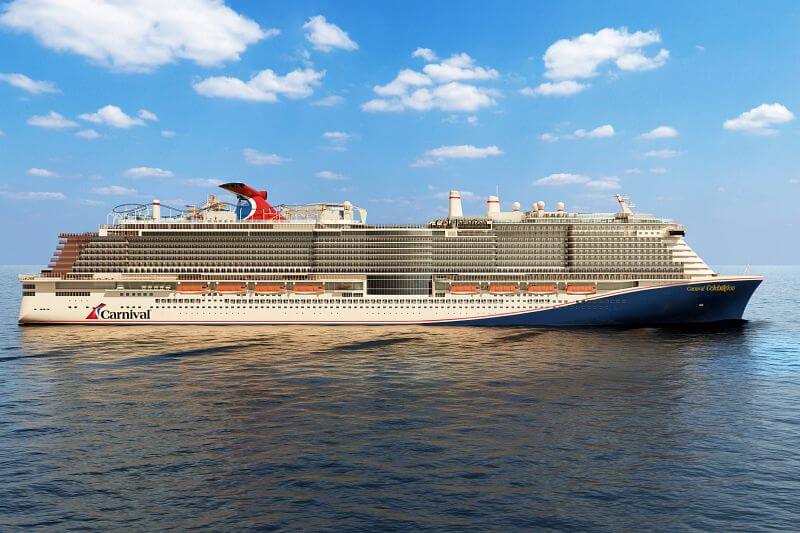
When you’re booking a Carnival cruise, the cheapest fare you can get will be one where you only pay for the cruise itself and the necessary extras – the port fees, taxes and gratuities.
And trust me, while it is possible to opt out of gratuities, you definitely don’t want to do that when you’re living on a cruise ship!
If you cruised in this way – choosing an inside cabin, eating only in the free restaurants and sticking to the free drinks you get on the ship (water, juices, basic tea and coffee at breakfast) then you could possibly cruise for around $35,000 per year.
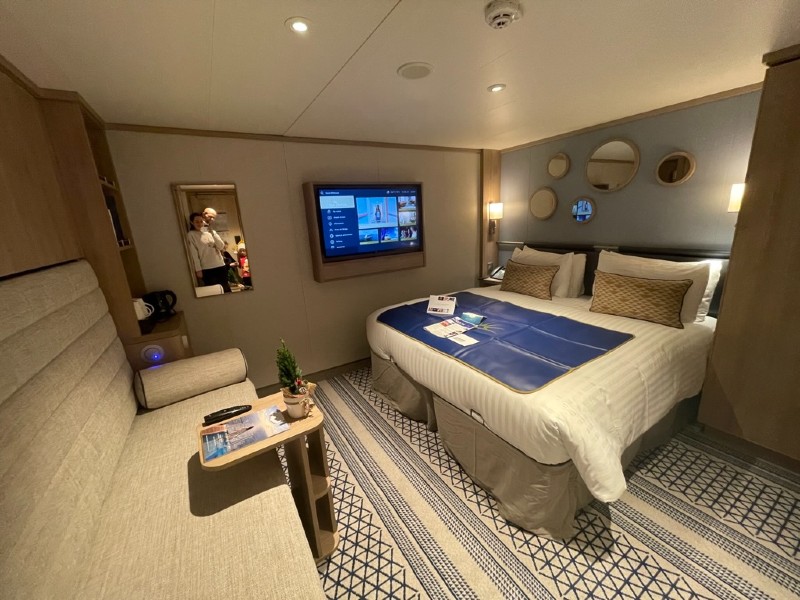
This would mean you’d have no internet access and you would have to pay for any other drinks separately, but you would be able to enjoy the free accommodation, days at port, and the included daytime and evening entertainment on the ship, along with meals in the main dining restaurant, the buffet and any other included venues on the ship.
Of course, whichever cruise you choose, you’ll still have to factor in your daily living expenses such as excursions, medication, phone bills and souvenirs. This article shows how much you can expect that to cost.
How to Live on a Cruise Ship for Free
The absolute cheapest way to live on a cruise ship is to work on one – although it probably isn’t what you had in mind when you thought about living on a cruise ship!
It’s the cheapest option because you’d actually be making money – and your room and food would be free. But you would be working six or seven days a week with only very rare days off, and often for long hours.
It’s hardly a relaxing way to see the world. But if you fancy it, there are plenty of cruise ship jobs with no experience needed.

In some cases, senior officers, including the ship’s captain and cruise director, may be allowed to have their families stay on the ship with them. It isn’t really standard practice, and most officers live on the ships alone, but if you really wanted to live on a cruise ship for free, then try convincing your partner to take up a career as a ship’s senior officer and then see what the cruise line can do for you!
Comparing the Cost of Cruise Ship Living With Other Options
A cruise ship offers a number of perks over regular living, the main one being that you get to see the world. Living on a cruise ship means travelling all across the globe, experiencing new cultures and thrilling experiences.
But how does the cost compare to regular living?
Is it cheaper to live on a cruise ship than in a house?
It costs a similar amount to live on a cruise ship as it does in a house. In the UK, the average cost of living is £2,200 per month, equal to around $2,650, and in the US the average cost is $3,200. You can live on a cruise ship for around $2,500-$3,000 per month.
Surprising, right? The average cost of living stats for the UK and for the US include typical rent payments, the cost of food, transport and entertainment, so we’re looking at very comparable rates. The UK’s cost of living makes it being cheaper than the average cruise, while the US is slightly more expensive.
Again, these are average costs for the countries. If we just look at the most expensive places to live, then London becomes £3,200 a month, or $3,800, while New York is approximately $5,100. So living on a cruise ship could actually work out cheaper!
Living on a Cruise Ship vs In a Nursing Home: What’s Cheaper?
It can be cheaper to live on a cruise ship than in a nursing home. The UK average cost for living in a care home is £3,550 per month ($4,250), while the US average is much higher at $7,900 per month. It is possible to live on a cruise ship for $5,200 per month.
Of course, if you need to live in a care home, there’s a good chance you need a carer. If that carer’s responsibilities aren’t specialised – if a family member is capable of taking care of you – then you just need to pay for a second person to join you on a cruise.
But that can still work out to be cheaper than paying for a care home.
| Accommodation option | Monthly cost for 1 person plus carer |
|---|---|
| Nursing Home in UK | $4,250 |
| Nursing Home in US | $7,900 |
| Residential Cruise (Villa Vie Residences – long-term lease) | $5,200 |
| Mainstream Cruise (Carnival) | $5,800 |
| Luxury Cruise (Regent) | $36,500 |
So, if you don’t need any specialist medical care and have someone in mind who would like to travel the world with you, then paying for the two of you to live on a cruise ship could work out to be a similar price, or cheaper, than living in a care home.
However, one thing that you’ll certainly need to factor in is travel insurance and medical costs. Travel insurance for such a trip could be very costly indeed, and it is mandatory.
Cruise ships do have doctors, but visits to the onboard medical centre can be very costly indeed, and for any serious medical issues, you would need to visit a hospital on land.
The People Who Live on Cruise Ships
What we’ve gathered from this guide is that, financially, it is viable to live on a cruise ship, although you need to plan your cruise carefully.
But is it actually an option, or are we being fanciful?
I’ve looked into some real-life examples of people who have lived on cruise ships, and there are some notable examples that prove it is a lifestyle within reach.
1. Lee Wachtstetter
Lee Wachtstetter was an American author who began living on cruise ships back in 2005, choosing Holland America Line’s MS Prinsendam as her ship of choice. She moved in 2008 to Crystal Serenity, and I love the reason why – it’s because Holland America stopped providing dancing partners.
Wachtstetter remained on Crystal Serenity until 2018, when she apparently had to return to land due to ill health. She’s published a book about her experiences, called I May Be Homeless, But You Should See My Yacht.


2. Morton Jablin
Morton Jablin, affectionately nicknamed ‘Captain’, is another long-term cruise passenger. As of 2018, when Jablin was 94 years old, he had spent 13 years living on the Seven Seas Navigator, enjoying a life of luxury. Sadly, Morton Jablin passed away on 14 January 2023 at the grand age of 99.
3. Mario Salcedo
Perhaps the most famous case is that of Mario Salcedo, nicknamed Super Mario. Mario has lived continuously on Royal Caribbean ships since 2000, with an average of 15 days a year spent on land to handle life admin. He did live on land for 15 months during the COVID-19 pandemic, too.
Salcedo isn’t a retiree – he works on the ship, managing investments for various high-worth individuals. And he isn’t tied to a single ship – at the end of his cruises he will return to his condo in Miami for a few hours, before embarking on his next voyage, often flying to a different port to meet the ship.
Suggested read: The Surprise Side Effect Of Life At Sea From The World’s Most Experienced Cruiser
4. Monica Brzoska and Jorell Conly
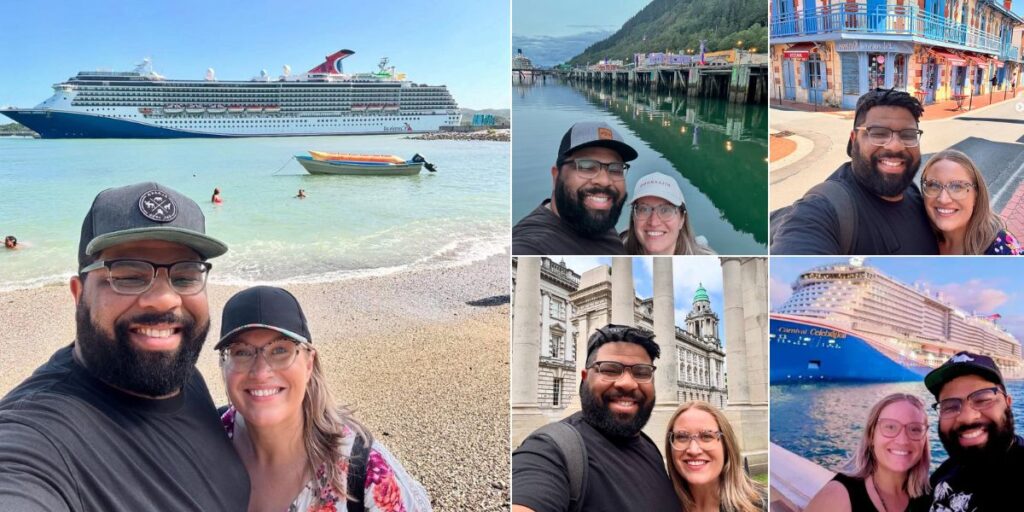
Monica and Jorell are a younger couple who made headlines after deciding to swap their traditional home life for full-time cruising back in 2023. They’ve been documenting their adventures as they sail the world together, proving that life at sea isn’t just for retirees.
Suggested Read: They Sold Everything To Live On Cruise Ships! Good Idea Or Not?
Things to Consider When Living on a Cruise Ship
Here are some of the things you’ll need to consider when you’re living on a cruise ship.
1. Tax
There are two main things to mention when considering tax on your cruise.
Firstly, every cruise you take has taxes that need to be paid. On residential cruise ships or long-term world cruises, these are incorporated into the cost, but if you choose to book traditional cruises back-to-back, the taxes and fees may be separate – so be careful when you’re budgeting.
The second tax consideration is if you decide to work while you cruise. Even if you cruise on a ship permanently, you’ll still need to have a home country of residence, and you’ll need to obey the tax laws for that country.
However, there are often exclusions if you spend less than a set number of days residing in the country, so it’s worth checking your local tax laws and speaking to your accountant for advice.
As an example, in the UK you usually only pay tax if you live in the country for more than half the year. So, by living on a cruise ship permanently, you may not have to pay tax at all.
In theory, you could get a work-from-home job and work on a cruise ship, and potentially save yourself tax money by not being permanently based in your home country! And if you’re a high earner, it could even be more cost-effective to work at sea since the cost of the cruise fare may be less than the tax you save.
This Reddit thread dives into it in a little more detail.
Especially when you consider that your cruise fare includes your room and food – maybe this is something I need to think about?
Just be careful, though, because you may also be paying for other benefits at home that you could miss out on if living on a ship. For example, in the UK, if you don’t make National Insurance payments, you won’t get the full state pension later in life.
2. Insurance
Normal travel insurance isn’t going to cover you if you decide to live on a cruise ship. Travel insurance policies count on the fact that medical cover is a rarity when you travel for 2-3 weeks of the year.
You’ll need to look into long-term health insurance, so that you have cover should anything go wrong while you’re sailing, and this is likely to be significantly more expensive than regular travel insurance.

3. Health
Speaking of health, you’ll need to consider how you’re going to stay healthy while living on a cruise ship. Cruise ships generally have a doctor on board, but visits to see them are costly, and they don’t offer most dental treatments.
It would be better to have the option of returning to land on a semi-regular basis to see a doctor and dentist, where prices will be lower.
If you intend to eat in the cruise ship restaurants, remember that they are aimed at vacation guests, and so meals will be richer and higher in calories than a regular diet. You might need to be careful with your meal choices, and you’ll want to make sure you visit the gym regularly or find other ways to stay active.

4. Mail
A minor consideration, but if you sail on a cruise ship, receiving mail isn’t as easy as it would be at home. It is possible for someone to write to you at a cruise port via the port agency, but this requires you to reach an agreement for them to hold your mail.
It may be better to have a post box somewhere that you visit regularly – essentially, set up a home port where you can visit medical services and pick up any mail that you need.
The Bottom Line
That’s a lot of information, but considering how we’re talking about as big a decision as living your life on a cruise ship, there’s always going to be a ton of information you need.
Is it realistic? Yes, it clearly is since others have done it, but it’s not something you can do without having some decent savings.
You’ll need at least $3,000 a month on most cruises, often more, and that’s per person – if you want to live solo, then costs may be inflated as well, so bear that in mind.
The best option is to choose one of the specialist cruises aimed at residential guests – such as the MV Narrative from Storylines. These offer the comfort of a long-term solution, while being more affordable than the ultra-luxury MS The World.
It’s definitely a tempting way of living out your retirement, with the chance to be cooked for and pampered while being whisked around the world. Are you considering it?
TODAY’S BEST CRUISE DEALS!
Don’t miss these offers…
