Viking has announced the names of its next two ocean-going vessels, revealing that the 998-passenger Viking Leda and Viking Vega will join the company’s expanding fleet in late 2028 and mid-2029 respectively.
Both ships are currently under construction at Italy’s Fincantieri shipyard and will continue the cruise line’s signature small-ship design philosophy.

The addition of Viking Leda and Viking Vega marks a significant milestone for the cruise operator, bringing its total number of ocean ships built at Fincantieri to 18 vessels.
This announcement comes as part of Viking’s ambitious expansion programme, which has positioned the company as one of the fastest-growing cruise lines in the premium and luxury segments since launching its ocean product in 2015.
Viking’s growth strategy differs markedly from mainstream cruise operators, focusing exclusively on ships that carry fewer than 1,000 passengers.
This deliberate approach has resonated strongly with discerning travellers seeking destination-focused itineraries without the crowds associated with larger resort-style vessels.
The 47,000-tonne vessels will feature design elements similar to the Viking Star, the company’s inaugural ocean ship that revolutionised the brand’s transition from river cruising to ocean voyaging.
This consistency in design has become a hallmark of Viking’s fleet strategy, allowing the company to maintain quality standards whilst achieving economies of scale in construction and operation.
Viking Leda Debuts With Mediterranean Winter Programme
Viking Leda is scheduled to enter service in December 2028, launching with a winter deployment in the Mediterranean region.
The ship will offer a varied selection of itineraries ranging from eight to 16 days, providing passengers with flexibility in choosing voyage lengths that suit their schedules.
According to published deployment schedules, the vessel will homeport from several strategic locations including Greece, Italy and Spain.
This multi-port approach reflects Viking’s commitment to providing convenient embarkation options for international guests whilst optimising itinerary planning.
The cruises will explore destinations across the Aegean Sea, the broader Mediterranean basin and Atlantic coastal ports.
Highlights include visits to the Greek Islands, renowned for their ancient history and stunning island landscapes, the glamorous French Riviera with its sophisticated resort towns, and Morocco’s exotic North African ports that blend European and Arabic influences.
Viking Vega Sets Sail In Summer 2029
Viking Vega will make its debut in June 2029, timing its maiden season to coincide with peak Mediterranean cruising weather.
The ship will welcome its first guests in Southern Europe before embarking on a diverse inaugural season that spans multiple regions.
After completing its initial Mediterranean programme, Viking Vega is scheduled to reposition to the British Isles in mid-July 2029.

This repositioning reflects Viking’s operational strategy of following seasonal demand patterns, moving ships to northern European waters during the warmer summer months when daylight hours are extended and weather conditions are most favourable.
The vessel’s inaugural season will feature departures from major cruise ports including Civitavecchia (Rome’s gateway port), Barcelona in Spain, Bergen on Norway’s fjord-lined coast, and various United Kingdom ports.
This geographic diversity allows the ship to serve multiple source markets whilst offering passengers access to contrasting cultural experiences from Mediterranean warmth to Nordic grandeur.
Continuing A Proven Design Philosophy
Both new vessels will replicate the design template established by Viking Star nearly a decade ago, a decision that underscores the success of the original concept.
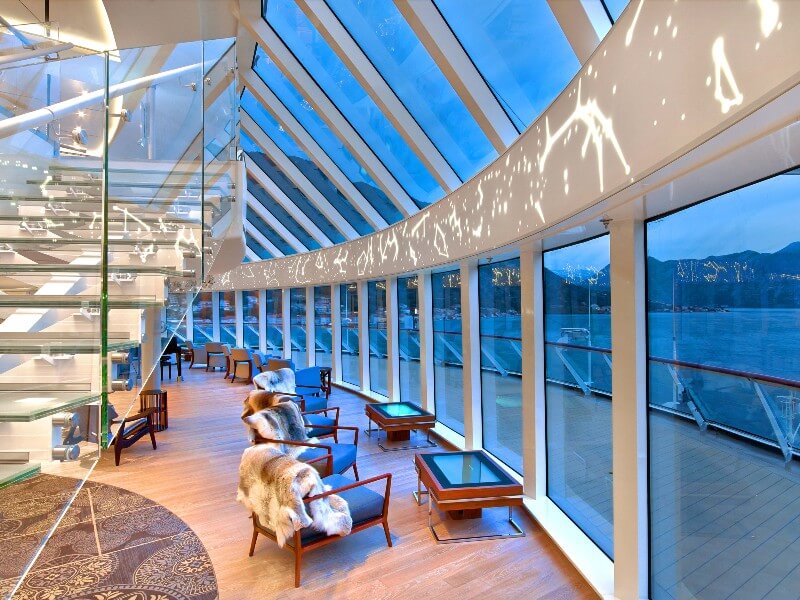
The Viking Star broke new ground when it launched in 2015, introducing Scandinavian-inspired interiors, all-veranda staterooms, and an unusual emphasis on indoor-outdoor spaces that blurred traditional boundaries between ship and sea.
The 47,000-tonne size represents an optimal balance for Viking’s target demographic.
Large enough to offer comprehensive amenities including multiple dining venues, a theatre, spa, and pool areas, yet small enough to access ports that mega-ships cannot visit and maintain an intimate atmosphere throughout the vessel.
Viking’s decision to maintain design consistency across its ocean fleet has proven commercially astute.
Repeat passengers know exactly what to expect when booking any Viking ocean ship, whilst operational efficiencies are maximised through standardised crew training, spare parts inventory, and maintenance procedures.
Five Ships Arriving Before Leda And Vega
Before Viking Leda and Viking Vega join the fleet, the company will welcome three additional sister ships between 2026 and 2028.
Viking Libra, Viking Astrea and Viking Lyra are all currently under construction and will incrementally expand the line’s capacity.
This staggered delivery schedule reflects careful planning by Viking’s management team.
Rather than overwhelming the organisation with simultaneous deliveries, the spaced timeline allows for proper crew recruitment and training, gradual marketing of new inventory, and systematic quality control as each vessel enters service.
The measured approach also provides financial predictability, spreading capital expenditure across multiple years whilst generating incremental revenue as each new ship begins operations.
For passengers, the regular addition of new tonnage means more departure dates and itineraries become available without waiting years between ship launches.
Groundbreaking Hydrogen Technology On Horizon
Among the vessels arriving before Leda and Vega, two will feature revolutionary propulsion technology that positions Viking at the forefront of maritime environmental innovation.
Viking Astrea and Viking Lyra, scheduled for delivery in 2027 and 2028 respectively, will be the cruise industry’s first hydrogen-powered ships.
These vessels will utilise containerised fuel technology that enables zero-emission operations, a significant advancement in reducing the environmental footprint of ocean cruising.
The hydrogen fuel cells generate electricity through a chemical reaction between hydrogen and oxygen, producing only water vapour as a byproduct rather than the greenhouse gases associated with traditional marine engines.
The successful implementation of this technology could prove transformative for the entire cruise industry.
As environmental regulations tighten globally and passengers increasingly prioritise sustainability in their travel choices, Viking’s investment in hydrogen propulsion may establish new standards that competitors will need to match.
Expedition Fleet Growth Continues Simultaneously
Beyond its ocean-going vessels, Viking’s orderbook includes two additional expedition ships scheduled for delivery in 2030 and 2031.
These purpose-built vessels will join the existing Viking Octantis and Viking Polaris, which specialise in polar and remote-region itineraries.
The expedition segment represents a natural extension of Viking’s destination-focused philosophy, allowing the company to offer guests access to Antarctica, the Arctic, and other wilderness areas that require specially ice-strengthened hulls and advanced navigation equipment.
These ships typically carry fewer than 400 passengers and feature scientific laboratories, observation decks, and expedition equipment including zodiacs and kayaks.
By simultaneously expanding both its ocean and expedition fleets, Viking is positioning itself to serve the full spectrum of destination-focused cruisers.
Guests can experience Mediterranean culture aboard traditional ocean ships, then book polar expeditions aboard specialised vessels, all within the same brand family with consistent service standards and loyalty programme benefits.
Comprehensive Orderbook Extends Through 2031
Viking’s total orderbook now comprises nine additional vessels beyond its current operating fleet, with deliveries scheduled through 2031.
This represents one of the most ambitious expansion programmes in the premium cruise sector and demonstrates confidence in sustained demand for the company’s product.
The financial commitment required for such an orderbook is substantial, with modern cruise ships typically costing between £300 million and £400 million each depending on size and specifications.
Viking’s ability to secure financing for this construction programme reflects strong backing from ownership and lenders’ confidence in the business model.
For the cruise industry broadly, Viking’s expansion contributes to overall capacity growth in the premium and luxury segments, which have historically grown more slowly than the contemporary and mass-market tiers.
This shift reflects changing consumer preferences, with increasing numbers of passengers willing to pay premium prices for smaller ships, included amenities, and culturally immersive itineraries rather than resort-style mega-ships focused on onboard entertainment.
The arrival of Viking Leda in December 2028 and Viking Vega in June 2029 will further cement Viking’s position as a major player in ocean cruising, less than 15 years after the company ventured beyond its river cruise roots.
For passengers, these additions mean greater choice in departure dates and itineraries, whilst the cruise industry watches closely as Viking continues to demonstrate that significant growth is achievable in the premium small-ship segment.
TODAY’S BEST CRUISE DEALS!
Don’t miss these offers…