
A UK government investigation has criticised the handling of a major heavy-weather incident aboard Saga Cruises’ Spirit of Discovery, concluding that failures in voyage planning, emergency response and onboard medical care contributed to a storm emergency that left 115 passengers injured and one guest dead.

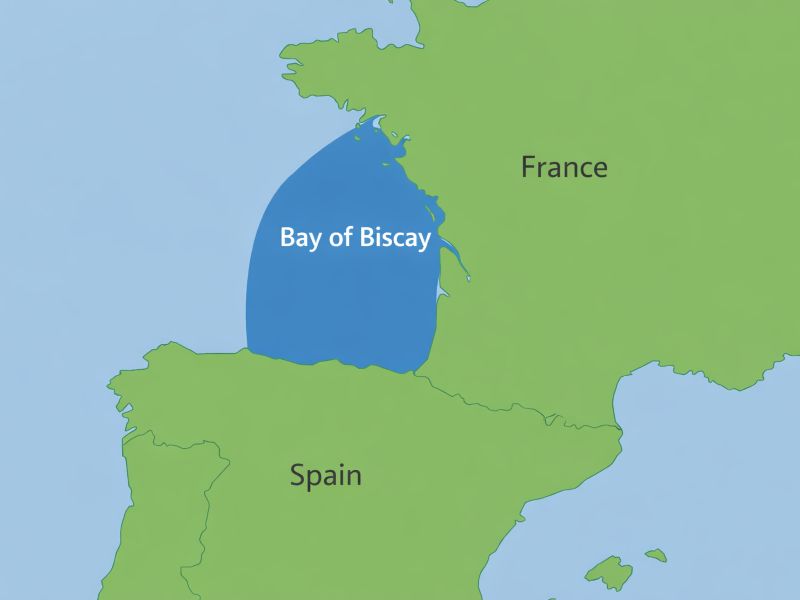
The Marine Accident Investigation Branch published its report on 11th March 2026 into the incident, which happened on 4th November 2023 as the 58,250 gross ton ship was crossing the Bay of Biscay during a 14-night Canary Islands sailing from Portsmouth.
Investigators said the vessel lost propulsion in heavy weather, was left hove to for almost 18 hours, and moved violently enough to cause one of the highest injury rates seen in comparable incidents.
Among those injured was 85-year-old Trevor Gilks, who later died after suffering a severe cervical spine injury. The report found that a delay in recognising the seriousness of his condition led to what investigators described as “suboptimal treatment”, and said that may have affected the severity of his injury.
“While cruising remains safe and accidents rare, Spirit of Discovery’s violent motion in heavy weather caused injury to over 100 passengers and, very sadly, one passenger lost their life as a result of injuries sustained,
“A complex sequence of events led to this accident and we have identified a number of clear lessons around vessel safety, crew decision-making and medical response.”
Rob Loder, chief inspector of marine accidents.
Storm Response And Medical Care Came Under Scrutiny
According to the MAIB report, Spirit of Discovery encountered very high seas and violent motion while returning north after itinerary changes caused by worsening weather. The ship had originally been due to call at Las Palmas de Gran Canaria, but that stop was dropped.
A subsequent plan to call at A Coruña also fell away after the Spanish port closed because of the weather, leading to a decision to sail directly back to Portsmouth.
Investigators said weather routing guidance had strongly advised against crossing the Bay of Biscay the following day, but that advice was not adequately acted on by the captain, crew and shore teams.
The report found the ship lost propulsion shortly after 12.30pm on 4th November when violent motion caused the propellers to overspeed and the propulsion pods to shut down automatically.
Investigators also said the loss of control worsened when both pods were unexpectedly parked at 90 degrees to the ship’s heading, increasing the vessel’s motion.
That motion triggered a mass casualty event on board. MAIB said 115 passengers were treated for injuries, with eight requiring hospital treatment after the ship arrived back in Portsmouth. Injuries included fractured hips and ribs, head trauma, a shoulder injury and spinal injuries.
Passenger surveys cited in the report showed that 49% of respondents needed further medical treatment after disembarkation, while 87% said they took four days or more to recover fully.
Gilks was injured when the ship rolled by about 10 to 13 degrees and the high-backed chair he was sitting in toppled backwards, with the main impact to his neck.
Investigators said he was initially helped back into the chair and remained upright for more than four hours rather than being kept flat on a spinal board, a decision the report said might have caused additional neurological damage.
Once he reached the medical centre, a neck X-ray was taken and reviewed by a shore-based radiologist, but no lateral X-rays had been taken and no further neck X-rays were sent for review. The MAIB said the full extent of his quadriplegia remained undiagnosed for more than 36 hours.
It also found that specialist advice from the Telemedical Maritime Assistance Service was not sought immediately, and that earlier intervention might have improved immobilisation, imaging and the assessment of a possible evacuation.
Gilks was taken ashore only after the ship berthed in Portsmouth on 6th November, and he died in hospital on 8th November 2023.
Investigators were also critical of the failure to activate the vessel’s mass casualty incident plan, saying that omission left the medical team working largely unsupported for more than 18 hours and increased the burden on an already overstretched team.
The report further said the lack of advanced trauma training among the ship’s nurses might have contributed to the spinal injury not being identified earlier.
The MAIB issued recommendations to several organisations, including Cruise Lines International Association.
Those recommendations call for more medical personnel with Advanced Trauma Life Support qualifications on passenger ships and updated heavy-weather policies covering the identification and securing of furniture. The report also stresses that safety recommendations do not create any presumption of blame or liability.
Saga and its operating partners have already taken a series of steps outlined in the report, including updated heavy-weather risk assessments, new meteorological operating limits for Spirit-class ships, improved emergency checklists, regular mass casualty drills and enhanced shore-based radiological and orthopaedic support for doctors at sea.
Spirit of Discovery entered service in 2019, and Saga says the ship now sails from both Portsmouth and Dover.
Cruise Injury Claims Remain In Focus
The MAIB report is likely to add to wider scrutiny of passenger injury cases across the sector, even though the agency makes clear its findings are not intended for use in assigning legal liability.
That comes at a time when other cruise-related claims are also drawing attention. In one recent US case, three Carnival Sunrise passengers filed a negligence lawsuit after a tender boat incident near Princess Cays in March 2025 allegedly left them injured during turbulent conditions.
In another case in the UK , compensation claims were filed on behalf of 115 passengers following illness outbreaks aboard P&O Cruises’ Ventura in 2024.
For Saga, the Spirit of Discovery findings represent one of the most serious official critiques of a modern UK cruise incident in recent years, with investigators pointing not to a single mistake but to a chain of decisions and shortcomings that turned severe weather into a deadly casualty event.


