A transport strike on the Greek island of Santorini forced three cruise ships to alter their itineraries this week, leaving thousands of passengers facing disrupted holiday plans after local bus operators suspended services in protest over controversial new port regulations.

The industrial action, which took place on Monday, 22nd June 2026, brought cruise passenger transportation on the island to a standstill. With no buses operating, cruise lines were unable to run shore excursions or move guests between key arrival points and tourist areas.
The disruption affected approximately 8,500 cruise passengers across three vessels from different cruise lines.
MSC Sinfonia and Norwegian Pearl both cancelled their scheduled calls to Santorini entirely and remained at sea instead. Meanwhile, Celebrity Ascent adjusted its itinerary and delayed its arrival by 24 hours, allowing passengers to visit the island on Tuesday, 23rd June, after transport services resumed.
Celebrity Ascent carries around 3,260 guests at double occupancy, meaning thousands of travellers were able to salvage their planned visit. However, passengers aboard MSC Sinfonia and Norwegian Pearl were not as fortunate and missed the destination altogether.
With little opportunity to secure alternative ports at short notice, both ships continued their voyages without replacing the lost call.
New Passenger Rules Spark Backlash
At the centre of the dispute is a recently introduced passenger management system implemented by Santorini’s port authority.
The policy, known locally as the “70-30 rule”, requires 70% of cruise passengers coming ashore to disembark at the Old Port of Fira.
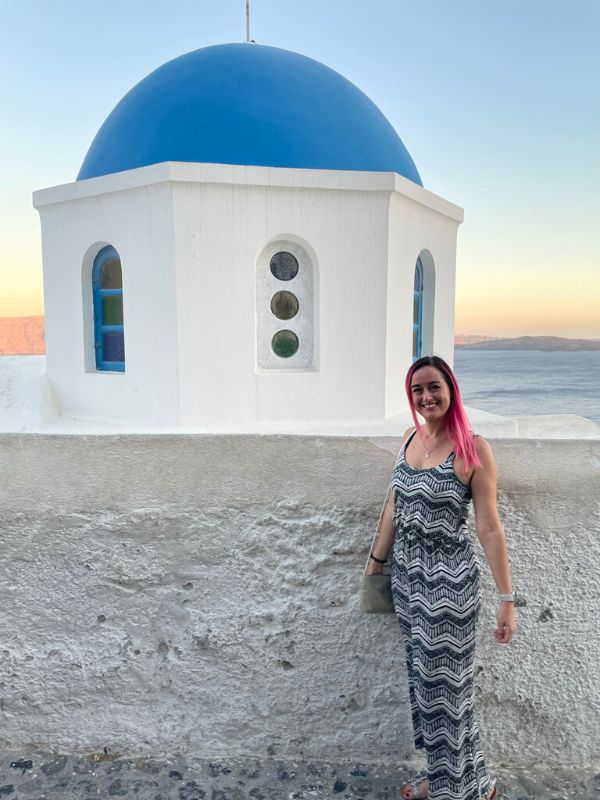
The remaining 30% must use Athinios Port, which offers road access suitable for larger vehicles and organised transportation.
Bus operators argue that the arrangement is impractical and creates significant operational challenges.
Passengers arriving at the Old Port face limited options for reaching the clifftop town of Fira. Visitors must either climb 588 steps, ride donkeys or use the island’s cable car system.
The cable cars can transport approximately 1,200 passengers per hour, a figure operators say is insufficient when several cruise ships arrive simultaneously.
According to the local bus association, the new system was introduced without adequate consultation or preparation. Drivers claim key issues such as parking arrangements, traffic management and passenger logistics were not properly addressed before implementation.
They warn that when multiple vessels are in port, as many as 8,000 passengers could converge on the Old Port at the same time, creating lengthy queues and potentially leaving visitors waiting in high temperatures with limited shade or access to water.
Bus operators have insisted they will continue protesting until meaningful discussions take place with local authorities regarding changes to the policy.
Overtourism Measures Continue To Reshape Santorini
The dispute comes amid wider efforts by Greek authorities to manage growing tourism pressures on Santorini, one of the Mediterranean’s most popular cruise destinations.
On 1st June, Greece introduced several new measures aimed at controlling visitor numbers on the island. Among them was a €20 levy on every cruise passenger arriving in Santorini, regardless of whether they book shore excursions.
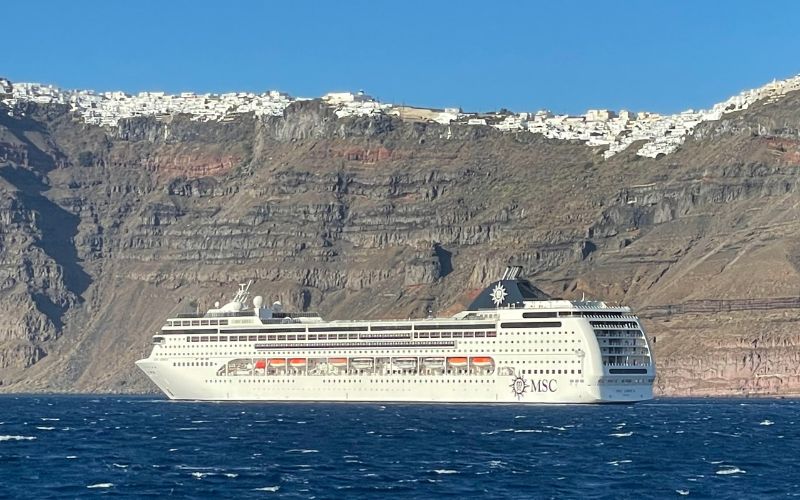
Authorities have also imposed a daily limit of 8,000 cruise visitors, requiring cruise lines, port officials and local businesses to carefully coordinate arrivals.
Supporters of the measures argue they are necessary to protect local infrastructure and improve the visitor experience. However, critics say the combination of passenger caps, new taxes and operational restrictions is creating additional challenges for cruise operators and transport providers.
The latest strike highlights the difficulties of balancing tourism management with the practical realities of moving thousands of cruise passengers around a destination with limited infrastructure and unique geographical constraints.
Local Businesses Feel The Impact
While the dispute is primarily between bus operators and port authorities, local businesses have become unintended casualties of the disruption.
The absence of approximately 8,500 cruise passengers meant restaurants, shops, tour companies and other tourism-dependent businesses missed out on a substantial number of potential customers during the height of the summer season.
Many business owners are understood to sympathise with concerns raised by transport operators but also rely heavily on cruise tourism revenue to sustain their operations.
For cruise lines and passengers, the situation serves as a reminder of how quickly local issues can affect scheduled itineraries. With Santorini dependent on coordinated transport systems due to its tender operations and steep terrain, future cruise calls could remain vulnerable unless a compromise is reached between bus operators and authorities.
Until an agreement is found, uncertainty may continue to hang over one of the cruise industry’s most sought-after destinations.