
Unlimited food is one of the biggest selling points of a cruise – and to be fair, it lives up to the hype. Late-night pizza, multi-course dinners, snacks whenever you feel like it… it’s all there.
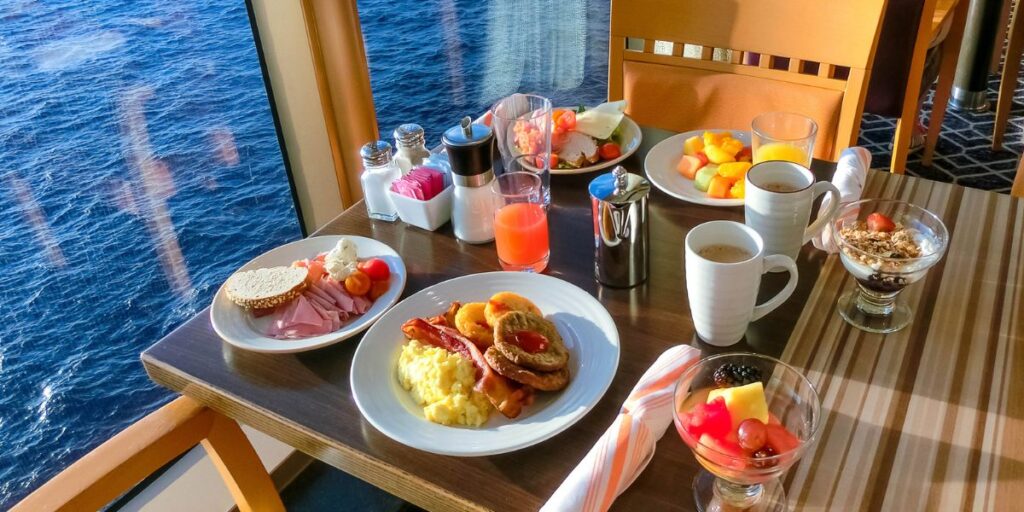
But once you look a little closer, it’s clear this isn’t just a case of “help yourself and enjoy.” There’s a whole system behind it, and most of it stays completely out of sight.
I’ve always found that side of cruising really interesting. What feels effortless as a guest is actually planned down to an almost obsessive level. Some of it’s impressive, some of it’s a bit surprising, and a few things might even change how you think about eating onboard.
Because as indulgent as it all feels, there’s a lot going on in the background that cruise lines don’t exactly advertise.
1. Cruise Ships Load a Huge Amount of Food – All at Once
Before passengers even step onboard, there’s a massive operation happening at the port.

Ships aren’t just topping up supplies. They’re loading everything needed to feed thousands of people for the entire trip. That means tens of thousands of eggs, tonnes of fruit and veg, and more meat, dairy, and dry goods than you can really picture.
What’s even more impressive is how quickly it happens. In just a few hours, pallets are moved onboard in a process that’s clearly been refined over time. It’s fast, organised, and leaves very little room for mistakes.
Once the ship sails, there’s no quick trip to the supermarket if something runs out. Everything depends on getting that initial load right.
Actually, that’s a little white lie. On some more premium cruise ships, the senior kitchen crew might head to local markets while in port to pick up some extra ingredients – and sometimes there’s even excursions where you can join them!
2. There’s a Lot More Thought Put Into Food Waste Than You’d Expect
You’d think waste would be a huge problem with this much food – and in the past, it definitely was.
These days, cruise lines put a lot of effort into reducing it. Kitchens track what gets eaten and what comes back uneaten, then adjust portions and prep accordingly as the cruise goes on.
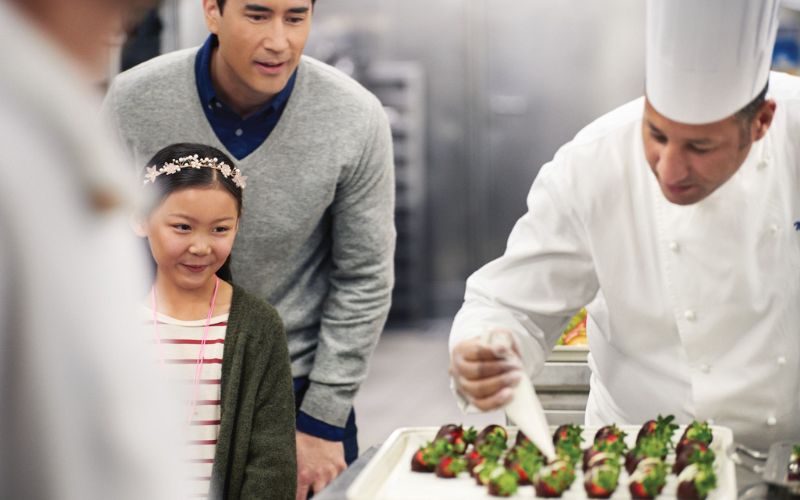
Buffets are a good example. Instead of piling everything out at once, food is topped up in smaller batches. It looks the same to you, but it means less ends up being thrown away.
It’s not perfect, and it probably never will be. When you’re feeding thousands of people with unpredictable appetites, some waste is unavoidable. But there’s a lot more strategy behind it than most people realise.
3. Crew and Guests Eat Very Different Food
It’s easy to assume the crew are eating the same meals as guests, just in a different dining room. In reality, it’s quite different.
Crew have their own dining areas, with menus designed to be practical, filling, and familiar. On an international ship, that usually means a mix of cuisines that reflect where crew members come from.
It’s less about presentation and more about keeping people fed and energised through long shifts.
That doesn’t mean the food is bad – far from it. It’s just not the same multi-course experience you get as a guest. It’s a reminder that behind the holiday atmosphere, this is still a workplace.
4. Buffets Are Designed More Carefully Than They Look
Cruise buffets can feel a bit chaotic at first, but they’re actually very deliberately set up.
Things like plate size, layout, and even the order you see food in all play a role in what people take. Smaller plates naturally limit portions. Putting salads first nudges people to fill some space before reaching the heavier options.

Even the placement of popular dishes is planned, often spread out to avoid queues building up in one spot. It’s why a lot of larger ships have buffets where everything’s duplicated on both sides – and the positions on each are carefully thought through. Anything to cut crowds and queues down and keep things flowing.
It’s not about controlling you, exactly. It’s more about keeping things flowing smoothly and cutting down on waste at the same time. Once you notice it, it’s hard to unsee.
5. A Lot of Food Is Prepped Ahead of Time
With the volume of meals being served, everything can’t be cooked from scratch the second you order it.
A lot of the work is done earlier in the day – chopping, prepping, partially cooking, or even fully preparing components that just need finishing.
In the main dining room, your plate might arrive quickly, but most of the effort has already happened behind the scenes.
That’s how they keep things consistent and avoid long waits. It’s not quite the same as a small restaurant kitchen, but it works for the scale they’re dealing with.
6. Food Safety Is Taken Seriously – Really Seriously
Food safety on cruise ships isn’t something they take lightly.
With so many people in one place, even a small issue could spread quickly. That’s why there are dedicated teams focused entirely on hygiene and safety.
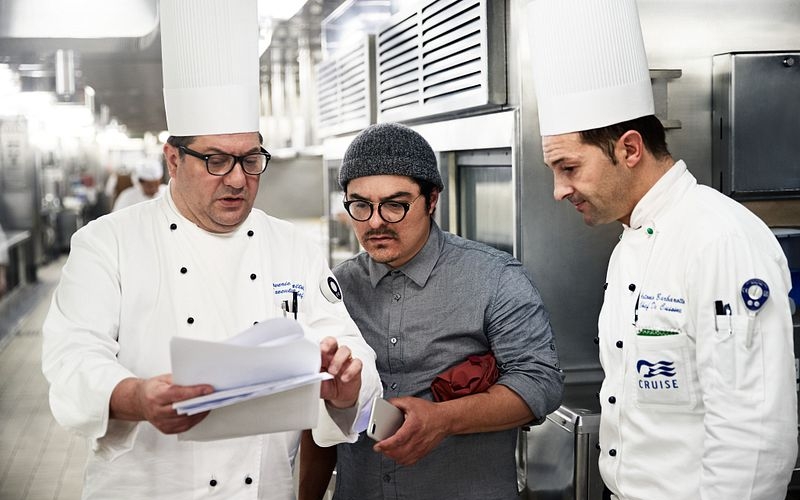
There are strict rules around everything – how food is stored, how long it can sit out, the temperatures it needs to reach. On top of that, ships go through regular inspections to make sure standards are being followed.
Some of it’s visible, like the hand-washing stations at buffet entrances. It might feel a bit over the top, but there’s a good reason for it.
7. Ordering More Than One Dish Is Completely Normal
One of the best things about cruise dining is the flexibility.
In most main dining rooms, you’re not limited to one starter, one main, and one dessert. If you want to try a couple of things, you can. No awkwardness, no raised eyebrows.
Two starters? Go for it. Two desserts? Also fine.
It takes the pressure off choosing, which makes the whole experience feel a lot more relaxed. And if something’s not to your taste, you can just order something else.
You just need to check the specific rules for your cruise line because a couple of them have started charging if you order too much. Starters and desserts are typically fine, but it’s the mains/entrees where there may be a limit. Even then, you’re typically fine with two!
8. Dietary Requirements Are Usually Well Covered
Cruise lines have got pretty good at handling dietary needs.
Whether it’s allergies, intolerances, or lifestyle choices like vegetarian or vegan diets, most ships can accommodate with a bit of notice.
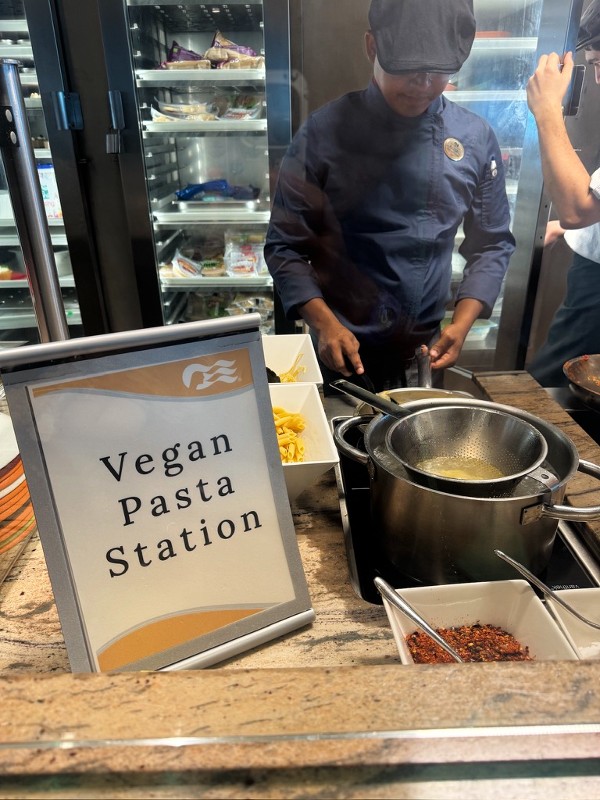
In main dining rooms, you can often pre-order meals a day ahead so the kitchen has time to prepare something suitable. Buffets usually label options too, though it’s always worth double-checking if it’s something serious.
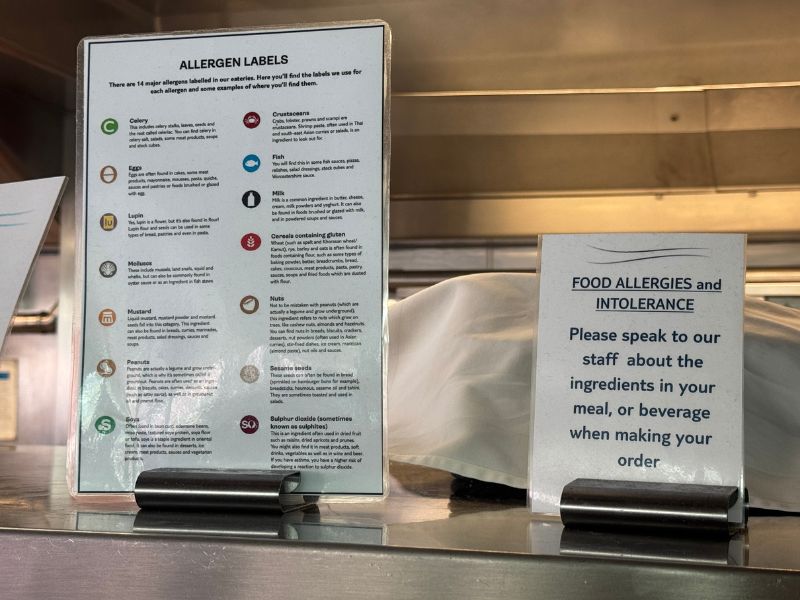
It’s not always completely seamless, especially on larger ships, but overall it takes a lot of the stress out of eating away from home.
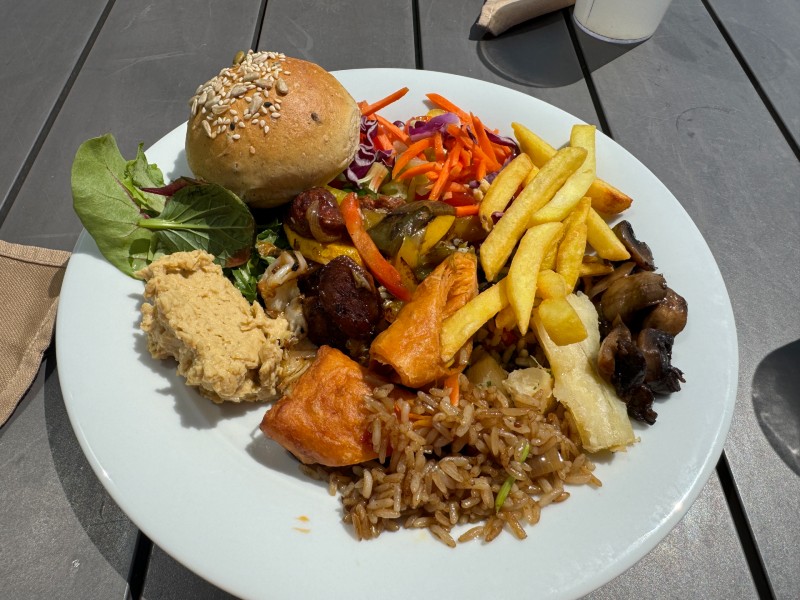
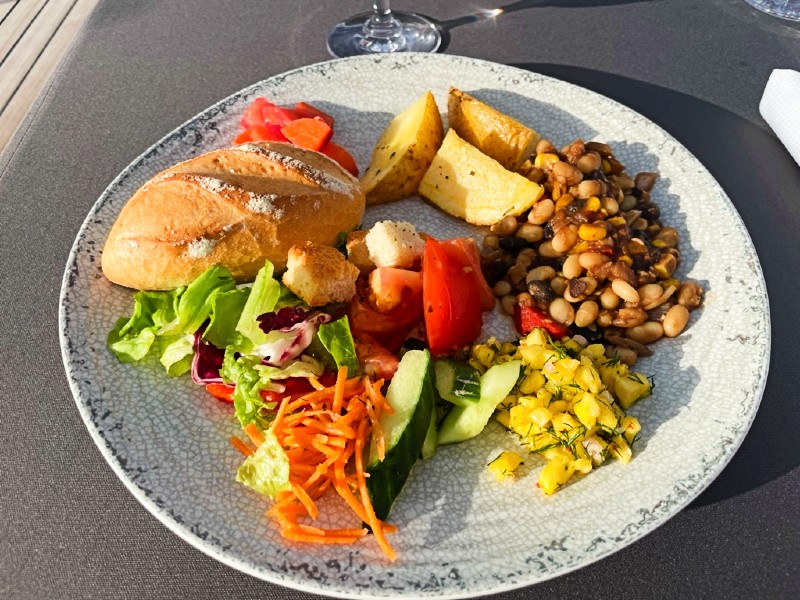
As a vegan, I rarely find a cruise ship where I can’t enjoy good variety. Some are definitely better than others though!
Read more: The Best & Worst Cruises For Vegans (I Tested 18 Cruise Lines)
9. “Free” Food Isn’t Really Free
It might feel like everything’s included, but of course, the cost of food is built into your cruise fare.
Cruise lines have to balance quality with cost, and part of that strategy is offering specialty restaurants for an extra charge.
That way, base prices stay competitive, while giving people the option to upgrade if they want something a bit different.
You’ll also notice smaller upsells here and there – drinks, premium items, that sort of thing. Nothing too pushy, but it’s definitely part of the bigger picture.
10. Specialty Restaurants Are Where Things Get More Interesting
If the main dining room is about consistency, specialty restaurants are where cruise lines get a bit more creative.
That’s where you’ll find more unusual dishes, higher-end ingredients, and sometimes even menus designed by celebrity chefs.

Because you’re paying extra, these restaurants don’t have to appeal to everyone. That gives them more room to experiment.
If you want something that feels a bit less standard, this is usually where you’ll find it.
11. Not Everything Goes Straight in the Bin
There are strict rules around what can be reused, but not all leftovers are automatically thrown away.
Ships have systems in place to deal with food waste properly – whether that’s processing it onboard or offloading it in port under strict regulations.
You’d be surprised at how sophisticated some of the modern systems are – dehydrating the remains, turning huge volumes into much smaller amounts of waste product. It’s all very clever.
It’s not something you’ll notice as a guest, but it’s a big part of how modern cruise ships operate.
Read more: What Cruise Ships Really Do With All That Sewage
12. Ingredients Come From All Over the World
To keep menus consistent, cruise lines rely on a global supply chain.
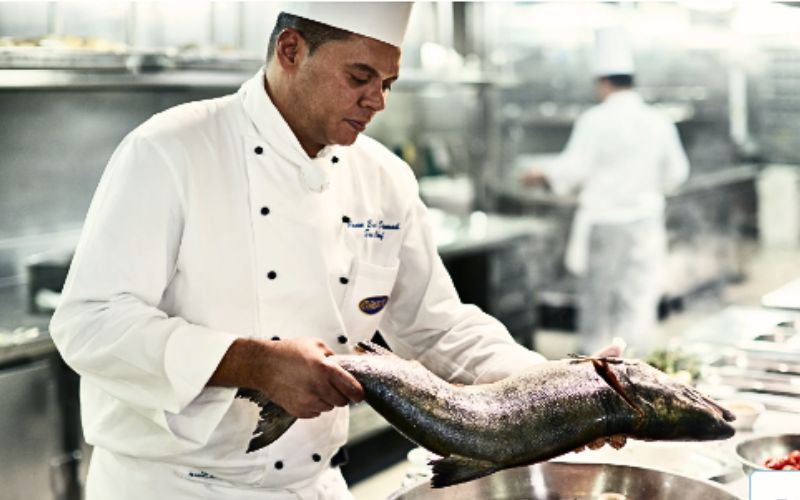
Different ingredients are loaded at different ports, depending on availability and regulations. Fresh produce might come onboard in one destination, while frozen or dry goods are stocked somewhere else.
It takes a lot of coordination, but it’s what allows ships to serve similar dishes no matter where you are in the world.
13. The Best Food Isn’t Always Where You Expect
It’s easy to stick to the main dining room or buffet, but some of the best food onboard is often in smaller, quieter spots.
Cafés, poolside grills, little grab-and-go places – they don’t always get as much attention, but they can be surprisingly good.
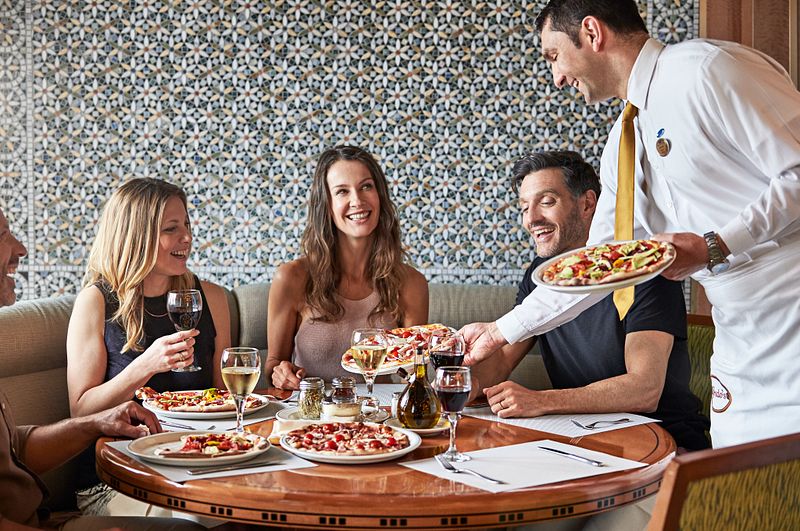
They tend to have simpler menus, but they do those few things really well. And because they’re less crowded, the whole experience feels more relaxed.
It’s worth exploring early on. You might find your favourite meal ends up being somewhere you nearly walked straight past.
TODAY’S BEST CRUISE DEALS!
Don’t miss these offers…
Final Word
Cruise food might feel effortless when you’re piling your plate high or ordering a second dessert, but there’s a huge amount going on behind the scenes to make it all work.
From careful planning and waste control to clever design choices and hidden upsells, it’s a system built to keep things running smoothly while still feeling indulgent.
The good news is you don’t need to think about any of that while you’re onboard – but knowing a few of these details might just help you make the most of it.
