Carnival Cruise Line has introduced a new system that allows crew members to identify passengers who have prepaid their gratuities, prompting criticism from guests who believe their tipping arrangements should remain private.
The cruise line has begun placing stickers on passengers’ Sail & Sign cards displaying the message “Crew love” alongside “I pre-paid my gratuities”.
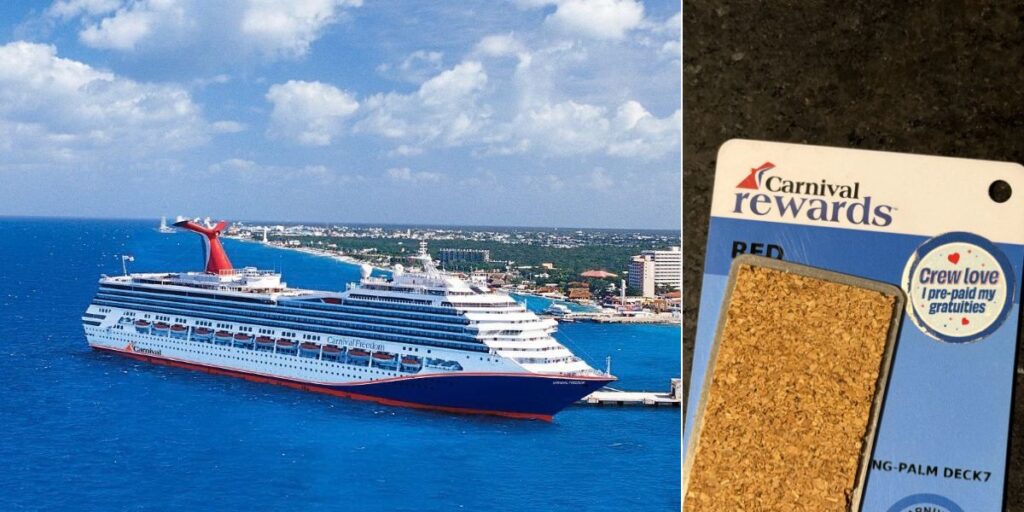
The initiative has been confirmed as part of a wider pilot programme, with Carnival explaining that it is intended to recognise passengers who pay gratuities before boarding.
However, the decision has divided cruisers, with some describing the stickers as unnecessary and others questioning whether they could influence how passengers are treated on board.
Carnival has insisted that all guests receive the same standard of service, regardless of when they pay their gratuities.
Carnival Explains Why It Is Introducing The Stickers
The stickers first attracted attention when passengers began sharing photographs and videos of their cruise cards on social media.
One guest sailing aboard Carnival Panorama in October 2026 displayed a light blue circular sticker attached to their card, featuring the gratuities message surrounded by decorative hearts and dots.
Similar stickers have also been reported aboard Carnival Sunrise, suggesting that the trial is already operating on multiple vessels.
Passengers who have prepaid their gratuities are also receiving thank-you notes in their staterooms, acknowledging their contribution towards crew members.
Carnival has since confirmed that both measures form part of an initiative currently being evaluated.
In a statement, the cruise line explained that its gratuity programme supports employees working directly with passengers as well as those performing essential duties behind the scenes.

It added that the stickers and notes are designed to provide recognition for passengers who pay in advance, while helping employees identify those guests.
Carnival also confirmed that the initiative is part of a broader pilot and that passenger feedback will be considered as the programme develops.
Cruise line Brand Ambassador John Heald separately confirmed the authenticity of the stickers after passengers questioned whether photographs circulating online were genuine.
Cruise influencer Alex Roberson contacted Heald after initially expressing doubts about the images, later confirming on 28th October that the stickers were legitimate.
Although Carnival has acknowledged the trial, it has not announced how many vessels are participating or whether the stickers will eventually be introduced across its entire fleet.
There has also been no indication of what other measures might form part of the wider pilot programme.
Passengers Question Whether The Stickers Are Necessary
The introduction of the labels has prompted considerable discussion among Carnival passengers, particularly those who believe gratuity payments should remain a private matter.
One of the main concerns is that the stickers visibly distinguish passengers who have paid in advance from those who have chosen to settle their gratuities during the cruise.
However, passengers without a sticker have not necessarily declined to pay.
Carnival allows guests to prepay their gratuities before departure or have the charges automatically added to their onboard accounts.
Both options contribute towards the same gratuity programme, meaning the absence of a sticker does not establish whether a passenger intends to pay.
This distinction has featured prominently in the criticism, with one passenger arguing that guests should not be judged for leaving the charges until the end of their sailing.
Others raised concerns about whether displaying gratuity information could create different expectations among crew members.
On social media, some passengers questioned whether those with stickers might receive preferential treatment, despite Carnival’s assurances that service standards will remain consistent.
One Cruise Critic forum member suggested that crew members could potentially access gratuity information electronically when scanning a passenger’s card, questioning the need for a physical label.
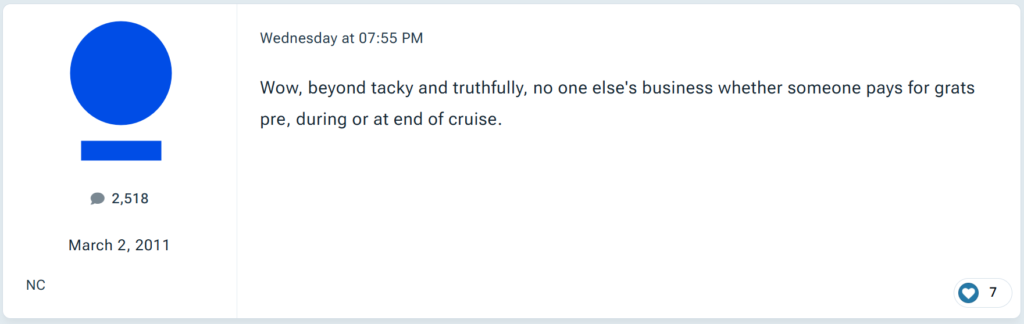
Another member described the practice as an intrusion into passengers’ financial decisions.
Not everyone has objected to the change, however.
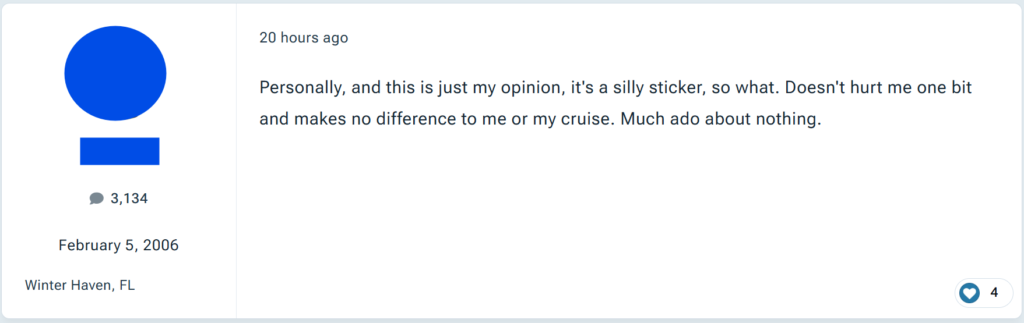
But some passengers have said it has not affected their experience or tipping habits.
Other passengers have suggested that those who dislike the labels could simply remove them from their cards.
The debate has nevertheless highlighted the sensitivity surrounding gratuities, particularly when passengers feel their payment choices are being displayed publicly.
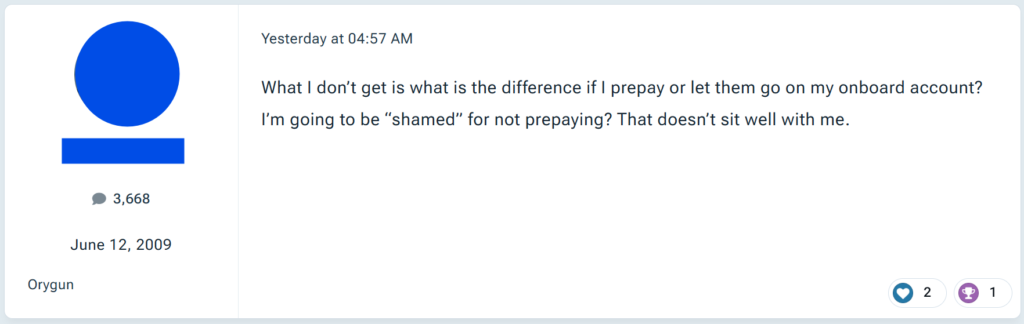
Carnival has not suggested that passengers without stickers should be treated differently, nor has it announced any changes to the gratuity system itself.
How Carnival’s Gratuity System Works
Carnival currently recommends daily gratuities of $17 per person for passengers staying in standard staterooms and $19 per person for those booked into suites.
The charges apply to guests aged two and older and are distributed among eligible crew members, including stateroom attendants, dining staff and employees working behind the scenes.
For a seven-night cruise, the recommended gratuity total for two adults sharing a standard stateroom is $238.
The equivalent charge for two adults staying in a suite is $266.
Passengers can arrange to pay these amounts before their sailing, allowing them to include gratuities in their holiday budget.
Alternatively, the recommended daily charges can be added automatically to their Sail & Sign accounts during the voyage.
Carnival increased its recommended gratuity rates in April 2026, but the introduction of the stickers has not been accompanied by a further increase.

The cruise line’s current published gratuity guidance explains the available payment arrangements without referring to the new labels.
It also no longer explicitly mentions passengers’ ability to adjust gratuities during their cruise, although this omission does not establish that the option has been withdrawn.
For now, Carnival is treating the stickers as an experimental addition rather than a confirmed fleet-wide policy.
The company has not provided a timetable for completing the trial or deciding whether to retain the system.
With passenger responses ranging from indifference to strong opposition, the outcome could depend on whether Carnival considers the additional recognition worthwhile alongside the concerns being raised about privacy and fairness.
NEW DEALS JUST RELEASED!
See the latest Carnival cruise offers…