Carnival Cruise Line has escalated its enforcement of mobility scooter policies, sending detailed pre-cruise warnings to passengers that non-compliant equipment will result in denied boarding with no compensation offered.
The cruise line is issuing these reminders approximately two weeks before embarkation to give travellers time to make alternative arrangements.
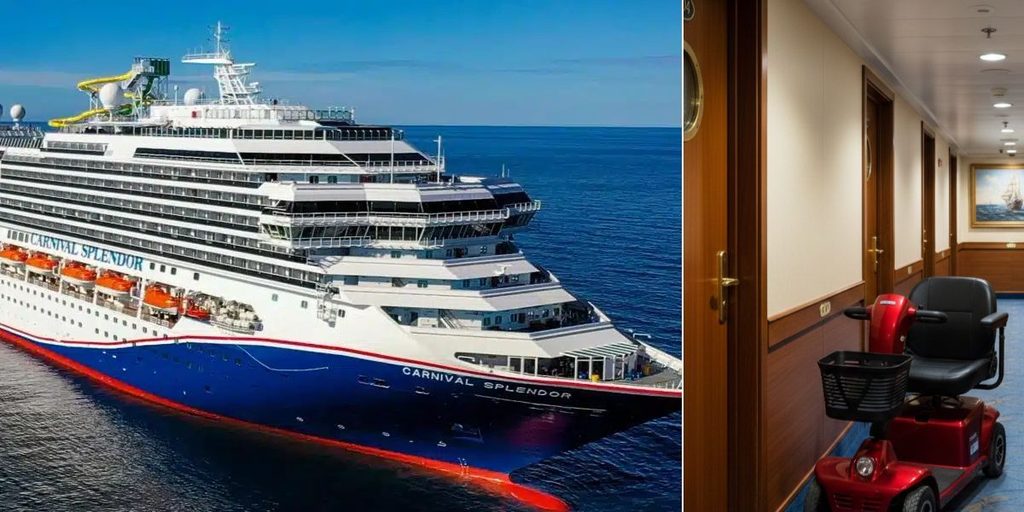
Guests booked on Carnival Radiance’s 14th November 2026 departure from Long Beach received comprehensive emails outlining the cruise line’s mandatory scooter storage requirements. The sailing, a 14-night Carnival Journeys voyage to Hawaii, serves as an example of the line’s intensified communication efforts, though the policies apply across all Carnival sailings regardless of duration.
The timing of these notifications – roughly two weeks prior to embarkation – provides a critical window for passengers to assess whether their mobility equipment meets Carnival’s specifications. This advance notice allows guests to arrange rentals of compliant scooters or consider alternative mobility solutions before arriving at the terminal.
The pre-cruise email opens with a clear warning directed specifically at scooter users, noting that the message contains important information about mandatory safe storage policies aboard the vessel. The communication emphasises that all content should be read thoroughly to avoid any misunderstandings during the boarding process.
Strict Size Requirements and Accessibility Room Mandates
Carnival’s scooter policy centres on specific dimensional requirements that directly impact which staterooms guests must book. Standard staterooms can accommodate a single mobility scooter measuring 21 inches in width or less, a specification that excludes many larger mobility devices commonly used by passengers with significant mobility challenges.
Guests whose scooters exceed the 21-inch width threshold face a mandatory requirement to book a fully accessible stateroom. These cabin categories feature additional space and modified layouts designed to accommodate larger mobility equipment, but they represent a limited inventory on each vessel and often command premium pricing.
The policy becomes even more restrictive for guests travelling together who both require mobility scooters. In such cases, booking a fully accessible stateroom is mandatory regardless of the individual scooter dimensions. This requirement addresses spatial constraints and safety considerations when multiple mobility devices must be stored within a single accommodation.
At check-in, all scooters undergo mandatory sizing verification by terminal staff. This inspection process determines whether the equipment will fit safely within the reserved stateroom category. Scooters that fail this assessment are prohibited from boarding entirely, with no exceptions granted regardless of the guest’s mobility needs or travel circumstances.
Denied Boarding Policy Carries Financial Consequences
The most significant aspect of Carnival’s updated communication strategy involves explicit warnings about the consequences of non-compliance. Passengers whose scooters do not meet dimensional requirements and who cannot arrange alternative mobility solutions on the spot will be denied boarding.
Carnival’s policy language makes clear that denied boarding under these circumstances carries no entitlement to compensation, refunds, or alternative accommodation. This places the financial risk entirely on the passenger, who stands to lose not only the cruise fare but also any associated travel expenses including flights, hotels, and pre-cruise arrangements.
The cruise line’s firm stance reflects the serious safety and operational challenges posed by oversized mobility equipment in the confined spaces of a cruise ship. Stateroom corridors, doorways, and cabin layouts have fixed dimensions that cannot accommodate equipment beyond certain specifications.
This policy represents a departure from the accommodation-focused approach many guests expect from cruise lines regarding accessibility needs. However, Carnival frames the requirements as non-negotiable safety measures rather than discretionary guidelines, removing any ambiguity about enforcement.
Mandatory Registration Process for All Mobility Devices
Beyond dimensional compliance, Carnival requires advance registration of all mobility devices through an online form available on the cruise line’s website. This Mobility Devices Form collects detailed information that helps the cruise line prepare for guests with accessibility requirements.
The registration process requests specifics about the type of device being brought aboard, whether a scooter, wheelchair, or other mobility aid. Guests must disclose their mobility level, providing the cruise line with information about their ability to transfer from the device, navigate stairs in emergency situations, and move about the ship independently.
Power source information is particularly critical for battery-operated scooters, as cruise lines maintain strict policies regarding lithium-ion batteries and charging procedures. The form captures details about battery type, wattage, and charging requirements to ensure compliance with maritime safety regulations.
The registration also cross-references the guest’s stateroom category, flagging potential issues before embarkation if a standard cabin has been booked but the mobility device requires accessible accommodation. This advance screening theoretically prevents surprises at check-in, though the pre-cruise emails suggest gaps remain in ensuring all guests understand the requirements.
Storage Requirements Prohibit Corridor and Public Area Placement
Carnival’s email explicitly prohibits the storage of mobility scooters in any location outside the guest’s assigned stateroom. Hallway placement, even temporarily, violates fire safety codes and maritime regulations governing emergency evacuation routes.
Public areas including dining venues, theatres, and pool decks cannot serve as storage locations for unattended scooters. This policy addresses both safety concerns and guest experience issues, as improperly parked mobility devices can obstruct pathways and create hazards for other passengers.
The restriction extends to balconies on accommodation featuring outdoor space. Though technically part of the stateroom, balconies present weather exposure risks to electronic components and potential hazards if devices shift during rough seas.
Guests must physically manoeuvre their scooters into their staterooms and ensure the devices can be stored without blocking emergency exits or safety equipment within the cabin. This requirement can prove challenging in standard staterooms, which is precisely why Carnival mandates accessible accommodation for larger equipment.
The cruise line’s emphasis on these storage requirements reflects lessons learned from past incidents where improperly stored mobility devices contributed to evacuation delays, blocked emergency routes, or created fire hazards through improper charging practices.
Longstanding Tensions Over Mobility Equipment Usage
Mobility scooters have generated ongoing friction aboard Carnival vessels, with disputes arising over proper usage etiquette, elevator access, and operational practices in public spaces. The devices, whilst essential for guests with mobility limitations, can create congestion in narrow corridors and queues for lifts during peak periods.
Elevator etiquette has emerged as a particular flashpoint, with scooter users sometimes monopolising lift capacity whilst ambulatory guests wait through multiple cycles. Carnival has implemented guidelines suggesting scooter users wait for less crowded periods when possible, though enforcement remains challenging.
Safe driving practices represent another concern, with reports of scooters operated at excessive speeds in crowded areas or without due regard for pedestrian traffic. Some guests have reported near-collisions or actual contact incidents involving mobility scooters, prompting complaints and safety discussions.
These operational challenges contributed to Carnival’s decision to strengthen pre-cruise communications and enforcement of existing policies. By setting clear expectations before embarkation, the cruise line aims to reduce onboard conflicts and ensure all guests understand their responsibilities regarding mobility equipment.
Tender Operations and Assistance Limitations

A September 2025 incident highlighted the limitations of assistance crew members can provide regarding mobility scooters during tender operations. A guest cruising to Belize complained when crew refused to carry their scooter onto a tender boat whilst they remained seated on the device.
Carnival Brand Ambassador John Heald addressed the complaint directly, clarifying that crew members can indeed assist with transporting mobility scooters onto tender vessels. However, safety protocols prohibit carrying scooters with guests seated on them, requiring passengers to transfer to seating before the equipment is moved.
This policy reflects both crew safety considerations and passenger wellbeing concerns. Carrying a scooter with an occupied seat increases weight substantially and creates balance challenges that could result in falls or injuries. The uneven surfaces and movements involved in tender boarding make such transfers particularly hazardous.
Guests requiring tender transport at ports lacking dock facilities must be able to transfer from their mobility devices to tender seating. Those unable to make such transfers may find themselves unable to participate in certain port calls, a limitation that underscores the importance of accurately assessing mobility capabilities during the booking process.
Abandoned Equipment and Early Disembarkation Policies
Carnival’s pre-cruise email includes an unusual provision addressing scenarios where guests disembark early and leave mobility equipment behind. The policy places full responsibility on the guest for arranging and funding the return shipment of any scooter or mobility device left aboard the vessel.
Whilst not explicitly stated, this policy most likely addresses medical evacuation situations. When emergency personnel airlift a guest from a cruise ship due to serious illness or injury, they transport only the patient – luggage, mobility devices, and personal belongings remain aboard for later retrieval.
Under Carnival’s policy, guests medically evacuated would need to coordinate the return of their mobility equipment, potentially whilst dealing with health crises and hospitalisation in foreign locations. The policy transfers logistical and financial responsibility to the passenger rather than the cruise line handling such arrangements.
The same provisions would apply if guests miss the ship at a port of call and must make alternative arrangements to return home. In such cases, their mobility scooter continues to the next port aboard Carnival Radiance, requiring the guest to coordinate retrieval or shipment, often across international borders.
This policy component highlights the complex practical considerations surrounding mobility equipment at sea. Unlike checked luggage at airports, cruise ship storage and forwarding of large equipment presents significant operational challenges that Carnival has chosen to address through passenger responsibility clauses.
NEW DEALS JUST RELEASED!
See the latest Carnival cruise offers…