Carnival Cruise Line has confirmed that passengers aboard six vessels departing between 8th and 12th October 2026 will participate in mandatory, full in-person safety drills rather than the line’s standard electronic muster process.
The affected sailings span itineraries ranging from seven to sixteen nights across multiple homeports.
Carnival Cruise Line maintains a rigorous safety protocol requiring each vessel in its fleet to conduct comprehensive, in-person muster drills twice annually.
This requirement ensures compliance with both governmental and international maritime safety regulations, including standards set by the International Maritime Organization’s Safety of Life at Sea (SOLAS) convention.
The cruise line’s brand ambassador, John Heald, has repeatedly emphasised that these full drills occur regardless of where ships are homeported.
Unlike the streamlined electronic muster system used for the majority of sailings throughout the year, these traditional drills require all passengers to physically gather at designated assembly stations whilst crew members verify attendance and demonstrate proper safety procedures.
This biannual practice has become standard across the industry, though Carnival has been transparent about when and where these drills will occur. Passengers receive advance notification to ensure they understand the process and can plan accordingly on embarkation day.
Six Vessels Conducting October Drills Across Global Itineraries
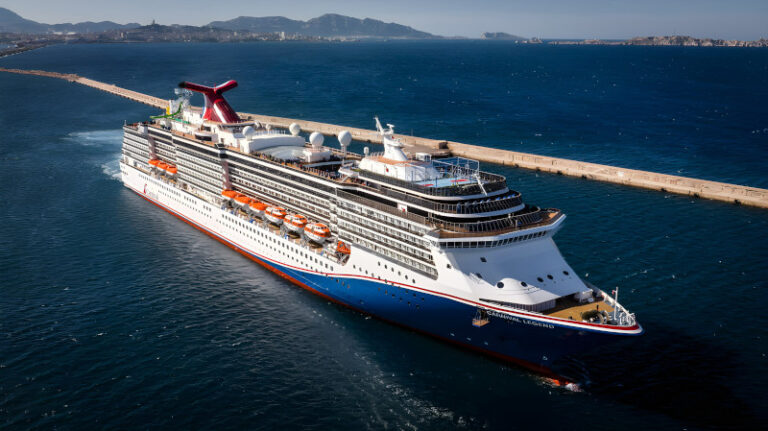
The vessels conducting full safety briefings during the October window represent a cross-section of Carnival’s fleet, operating diverse itineraries from North America, Europe, and Asia.
Carnival Spirit will undertake a 16-night repositioning voyage departing 8th October 2026 from Seattle to Mobile, Alabama, transiting the Panama Canal with calls at Cabo San Lucas, Puntarenas, and Cartagena.
Carnival Luminosa follows on 9th October with a 14-night one-way cruise from Tokyo to Singapore, visiting ports across Japan, South Korea, Taiwan, China, and Vietnam.
This sailing represents the vessel’s seasonal repositioning between Asian markets.
On 11th October, two ships will simultaneously conduct full drills. Carnival Legend embarks on a 12-night Eastern Mediterranean roundtrip voyage from Civitavecchia (Rome), calling at ports throughout Turkey, Greece, and Italy.
Meanwhile, Carnival Radiance departs Long Beach for a 14-night roundtrip Hawaii itinerary, visiting Kahului, Honolulu, Nawiliwili, Hilo, and Ensenada.
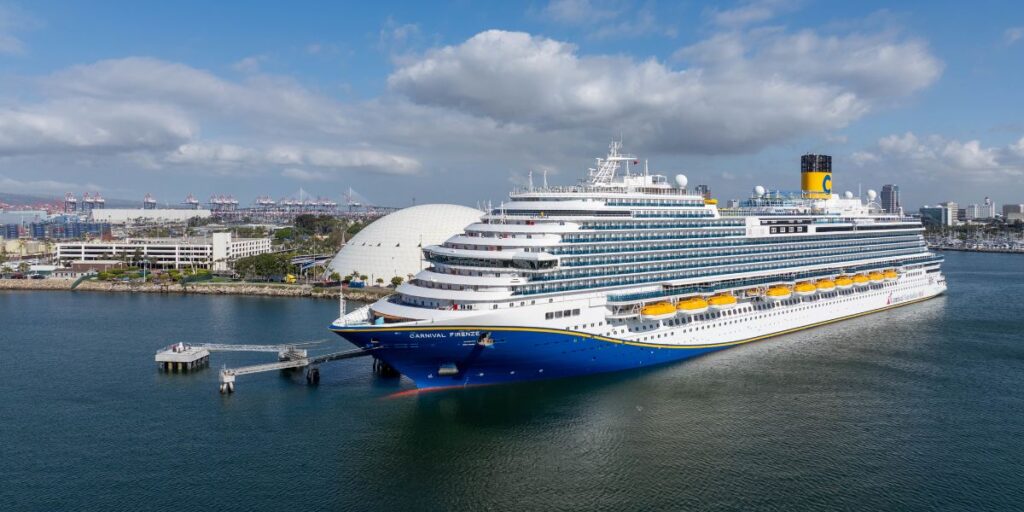
The final two affected sailings depart 12th October. Carnival Firenze will operate a seven-night adults-only Serenity at Sea (SEA) cruise along the Mexican Riviera from Long Beach, visiting Mazatlán, Cabo San Lucas, and Ensenada.
Carnival Miracle rounds out the group with a 10-night roundtrip Western Caribbean voyage from Galveston, featuring calls at Grand Cayman, Jamaica, Honduras, Belize, and Cozumel.
What Passengers Can Expect During In-Person Drills
Guests on affected sailings will experience a significantly different embarkation process compared to the electronic muster system now standard across the fleet.
Shortly before departure, ship-wide public address announcements will direct all passengers to their assigned muster stations, locations designated based on cabin placement.
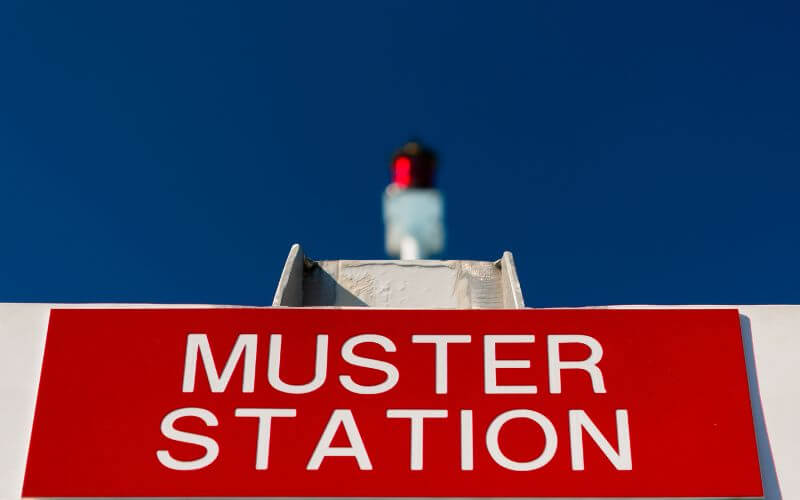
Crew members stationed at each assembly point will verify attendance by scanning passengers’ Sail and Sign cards, ensuring complete participation as required by maritime law.
The drill includes demonstrations of proper life jacket donning techniques, with crew members available to assist passengers and answer questions about emergency procedures.
Young cruisers receive special attention during the process, with crew members distributing wristbands that clearly identify their designated muster stations.
This ensures children can be quickly located and accounted for in the unlikely event of an actual emergency.
The drill culminates with the ship’s official emergency alert signal – seven short blasts followed by one long blast – familiarising passengers with the sound they would hear if evacuation procedures were ever necessary.
The entire process typically takes between 30 and 45 minutes, after which normal embarkation activities resume.
Temporary Service Interruptions During Safety Briefings
During the mandatory safety drill, Carnival temporarily suspends food and beverage service throughout the vessel.
Bars, buffets, restaurants, and other dining venues close their operations to ensure all crew members can focus on the safety exercise and all passengers can participate without distraction.
This represents a notable difference from the electronic muster system, which allows passengers to complete their safety briefing at their convenience during a designated time window whilst still enjoying ship amenities.
The streamlined e-muster process has proven popular since its widespread adoption, as it reduces congestion and allows guests to begin their holidays with minimal interruption.
However, the temporary service closure during full drills is considered essential to achieving complete participation.
Maritime regulations require that all persons aboard – both passengers and crew – understand emergency procedures before the vessel departs port.
Cruise veterans understand and accept these interruptions as a necessary component of maritime safety, though first-time cruisers may find the process more intrusive than expected.
Carnival’s advance notification helps manage expectations and ensures passengers aren’t surprised by the closure of their favourite embarkation day venue.
Electronic Muster System Remains Standard Protocol
Despite these October exceptions, Carnival’s electronic muster system – often called “e-muster” – will continue as the standard safety briefing format for all other sailings.
This technology-driven approach revolutionised the cruise industry’s safety procedures when it gained widespread adoption following the pandemic restart.
The e-muster system allows passengers to complete much of their safety briefing through the Carnival Hub app before physically visiting their assigned assembly station.
Guests watch instructional videos covering emergency procedures, life jacket usage, and evacuation protocols at their convenience, then proceed to their muster station for a brief verification and final instructions.
This hybrid approach significantly reduces the time passengers spend at assembly stations, typically cutting the process from 30-45 minutes down to approximately 15 minutes.
It also eliminates the crowding issues that plagued traditional drills, particularly on larger vessels where thousands of passengers simultaneously converged on assembly areas.
The system has received overwhelmingly positive feedback from passengers who appreciate the flexibility and efficiency.
Industry observers note that electronic mustering has become a competitive advantage for cruise lines that implement it well, as it demonstrably improves the embarkation experience without compromising safety standards.
Carnival has confirmed that only the six specifically identified October sailings will deviate from this electronic protocol, with all other departures continuing to use the streamlined system that has become familiar to regular cruisers.
Advance Notification Helps Passengers Prepare
Carnival sends email notifications to booked passengers shortly before their embarkation dates, providing advance warning about the full drill requirement.
These communications emphasise the cruise line’s commitment to safety whilst explaining what guests should expect during the embarkation process.
“The safety of everyone on board is always our priority, and we are dedicated to maintaining responsible and secure operations,” the notification explains.
“As part of this commitment to this key Carnival value, a safety briefing will be conducted ahead of every sailing.”
The email continues: “Shortly before departure, a full safety drill will take place on your upcoming sailing. This is a mandatory procedure, and all guests will be required to participate in this brief but essential exercise.”
This transparency represents a customer service best practice that helps manage expectations and reduces confusion on embarkation day.
Passengers who might otherwise plan to immediately visit the lido deck buffet or grab poolside cocktails can instead adjust their schedules to accommodate the mandatory drill.
The advance notification also provides an opportunity for passengers with mobility concerns or other special needs to contact Carnival’s access and compliance department.
Crew members make special accommodations when necessary to ensure all guests can safely participate in the drill regardless of physical limitations.
Exceptional Circumstances May Alter Drill Schedule
Whilst the notifications inform passengers that full drills will occur on their specific sailings, Carnival acknowledges that exceptional circumstances might occasionally necessitate cancellation or postponement.
These situations are rare but can include severe weather conditions during embarkation, port-related delays, or other operational considerations.
If such circumstances arise, the cruise line maintains the flexibility to revert to the electronic muster system or reschedule the full drill to an alternative time during the voyage.
This operational flexibility ensures that safety requirements are met without compromising passenger experience or vessel schedules when unforeseen challenges emerge.
Passengers affected by any such changes would receive updated instructions through cabin announcements, the Carnival Hub app, or direct communication from guest services.
The cruise line’s priority remains ensuring all safety requirements are fulfilled whilst maintaining the smooth operation of its vessels.
Maritime safety experts note that this flexibility, whilst practical, is exercised sparingly.
The biannual full drill schedule is carefully planned around seasonal repositioning periods and other operational considerations to minimise disruption whilst meeting regulatory obligations.
Industry Context And Safety Culture Evolution

Carnival’s approach to muster drills reflects the broader cruise industry’s evolution in safety culture over recent decades.
Traditional in-person drills were once the only option, often conducted after vessels departed port, creating logistical challenges and passenger frustration.
The tragic 2012 Costa Concordia disaster – involving a Carnival Corporation sister brand – highlighted the critical importance of effective safety procedures and prompted industry-wide reviews of muster drill protocols.
Subsequent regulatory changes strengthened requirements whilst allowing technological innovations like electronic mustering systems.
Today’s cruise industry maintains some of the most rigorous safety standards of any transportation sector, with multiple redundant systems and constant training ensuring crew preparedness.
The biannual full drill requirement represents just one component of a comprehensive safety management system that includes regular crew training, equipment inspections, and emergency response simulations.
Carnival Cruise Line operates the world’s largest cruise fleet with 27 vessels serving destinations worldwide.
The brand has built its reputation on delivering fun, affordable cruises whilst maintaining strict safety protocols across all operations.
This commitment to safety – even when it requires temporary inconvenience for passengers – reflects the cruise line’s recognition that passenger confidence depends on demonstrable safety competence.
For the hundreds of thousands of annual Carnival passengers, the twice-yearly full muster drills on specific sailings represent a minor adjustment to embarkation routines.
Most cruisers understand and appreciate that these procedures exist to protect everyone aboard, making the brief interruption a worthwhile investment in their safety and security throughout the voyage.
NEW DEALS JUST RELEASED!
See the latest Carnival cruise offers…