Virgin Voyages’ Scarlet Lady broke free from its moorings in Rhodes on Wednesday, 30th September 2026, striking three smaller vessels during severe weather conditions. The incident occurred as heavy swells and strong waves battered the Greek port, causing the 110,000-tonne ship to drift away from the dock despite being secured with mooring lines.
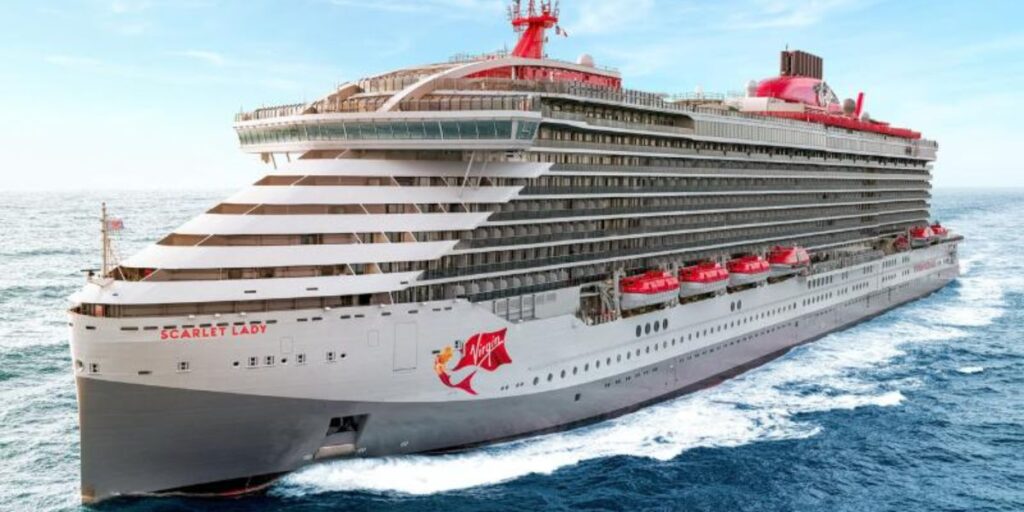
The incident unfolded whilst Scarlet Lady remained berthed at Rhodes port later than originally scheduled, following weather-related itinerary alterations that had already disrupted the vessel’s planned sailing. Strong Mediterranean weather systems created conditions that proved too powerful for the ship’s mooring configuration, leading to the unexpected contact with smaller craft in the harbour.
Virgin Voyages confirmed that no injuries were reported amongst passengers, crew members, or individuals on the affected boats. The ship’s command team was able to regain control of the vessel using its own propulsion systems, successfully repositioning Scarlet Lady without requiring external assistance from tugboats or port authorities.
The incident serves as a reminder of the challenges cruise ships face when severe weather impacts Mediterranean ports, particularly during the autumn season when weather patterns become increasingly unpredictable. Rhodes, whilst a popular cruise destination, can experience sudden changes in sea conditions that affect vessel operations.
Έσπασαν οι κάβοι στο κρουαζιερόπλοιο και χτύπησε σκάφος στο λιμάνι της Ρόδου
— Αντώνης Νταλακογεώργος (@Adalakogeorgos) October 1, 2026
Δείτε βίντεο
Μεγάλη κινητοποίηση σημειώθηκε το βράδυ της 30ής Σεπτεμβρίου 2026 στο κεντρικό λιμάνι της Ρόδου, όταν έσπασαν οι κάβοι πρόσδεσης του πολυτελούς κρουαζιερόπλοιου «Scarlet Lady», με… pic.twitter.com/WEdxPugDUO
Weather Disruption Forces Itinerary Changes
The circumstances leading to the incident began earlier in the day when Virgin Voyages made the operational decision to cancel a scheduled call at Mykonos due to high winds affecting the Aegean Sea. This weather-related modification to the planned itinerary resulted in Scarlet Lady remaining at Rhodes for an extended period beyond its original departure time.
Mediterranean cruise itineraries frequently require adjustments during late September and early October, as the region transitions from summer conditions to more volatile autumn weather patterns. Cruise lines must balance passenger experience with safety considerations, often opting to skip ports when conditions could compromise safe tendering operations or create hazardous docking situations.
The decision to remain in Rhodes rather than attempt the crossing to Mykonos reflected standard maritime safety protocols. High winds in the Aegean can create dangerous conditions for cruise ships, particularly when attempting to anchor in exposed locations that require tender operations to bring passengers ashore.
However, the extended stay in Rhodes ultimately created its own complications when deteriorating local conditions exceeded the holding capacity of the ship’s mooring arrangement. Such scenarios highlight the difficult calculations cruise operators must make when managing itineraries in challenging weather.
No Damage Reported To Scarlet Lady
Following the incident, Virgin Voyages confirmed that Scarlet Lady sustained no structural damage despite making contact with three smaller boats. Maritime authorities were notified immediately, as required by port regulations and international maritime protocols governing vessel incidents.
The condition of the three smaller vessels that were struck has not been detailed in official reports. Typically, such contacts between large cruise ships and smaller craft can result in varying degrees of damage depending on the angle and force of impact, though the specific circumstances of this incident appear to have resulted in a relatively minor outcome.
Port authorities in Rhodes would have conducted standard assessments following the incident to determine whether any environmental concerns arose and to evaluate the seaworthiness of all vessels involved. The fact that Scarlet Lady was able to continue operating suggests the impacts were glancing rather than substantial collisions.
Modern cruise ships are built with robust hull construction designed to withstand considerable forces, including the stresses of docking operations and occasional contact with port infrastructure. The vessel’s ability to reposition itself under its own power indicated that propulsion systems, steering mechanisms, and other critical operational systems remained fully functional.
About Scarlet Lady And Virgin Voyages
Scarlet Lady serves as the inaugural vessel in Virgin Voyages’ fleet, having been delivered from Fincantieri’s Italian shipyard in February 2020. The ship represents Richard Branson’s entry into the cruise industry, bringing the Virgin brand’s distinctive approach to sea-based holidays with an adults-only concept targeting travellers aged 18 and over.
The vessel measures 278 metres in length and accommodates approximately 2,770 passengers based on double occupancy, with capacity for up to 1,160 crew members. This passenger-to-crew ratio of roughly 2.4 to 1 enables Virgin Voyages to deliver its promised high service levels and personalised guest experience.
Scarlet Lady features design elements that distinguish it from traditional cruise ships, including over 20 dining venues with no additional charges, a tattoo studio, vinyl record shop, and numerous entertainment spaces. The ship’s aesthetic incorporates contemporary design by some of the world’s leading creatives, creating spaces that appeal to younger cruisers and those seeking alternatives to conventional cruise experiences.
Virgin Voyages has since expanded its fleet with sister ships Valiant Lady, Resilient Lady, and Brilliant Lady, all sharing similar specifications and design philosophies. The brand positions itself as a disruptor in the cruise industry, eliminating traditions such as formal nights, buffets, and cruise directors whilst introducing inclusive pricing that covers dining, basic beverages, gratuities, and WiFi.
Mediterranean Operations And Seasonal Challenges
The incident occurred during Scarlet Lady’s Mediterranean deployment, a popular seasonal positioning for many cruise vessels during the spring through autumn months. The Mediterranean represents one of the world’s most significant cruise markets, attracting millions of passengers annually to destinations spanning Southern Europe, the Greek Islands, and the Eastern Mediterranean.
Rhodes serves as a major port of call for cruise ships visiting the Dodecanese Islands, offering passengers access to medieval old town attractions, ancient archaeological sites, and beautiful beaches. The island’s strategic location makes it a natural inclusion on many Eastern Mediterranean itineraries, though its exposed harbour can present challenges during adverse weather.
September typically marks the shoulder season for Mediterranean cruising, with weather generally remaining favourable though less predictable than peak summer months. As October approaches, cruise lines begin repositioning vessels towards winter deployment areas, including the Caribbean, Central America, and other warm-weather destinations.
The timing of this incident coincides with a period when Mediterranean weather patterns become more variable, with increased potential for strong winds, heavy swells, and storm systems moving through the region. Cruise operators must remain vigilant during these transitional periods, often making last-minute itinerary adjustments to ensure passenger safety and operational reliability.
Safety Protocols And Passenger Communication
Following the incident, Virgin Voyages would have implemented standard passenger communication protocols to inform guests about what had occurred and provide reassurance about the ship’s condition and continued operations. Transparency during such events helps maintain passenger confidence whilst demonstrating the cruise line’s commitment to safety.
Modern cruise operations include comprehensive safety management systems that govern responses to incidents ranging from minor technical issues to more significant events. These protocols ensure appropriate authorities receive notification, documentation processes capture relevant information, and internal reviews identify any lessons that could prevent future occurrences.
The absence of injuries represents the most important outcome from any maritime incident. Virgin Voyages’ crew training programmes would have prepared team members to respond appropriately during the mooring failure, ensuring passenger safety remained the paramount concern throughout the event.
Cruise lines maintain detailed contingency plans for various scenarios that could affect operations, including weather-related disruptions, mechanical issues, and port-related incidents. These frameworks enable quick decision-making whilst maintaining consistency with corporate policies and regulatory requirements.
Industry Context For Mooring Incidents
Whilst relatively uncommon, incidents involving cruise ships breaking free from moorings do occur periodically across the industry, typically during severe weather conditions that exceed the holding capacity of mooring arrangements. Similar events have affected vessels from various cruise lines in ports worldwide, particularly in locations exposed to sudden weather changes.
Modern cruise ships carry sophisticated positioning systems and powerful propulsion units that enable them to maintain position even when mooring lines fail, reducing the risk of uncontrolled drift. Bridge teams receive extensive training in emergency manoeuvring procedures, preparing them to respond quickly when unexpected situations develop.
Port infrastructure varies considerably across different destinations, with some locations offering more robust mooring arrangements than others. Older ports not originally designed for today’s larger cruise vessels sometimes struggle to provide adequate securing capacity, particularly when weather conditions deteriorate rapidly.
The incident highlights ongoing discussions within the maritime industry about infrastructure requirements as ships continue to grow in size and passenger capacity. Ensuring ports can safely accommodate modern cruise vessels across various weather conditions remains a priority for destination authorities seeking to maintain their appeal to cruise lines.
Looking Ahead For Scarlet Lady Operations
Following the Rhodes incident, Scarlet Lady would have continued with its scheduled Mediterranean itinerary, subject to any further weather-related adjustments that might prove necessary. Virgin Voyages’ operational teams would have conducted thorough assessments to confirm the vessel’s readiness to proceed, ensuring no hidden damage or compromised systems could affect subsequent operations.
The cruise line’s reputation for transparency and modern communication approaches suggests passengers would have received detailed information about the incident and any implications for their voyage. Virgin Voyages has cultivated a loyal following amongst its target demographic, with many passengers appreciating the brand’s straightforward communication style and willingness to address issues directly.
As Mediterranean cruise operations continue through October before seasonal repositioning begins, cruise lines remain focused on delivering exceptional experiences whilst prioritising safety above all other considerations. Weather monitoring systems and improved forecasting capabilities enable better advance planning, though sudden deteriorations can still create challenging situations requiring rapid response.
The incident serves as a reminder that despite technological advances and sophisticated operational procedures, maritime travel remains subject to natural forces that can occasionally create unexpected situations. The professional response by Scarlet Lady’s crew and the absence of injuries demonstrate the effectiveness of modern safety systems and training programmes that prepare maritime professionals for such eventualities.
NEW DEALS JUST RELEASED!
Don’t miss the latest Virgin Voyages offers…