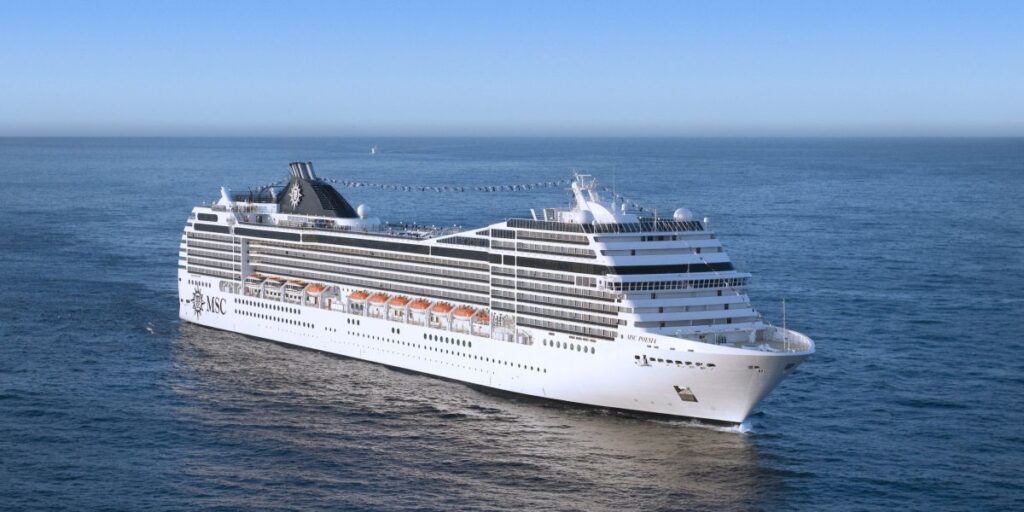
The U.S. Coast Guard has opened a criminal investigation into MSC Poesia following allegations the vessel illegally discharged oil at sea using an unauthorised “magic pipe” system.
The probe comes after the ship was detained in PortMiami for 11 days in November, resulting in the cancellation of a scheduled Caribbean voyage and leaving hundreds of passengers stranded.
Federal Authorities Examine Alleged Magic Pipe Installation
The U.S. Coast Guard is investigating whether MSC Poesia deliberately bypassed required filtration systems to discharge oily waste directly into the ocean, a serious federal environmental violation.
According to CBS News, a federal official with knowledge of the investigation has confirmed the criminal probe is underway, focusing on an alleged “magic pipe” – an illegal bypass mechanism designed to route waste streams around proper treatment equipment.
The investigation centres on claims that oil residue was being diverted into the ship’s grey water system, which operates under less stringent discharge standards than those required for oily bilge water.
Such a scheme would allow the vessel to dump untreated or inadequately treated oil waste at sea whilst appearing to comply with environmental regulations.
Understanding The Magic Pipe Scheme
A “magic pipe” is maritime industry slang for an illicit plumbing bypass that allows ships to discharge oily bilge water and other pollutants directly into the ocean without proper treatment.
These illegal installations typically route contaminated waste around the vessel’s required oil-water separator and monitoring equipment, leaving no record of the environmental violation.
The practice has been a persistent problem in the maritime industry for decades.
Ships generate oily waste from engine operations, and international law requires this bilge water to pass through specialised filtration equipment before discharge.
However, proper treatment is time-consuming and expensive, creating a financial incentive for unscrupulous operators to cut corners.
Magic pipe cases have resulted in numerous high-profile convictions and substantial penalties against cruise lines and cargo vessel operators over the past two decades.
The violations are taken seriously because they represent deliberate attempts to evade environmental protections and often involve falsifying official records.
Detention Disrupts MSC Poesia Caribbean Voyage
MSC Poesia was detained at PortMiami on Sunday, 1st November, following a Coast Guard Port State Control examination.
The inspection, which is routine for foreign-flagged vessels visiting U.S. ports, uncovered what officials described as “deficiencies with systems on board the vessel.”
Captain Frank Florio, Commander of U.S. Coast Guard Sector Miami, issued a statement at the time acknowledging the detention but declining to provide specifics.
“The Coast Guard cannot currently comment on the specifics of an ongoing Port State Control Examination, but we have identified deficiencies with systems on board the vessel that we are addressing with MSC,” he said.
The detention came just as MSC Poesia was preparing to embark passengers for an 11-night Southern and Western Caribbean voyage scheduled to depart that same day.
After holding the vessel for two days whilst attempting to resolve the identified issues, MSC Cruises made the decision to cancel the sailing entirely on 3rd November.
Passengers Left Stranded As Sailing Cancelled
The cancellation left hundreds of passengers who had arrived in Miami for the cruise scrambling to make alternative travel arrangements.
MSC Cruises allowed affected guests to remain aboard the ship until noon on Thursday, 5th November, whilst they reorganised their plans.
The cruise line offered what many industry observers considered a generous compensation package under the circumstances.
Passengers received a full refund of their cruise fare plus a 100 per cent future cruise credit – effectively doubling their money for a future sailing.
At the time of the cancellation, MSC Cruises characterised the detention as a “regulatory matter” requiring resolution.
“Prior to departure, a regulatory matter arose that required resolution. Despite our efforts to address the matter, we were unable to resolve it in time for the sailing to proceed,” the company stated on 3rd November.
The ship’s captain similarly downplayed the seriousness of the situation in communications with passengers, referring to it as a regulatory matter without elaborating on the nature of the Coast Guard’s concerns.
Vessel Released After Extended Inspection Period

MSC Poesia remained detained at PortMiami until Thursday, 12th November, when the Coast Guard finally cleared the vessel to resume operations.
The 11-day detention was significantly longer than typical Port State Control inspections, which usually conclude within hours or a few days at most.
Following her release, the ship immediately departed on a modified 10-night Caribbean itinerary.
The revised voyage included port calls to St. Thomas, St. Kitts, St. Maarten, Antigua, San Juan, and Puerto Plata, with a scheduled return to Miami on Sunday, 22nd November.
The extended detention and subsequent release suggest Coast Guard inspectors identified and required remediation of specific deficiencies before allowing the vessel to sail.
However, the release does not indicate that the criminal investigation has concluded – such probes typically continue for months or even years as investigators gather evidence and determine which parties may bear criminal liability.
Grey Water Versus Black Water Discharge Standards
Understanding the allegations against MSC Poesia requires familiarity with the different categories of wastewater generated aboard cruise ships and the varying regulations governing their disposal.
Grey water and black water are subject to distinctly different treatment requirements under U.S. and international environmental law.
Grey water originates from sources including sinks, showers, drinking fountains, spa and salon facilities, bars, restaurants, and the ship’s galley.
Whilst grey water contains some contaminants – including soaps, food particles, and cleaning products – it is considered less hazardous than sewage.
According to the U.S. Environmental Protection Agency Office of Wastewater Management, medium and large cruise ships carrying more than 100 passengers and crew must either treat grey water to specific discharge standards or store it until the vessel is at least three nautical miles from shore.
Kitchen and cooking oil residue must be minimised in grey water, and fuel oil should never be present in this waste stream.
Black water, by contrast, is water flushed from toilets and urinals.
Because it contains human waste classified as an environmental hazard, black water requires specialised treatment and rigorous filtration.
Solid material is typically dehydrated and disposed of on land at appropriate facilities rather than being discharged at sea.
Potential Criminal Liability And Financial Penalties
The criminal investigation could result in serious consequences for MSC Cruises and individual crew members aboard MSC Poesia.
Coast Guard investigators are working to determine who may have been involved with any alleged illegal discharge scheme, including crew members, ship management, the vessel’s owner, and anyone else directly complicit in environmental violations.
If criminal charges are filed and prosecutors secure convictions, the penalties could be substantial.
Previous magic pipe cases have resulted in fines exceeding tens of millions of dollars against cruise lines and cargo vessel operators.
Individual crew members found criminally liable have faced imprisonment, substantial personal fines, and prohibition from working aboard vessels calling at U.S. ports.
Beyond financial penalties, a conviction could damage MSC Cruises’ reputation and result in enhanced scrutiny from regulators.
Companies with records of environmental violations often face more frequent inspections, operational restrictions, and difficulty obtaining permits for new vessels or itineraries.
The investigation also examines whether the company maintained adequate oversight and compliance programmes to prevent such violations, or whether systemic failures enabled individual crew members to circumvent environmental protections.
MSC Cruises Remains Silent On Investigation
Despite multiple requests for comment from media outlets, MSC Cruises has not issued any public statement regarding the criminal investigation.
The company’s silence stands in contrast to its earlier willingness to characterise the detention as a routine regulatory matter.
MSC Cruises is one of the world’s largest privately-owned cruise companies, with a fleet of nearly two dozen vessels serving destinations worldwide.
The Swiss-based company has grown rapidly over the past two decades, expanding its presence in the North American market and investing billions in new tonnage.
MSC Poesia herself entered service in 2008 as part of the line’s Musica class.
The 89,600-tonne vessel accommodates approximately 2,550 passengers at double occupancy and features a wide array of dining venues, entertainment options, and amenities typical of contemporary cruise ships.
The outcome of the Coast Guard investigation remains uncertain, with federal authorities maintaining their typical discretion during ongoing criminal probes.
As the investigation continues, the cruise industry will be watching closely to see whether charges are filed and what consequences may follow for MSC Cruises and any individuals found liable for environmental violations.
Don’t overpay for your MSC cruise!
Compare MSC Cruises deals from different travel agents and find the best price for your next cruise.