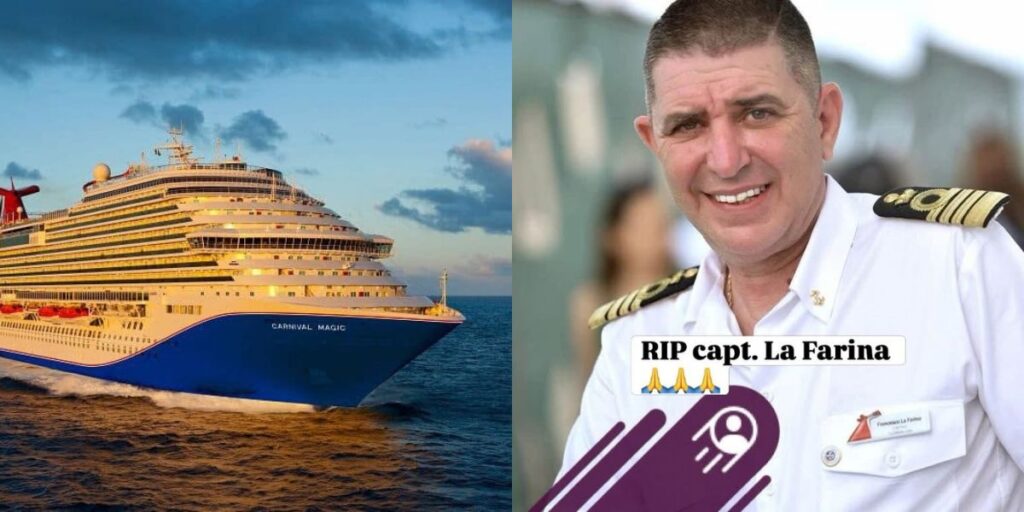
The cruise community is mourning the loss of Captain Francesco “Ciccio” La Farina, a veteran Carnival Cruise Line master who died on 26th September 2026, following a battle with cancer. His passing has prompted an outpouring of tributes from crew members, colleagues, and passengers who sailed under his command.
Captain La Farina’s maritime career stretched back to 1999, according to his LinkedIn profile, encompassing more than two decades of service on the world’s oceans. He dedicated many of those years to Carnival Cruise Line, where he rose through the ranks to command some of the fleet’s most prominent vessels.
Throughout his tenure with Carnival, La Farina helmed several ships, most notably Carnival Freedom and Carnival Magic. His progression through the maritime hierarchy demonstrated the trust and confidence the cruise line placed in his leadership abilities, advancing from junior officer positions to the prestigious role of ship’s captain – a position that requires not only technical expertise but also exceptional people management skills and crisis leadership capabilities.
The captain’s extensive experience at sea made him a familiar face to thousands of passengers who sailed aboard his vessels over the years. His reputation within the Carnival fleet grew steadily, and he became known as one of the line’s most dependable and personable commanders.
Announcement Sparks Wave of Remembrances
The news of Captain La Farina’s death was shared publicly by his friend Jorge Solano via Facebook, who announced that the captain had “taken his final voyage to Heaven” at 10:15 PM on 26th September. Solano’s post employed the traditional maritime farewell, writing: “Fair winds and following seas, Captain.”
This announcement immediately resonated throughout the cruise community, generating hundreds of responses from those whose lives La Farina had touched during his career. The post served as a gathering point for grieving colleagues, crew members, and passengers to share their memories and express their condolences.
Solano later revealed that Captain La Farina had been surrounded by family members in his final moments, providing some comfort to those mourning his loss. Whilst specific details about the duration and nature of his illness remained private, Solano emphasised that the captain had “fought bravely until the end,” demonstrating the same courage and determination that had characterised his professional life.
The maritime tradition of the “final voyage” metaphor reflects the deep cultural connection seafarers maintain with their profession, viewing life itself through the lens of navigation, journeys, and destinations. This language resonated particularly strongly with La Farina’s fellow mariners, who understood the profound symbolism of the farewell.
Carnival Cruise Line Provides Support During Illness
According to Facebook user Linda Spanky Warhaftig, who appeared to have personal knowledge of the captain’s situation, Carnival Cruise Line went above and beyond in supporting La Farina during his cancer battle. Whilst she stated she could not divulge specific details, Warhaftig made clear that the company’s assistance was substantial and deeply appreciated by the captain and his family.
“As a corporation they didn’t have any obligation, to do all the things they did or take the actions for Francesco,” Warhaftig wrote. “It was impressive what Carnival did and the amount of assistance they provided.”
This revelation highlights an often unseen aspect of the cruise industry – the care provided to crew members facing serious health challenges. Whilst employment contracts vary across the maritime sector, and companies are not always legally required to provide extensive support for illnesses that develop after employment, many cruise lines maintain compassionate policies for long-serving staff members.
Carnival Cruise Line, as part of the world’s largest cruise corporation, Carnival Corporation & plc, employs tens of thousands of crew members across its fleet. The company’s response to Captain La Farina’s illness suggests a commitment to supporting veteran officers who have dedicated their careers to the organisation.
Such corporate support can encompass various forms of assistance, potentially including continued salary payments, medical insurance coverage, repatriation arrangements, and help coordinating specialist treatment. For maritime officers living abroad whilst working on ships registered in different countries, navigating healthcare systems can prove particularly complex, making employer support especially valuable.
Notable Incident in Jamaica Demonstrated Crisis Management
Captain La Farina’s career included challenging moments that tested his seamanship and crisis management abilities. In 2024, Carnival Magic, under his command, experienced difficulties whilst attempting to dock in Ocho Rios, Jamaica, when strong winds caused the vessel to make contact with the pier.
The incident required La Farina to make the difficult decision to temporarily depart the pier, even though some guests remained ashore, prioritising the safety of the ship and the majority of passengers aboard. The situation resulted in an overnight delay as weather conditions improved enough to allow safe re-docking.
No injuries were reported during the incident, and ship services remained fully operational throughout. Captain La Farina maintained regular communication with guests, providing updates about the situation and the timeline for resolution – a transparency that passengers later praised.
Such incidents, whilst relatively rare, highlight the complex challenges modern cruise ship captains face. Carnival Magic is a Dream-class vessel measuring 306 metres in length with a gross tonnage of approximately 130,000 tonnes, making manoeuvring in adverse weather conditions particularly demanding.
The ship accommodates over 3,600 passengers and more than 1,300 crew members, meaning every command decision affects thousands of people. La Farina’s handling of the situation demonstrated the experience and judgement that had earned him command of such a large vessel.
The incident also illustrated why cruise lines invest years developing officers through progressively responsible positions before entrusting them with captaincy.
Former Colleagues Recall Humble and Respectful Leader
Trevor Nugent, a former colleague who worked alongside Captain La Farina at multiple stages throughout his career, shared heartfelt memories following news of the captain’s passing. Nugent had known La Farina during his progression through various ranks, including Safety Officer, Staff Captain, and ultimately Captain.
“Very great man very humble and respectful,” Nugent wrote in his tribute, adding that La Farina would be “surely missed.” This characterisation of humility is particularly notable given the authority and prestige associated with the captain’s position, suggesting La Farina never allowed rank to affect how he treated others.
The maritime hierarchy aboard cruise ships is strictly defined, with the captain holding ultimate authority over all shipboard operations, safety decisions, and personnel matters. Officers who maintain humility despite wielding such power often earn particular respect from their crews.
Another former colleague described La Farina as “absolutely amazing to work with and sail with,” whilst additional crew members emphasised his care for those serving under his command. One crew member, writing in Spanish, expressed that she would always remember how the captain looked after his team.
Former crew member Suri Asih shared a photograph of the captain alongside a tribute expressing pride at having once served as part of his crew. This sentiment reflects the loyalty and respect La Farina inspired among those who worked most closely with him.
The consistent theme throughout these remembrances – humility, respect, and genuine care for crew welfare – paints a picture of a leader who understood that a ship’s success depends on every team member, from the bridge officers to the housekeeping staff. This leadership philosophy creates the positive working environment essential for maintaining morale during the demanding conditions of life at sea.
Passengers Remember Captain Who Connected With Cruisers
Beyond his relationships with crew members, Captain La Farina also made lasting impressions on the passengers who sailed aboard his ships. One cruiser described him as “one of my favorite captains in the fleet,” indicating that his impact extended beyond operational competence to genuine connection with guests.
Linda Spanky Warhaftig specifically highlighted La Farina’s habit of walking around his ship and interacting with passengers, making him a visible and accessible presence rather than a remote figure confined to the bridge. This approachability helped passengers feel connected to the ship’s leadership and created memorable cruise experiences.
“Most of all know this – Francesco ADORED all of you! He truly loved walking his ship and interacting with his guests,” Warhaftig wrote. “He genuinely loved mostly everything about being a ship Captain.”
This guest interaction represents an important but often underappreciated aspect of modern cruise ship captaincy. Whilst technical seamanship and safety management remain paramount, today’s cruise captains also serve as ambassadors for their ships and their cruise lines, helping create the welcoming atmosphere that encourages repeat bookings.
Captain La Farina’s genuine enjoyment of these interactions – rather than viewing them as obligatory public relations duties – likely contributed to their authenticity and impact on passengers. Cruisers can typically distinguish between captains who grudgingly perform meet-and-greet duties and those who genuinely enjoy connecting with their guests.
The captain’s welcome aboard announcements, safety briefings, and periodic updates during voyages provide passengers with their primary direct contact with ship leadership. La Farina’s communication style and visible presence clearly resonated with many who sailed under his command, creating positive memories that prompted tributes years later.
Legacy Within Carnival Fleet and Broader Maritime Community
The volume and heartfelt nature of the tributes following Captain La Farina’s death underscore the significant impact he had throughout his career. Social media posts commemorating his life came from current and former Carnival employees, colleagues from across the maritime industry, and passengers from various walks of life – collectively painting a portrait of a man who touched many lives.
Within Carnival Cruise Line’s officer corps, which numbers in the hundreds across the fleet’s 27 ships, La Farina had clearly earned particular respect. The progression to captain represents the pinnacle of a maritime career, typically requiring 15 to 20 years of service and extensive certification.
Those who knew La Farina throughout this journey witnessed his professional development and character firsthand. The cruise industry’s maritime officers form a relatively tight-knit international community, with many working together across different ships and cruise lines throughout their careers.
News of a respected captain’s passing therefore ripples throughout this network, touching colleagues across multiple companies and countries. Captain La Farina’s legacy extends beyond professional accomplishments to the personal connections he maintained and the leadership example he set.
Former crew members who sailed under his command likely carried forward lessons learned about treating colleagues with respect and maintaining humility regardless of rank – lessons that will influence future generations of maritime officers.
For passengers who enjoyed positive interactions with Captain La Farina, his memory contributes to their overall cruise experiences and their connection to Carnival Cruise Line. These personal touches often prove more memorable than shipboard amenities or port visits, creating emotional bonds that generate long-term customer loyalty.
Condolences Extended to Family and Maritime Community
The cruise publication Cruise Hive, which reported on Captain La Farina’s passing, extended condolences to his family, friends, colleagues, and all who knew him. This formal acknowledgement reflects the broader cruise community’s recognition of the loss.
Captain La Farina’s family, who were present during his final moments, now carry forward his memory whilst also dealing with the practical and emotional challenges following the loss of a loved one. For families of maritime officers, the seafaring life often means extended periods of separation, making the time spent together particularly precious.
The international nature of cruise ship employment adds complexity to situations involving serious illness or death, as families may be scattered across different countries whilst the officer works aboard ships registered in yet another jurisdiction. The support Carnival provided during La Farina’s illness likely helped navigate some of these complications.
Within Carnival Cruise Line, his passing represents the loss of a valued long-term employee whose experience and leadership contributed to the company’s operations and reputation. The institutional knowledge possessed by veteran captains – encompassing everything from specific port characteristics to crisis management protocols – cannot be easily replaced.
The maritime tradition of commemorating deceased seafarers acknowledges both their professional contributions and their shared identity as members of a unique occupational community. Captain Francesco “Ciccio” La Farina’s final voyage ends a distinguished career that exemplified the professionalism, dedication, and human connection that define exceptional cruise ship leadership.
NEW DEALS JUST RELEASED!
See the latest Carnival cruise offers…