A final investigation into the death of a crew member aboard P&O Cruises’ Arvia has identified serious failures in maintenance procedures, communication and safety controls that allowed a passenger lift to move while a technician was working inside its shaft.

The Marine Accident Investigation Branch (MAIB) published its findings on 8th October 2026, almost a year after 35-year-old electrical technician Lixter Dave Visaya Mahinay was fatally injured aboard the cruise ship.
Investigators concluded that the maintenance team had not established effective control over the lift’s movement before Mahinay entered the shaft. The investigation also highlighted shortcomings in work planning, training and the reliance placed on safety mechanisms designed to prevent unintended lift movement.
Carnival UK, which operates P&O Cruises, has since introduced additional safety measures across its fleet, while investigators have called for a further review of lift door interlocks.
How The Fatal Accident Happened
The accident occurred on 26th October 2025, two days after Arvia departed Southampton on a 14-night Caribbean voyage to Barbados.
The 185,600-gross-tonne cruise ship was at sea when Mahinay, a Filipino electrical technician, began inspecting a passenger lift that had undergone repairs overnight.
During the inspection, Mahinay accessed the lift shaft using a fixed ladder. However, while he was inside, the lift unexpectedly began moving after responding to a previously stored call signal.
Mahinay became trapped between the moving lift car and the side of the shaft, suffering fatal crushing injuries.
Following the accident, Arvia diverted to A Coruña in Spain, where his body was taken ashore.
Although the ship is registered in Bermuda, the Bermuda Shipping and Maritime Authority authorised the UK’s MAIB to investigate the incident on its behalf.
An interim investigation report was released in February 2026, providing an initial account of the accident. However, the final report published in October established a more detailed picture of the circumstances and identified the safety failures that contributed to the death.
Central to the findings was the failure to ensure that the lift could not move unexpectedly while maintenance personnel were inside the shaft.
Investigators found that the team had departed from the maintenance arrangements specified in the work permit without first agreeing on an appropriate method for carrying out the inspection.
Communication between those involved was also found to be ineffective, meaning the work proceeded without adequate coordination or a shared understanding of how the lift’s movement would be controlled.
Another significant issue concerned the lift’s door interlocks, which were relied upon as a barrier against unintended movement.
The investigation established that these interlocks reset during the incident, allowing the lift to respond to a call signal that had already been registered.
As a result, the lift was able to move while Mahinay remained in the shaft.
The findings also raised concerns about inconsistencies in the training provided to maintenance personnel and the processes used to establish whether crew members were competent to undertake the work.
Taken together, the failures meant that the maintenance operation proceeded without sufficient safeguards to protect the technician from unexpected lift movement.
Carnival UK Introduces New Safety Measures
Following the fatal accident, Carnival UK introduced changes intended to strengthen lift maintenance safety procedures throughout its fleet.
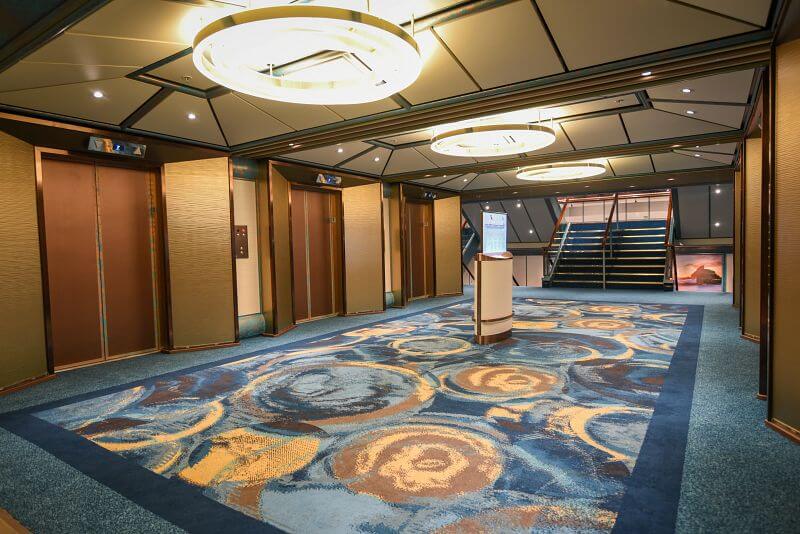
These include revisions to training materials and additional communication requirements for personnel involved in maintenance operations.
The company has also introduced an interim requirement for lift maintenance personnel to have completed basic safety training within the previous six months.
Under the revised arrangements, that training must be delivered by either the lift equipment manufacturer or an appropriate third-party provider.
A further change involves the introduction of competency verification assessments, requiring maintenance personnel to demonstrate their understanding after completing training.
The measures are intended to address concerns identified by investigators about inconsistent training standards and the effectiveness of existing competency checks.
Carnival UK has also prohibited maintenance personnel from using fixed ladders within lift shafts to access the tops of lift cars.
This change directly addresses the access method used by Mahinay before the fatal accident.
Beyond the measures already introduced, the MAIB has issued a recommendation for Carnival UK to review the effectiveness of self-resetting lift door interlocks when used as a safety barrier during maintenance.
The recommendation follows the investigation’s finding that the interlocks reset and permitted the lift to move in response to the stored call signal.
Investigators want the operator to examine whether these mechanisms provide adequate protection against unintended activation when personnel are working in potentially dangerous areas of the lift system.
The final report brings the investigation into the October 2025 accident to a close, while placing renewed attention on the procedures used to control lift movement during maintenance aboard cruise ships.
Its findings underline the importance of establishing effective control of equipment before maintenance begins, particularly where unexpected movement could expose personnel to serious or fatal injuries.