
The fastest way to start an argument in a cruise Facebook group is to mention gratuities. Someone will always say they remove them if the service is bad, and plenty of people will agree.
I’ve never done that. Not once.
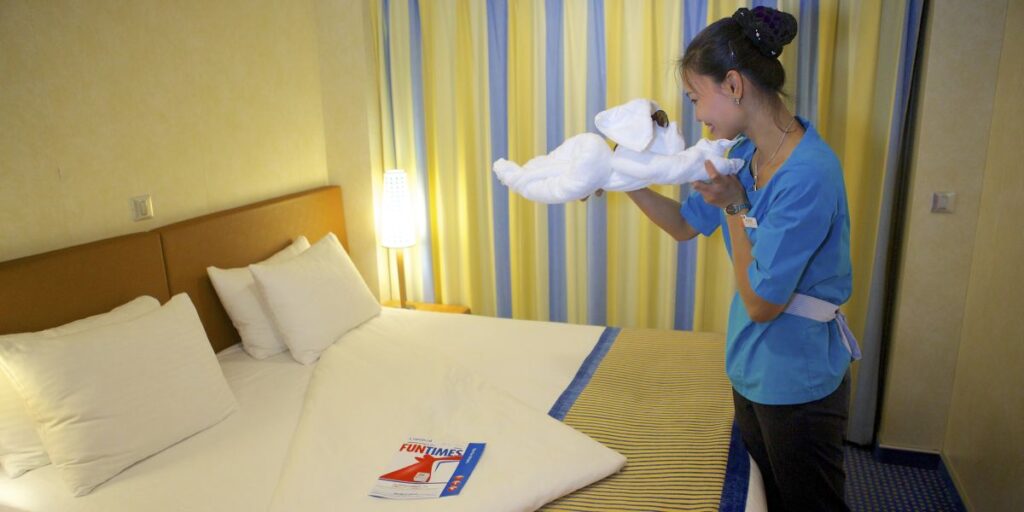
That probably sounds stubborn, or even a bit soft on cruise lines. But it’s not about defending the companies at all. It’s about who actually gets hurt when those charges come off your bill.
Most people don’t realise where that money really goes, or how many people rely on it who never step foot into a dining room or a cabin corridor.
Once you understand that side of cruising, the whole “just remove the gratuities” solution starts to look very different.
What Cruise Gratuities Actually Are
On most cruise lines, gratuities are a daily charge added to your onboard account. They’re sometimes called service charges, which already tells you a lot about how they’re meant to function.
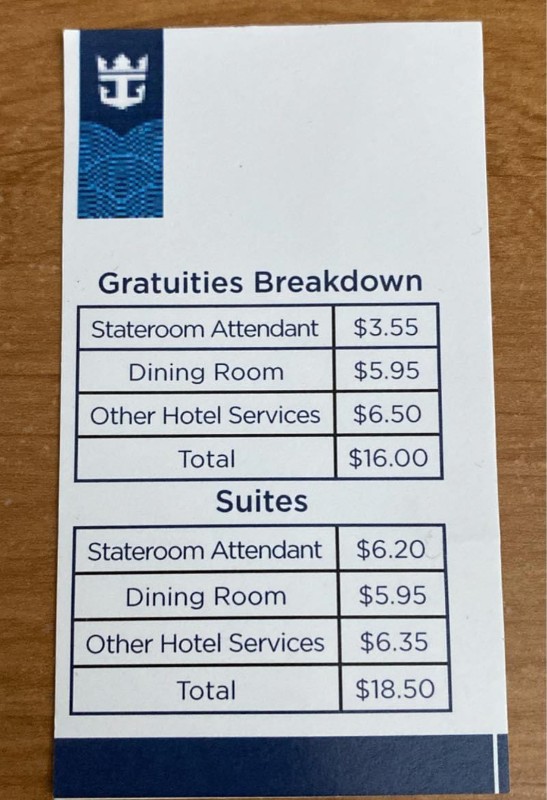
They aren’t just a tip for your waiter or your cabin steward. On most mainstream lines, they’re pooled and shared across a much wider group of crew.
That includes ‘other hotel services’, which may be people you never see – laundry workers, cleaners, galley workers, assistant waiters, bar back staff, and those working long shifts below deck to keep the ship running smoothly.

The exact amount varies by cruise line, but it’s usually a fixed daily figure per person. Some lines let you remove or adjust it. Others build it into the fare from the start, so you don’t see it as a separate charge at all.
Read more: Cruise Gratuities: Should You Prepay? Pros & Cons Explained
The key point is this: in practice, gratuities are part of how crew are paid. They’re not a little bonus on top in the way many people imagine. For many roles, that daily charge forms a significant portion of expected earnings.
That doesn’t make the system perfect. It does mean it exists for a reason – and it supports far more people than just the person who brings your drinks at dinner.
Why People Remove Gratuities
I can understand why people do it.
Cruises aren’t cheap, and nobody likes paying extra when something has gone wrong. When you’ve saved for months – sometimes years – for a holiday, expectations are high.

Very occasionally, service does fall short. You might wait ages for drinks. Your cabin might not be cleaned to the usual standard. Mistakes might keep happening in the dining room.
But it’s important to say this clearly: that’s the exception, not the rule.
On the vast majority of cruises, the service is outstanding. Crew members are known for remembering names, dietary preferences, favourite drinks, and small personal details that make people feel genuinely cared for. That reputation doesn’t exist by accident.
When problems do happen, they tend to stand out precisely because they’re unusual.
And when they do happen, it’s normal to feel frustrated. It’s also normal to want some kind of financial acknowledgement that the experience wasn’t what you paid for.
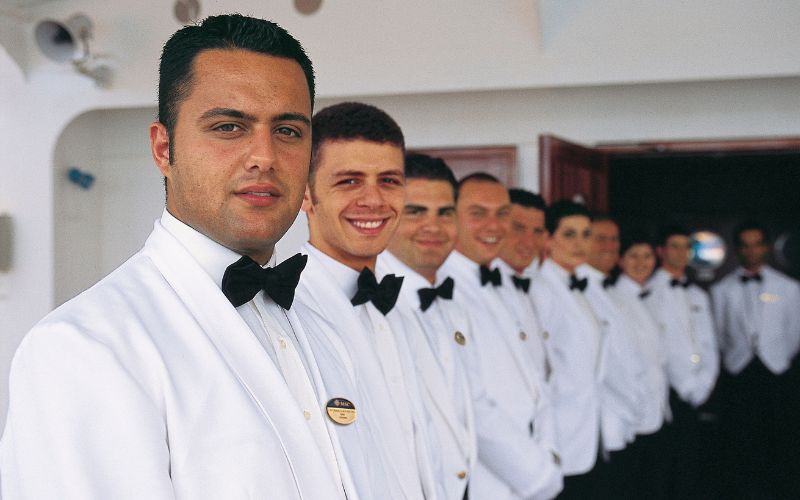
There’s also the argument that tips should be earned. If the service is bad, why should you still pay?
Add in the fact that gratuities are often presented as “optional,” and it can feel like removing them is simply using the system as intended.
Read more: Can You Refuse Cruise Gratuities?
None of that makes someone unreasonable. It just means they’re reacting to a disappointing experience in the most obvious way the ship presents to them.
Who Actually Loses Out When You Remove Them
This is the part many people don’t fully realise until they look into it more closely. Removing gratuities almost never affects only the person who gave poor service.

On many ships, gratuities are shared across departments. That means your decision impacts people who may have done an excellent job all week – and who may never have interacted with you directly.
- The person washing your sheets
- The crew member scrubbing public toilets at 2am
- The galley team prepping hundreds of meals while you sleep
- The assistant server quietly topping up water glasses all evening
They’re part of that pool.
Those crew members have no control over whether your waiter was slow, whether a section was short-staffed that day, or whether a system broke down at peak time. They still rely on that money.

For many crew, gratuities aren’t pocket money. They’re a meaningful part of take-home pay. Removing them can mean a real loss, not just a symbolic one.
So while it might feel like you’re sending a message about poor service, the reality is that the message lands on a lot of people who did nothing wrong.
Why Bad Service Is Rarely Just One Person’s Fault
Cruise ships are intense places to work.
Contracts are long. Days are longer. Time off is limited. Crew members may work seven days a week for months at a time.
Staffing levels can change mid-season. People get moved between roles. New hires are constantly being trained. Ships sail full. Turnaround days are tight. Technology fails. Supply deliveries run late.
All of that affects service.

Sometimes what looks like indifference is actually exhaustion. Sometimes it’s inexperience. Sometimes it’s a temporary staffing gap. Sometimes it’s simply that the system is under pressure that day.
That doesn’t mean you should accept poor service without complaint. It does mean that punishing the entire gratuities pool is a very blunt tool for a very specific problem.
Most of the time, the issue is bigger than one crew member – and smaller than the whole team deserves to suffer for.
What I Do Instead When Service Is Bad
If something isn’t right, I deal with it while I’m still on board.
That gives the ship a chance to fix it. And more often than not, they do.
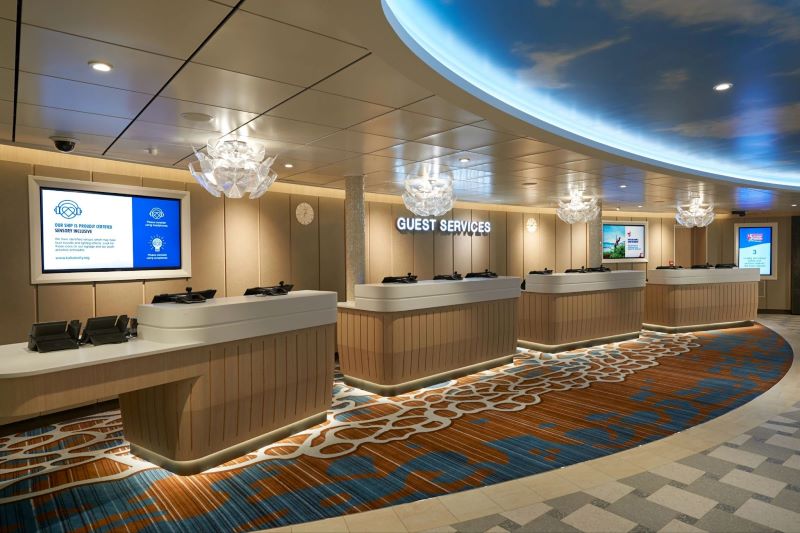
If your bathroom isn’t clean – tell your cabin steward, they will clean it again. If you food is cold – tell your waiter – they will bring you some more.
If that doesn’t work, a quiet word with a supervisor or a visit to guest services often sorts things out faster than people expect. Cruise lines care deeply about onboard satisfaction scores, and they’re usually keen to put problems right before they escalate.
I also make a point of recognising good service at the same time. Two things can be true. One department might be under pressure, while another is delivering something exceptional.
If something is serious or keeps happening, escalate it properly. That creates a record. It gives management something concrete to respond to.
None of that requires taking money away from people who may have had nothing to do with the problem.
Read more: 11 Things Your Cruise Cabin Steward Secretly HATES You Doing
“But Shouldn’t Tips Be Earned?”
This is probably the most common – and most understandable – argument.
On land, in many countries, tips are a direct response to the service you personally receive. You reward or withhold based on that individual interaction.
Cruising doesn’t really operate like that anymore, even if the language still suggests it does.

The system functions much more like a service charge than a traditional discretionary tip. In reality, most of us are paying part of the crew’s wages through that daily amount, whether we like the wording or not.
That’s not me defending the structure. It’s simply acknowledging how it works.
Opting out doesn’t reform the pay model. It doesn’t push cruise lines to redesign compensation structures. It just shifts the financial impact onto crew members who are least able to absorb it.
If gratuities were rolled into the fare and the word “tip” disappeared, very little would change in practice. The money would still need to come from somewhere.
So for me, this is less about “earning” a tip and more about recognising how the industry has structured pay – and who carries the consequences when passengers opt out.
When It’s Fair to Escalate or Complain
Not all problems are minor. And not all of them should be handled with a polite shrug.
If there are hygiene issues, safety concerns, repeated service failures, or anything that genuinely affects your cruise, that absolutely deserves escalation.
Guest services and onboard management are the right channels. They can investigate, log issues, review staffing, and take corrective action in a way your onboard account simply can’t.

Formal complaints – both on board and after the cruise – are also far more powerful than silent financial protests.
Cruise lines respond to documented trends far more than they respond to one passenger quietly removing gratuities at the end of a sailing.
Holding companies accountable matters. But taking pooled income away from crew members who may not even know there’s a problem is a very indirect way of trying to do that.
Removing Gratuities and Tipping Cash Instead Isn’t a Solution
Some people argue that they don’t really avoid tipping. They just remove the automatic gratuities and hand cash directly to the crew members who looked after them.
And honestly, if you want to give extra cash tips to people who gave exceptional service, I think that’s a lovely thing to do.

But replacing the pooled gratuities with cash tips isn’t quite as fair as it sounds.
The problem is that cash almost always goes to the visible crew members. Your waiter. Your bartender. Your cabin steward.
It usually doesn’t go to:
- The laundry crew washing thousands of sheets
- The galley staff preparing food behind the scenes
- The cleaners working overnight in public areas
- The assistant staff quietly helping service run smoothly
- The crew members you never actually meet
When you remove the automatic gratuities, you’re not removing money from “the cruise line.” You’re changing who receives it.
The people who are already most visible and most likely to receive extra cash often end up doing fine. The quieter behind-the-scenes crew can lose out.
That’s why I see cash tipping as something extra, not something that should replace the shared gratuity system.

If someone gives amazing service, I’ll absolutely hand over extra cash. But I’ll still leave the daily gratuities in place because I know they support a much wider team.
And honestly, one of the best things you can do for exceptional crew members isn’t financial at all.
Fill in the comment cards. Mention names in post-cruise surveys. Tell guest services when somebody went above and beyond.

Cruise lines take that feedback incredibly seriously. Positive mentions can help crew members get bonuses, better contracts, promotions, and preferred assignments in future.
That kind of recognition can have a much longer-lasting impact than a few extra dollars slipped into a handshake at the end of the cruise.
The Bigger Picture
Every cruise relies on thousands of people doing unglamorous, exhausting work behind the scenes. Most of them will never be thanked directly by passengers.
Gratuities, for all their flaws, are one of the ways that work is recognised and paid for. Removing them changes real pay packets, not just abstract numbers on a screen.
I’d much rather challenge poor service through complaints, feedback, and pressure on the cruise line than through a system that mostly hits the wrong people.
That doesn’t mean accepting bad experiences. It means being precise about where responsibility actually sits.
For me, keeping gratuities in place isn’t about blind loyalty to cruise lines. It’s about fairness.
It’s about aiming consequences at systems – not at the lowest-paid people working within them.
And that’s why, no matter how bad the service is, I wouldn’t remove them.

Really feel you have made some excellent points in this article. We never remove tips, I have worked in the service/hospitality industry and provided the powers that be do share out gratuities as expected, it helps the team tremendously. Customers don’t see the person ensuring your sheets are immaculate, your plates and cutlery are sparkling, but that person impacts on your holiday experience and deserves recognition and renumeration for their work.
There should be no reason for gratuities. People working on the ship should simply be paid a fair wage in the first place. Anything else is simply exploitation.