
A social media post showing how quickly an unattended sun lounger was tagged aboard a P&O Cruises ship has reignited one of the most persistent arguments at sea.
The passenger said they left their lounger at 9.23am and returned within 30 minutes, only to find that a crew member had attached a notice at 9.28am.
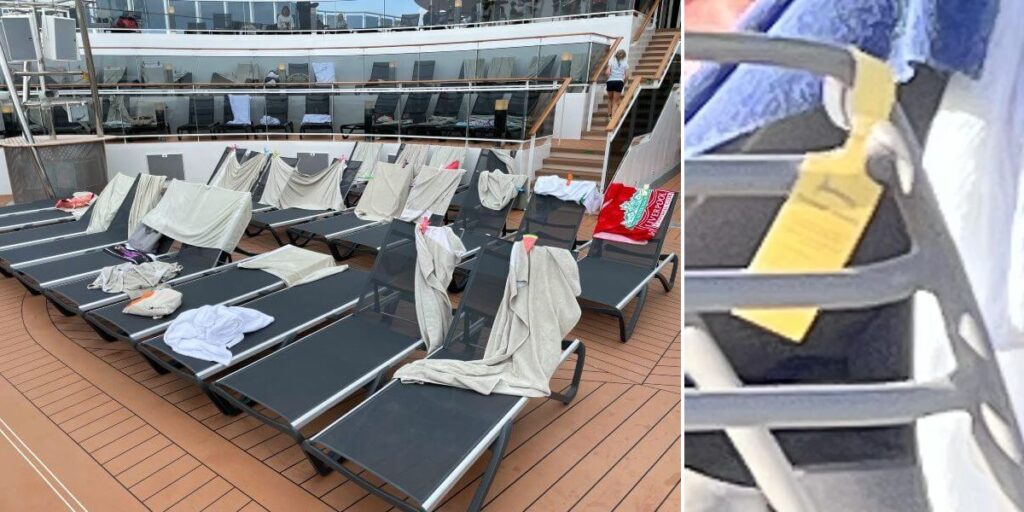
The card, branded with the words “This lounger was lonely”, explained that belongings could be removed if the passenger remained away and directed guests to a collection point.
It read: “This lounger was lonely. As you weren’t here for a while, we have removed your belongings. Please collect from the lonely lounger pick up point:”
However, the sections marked “Belongings removed time”, “Bag number” and “Name of crew member” had been left blank.
That suggests the passenger’s possessions had not actually been taken away. Instead, the tag appears to have been used to record when crew first noticed that the lounger was empty, allowing staff to return later and remove the items if it remained unoccupied.
The passenger described the approach as “a bit OTT”, pointing out that the tag had been added just five minutes after they left.
Rather than attracting widespread sympathy, however, the post prompted a large number of cruise passengers to defend the policy and argue that firm enforcement was necessary to prevent deck chairs being reserved for long periods.
Passengers Back Crackdown On Sunbed Hogging
Many of those responding said passengers should not expect to keep control of a lounger while eating breakfast, having lunch or spending time elsewhere on the ship.
The most common view was that a short trip to the toilet, a quick swim or collecting a drink should be considered reasonable, but that leaving for a full meal was different.
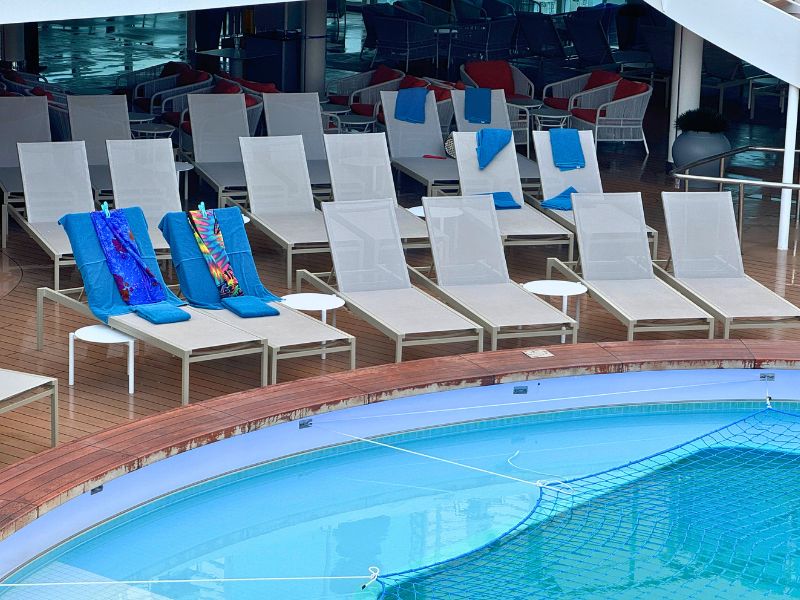
One commenter wrote: “If everyone was abit more courteous and only had the beds whilst using them, the bed turn around would be quicker and everyone would have a better chance of enjoying them.”
Others said guests should have breakfast before looking for a lounger, rather than placing towels and belongings on a chair before heading to the buffet or main dining room.
Several passengers described struggling to find loungers on sea days, despite seeing large numbers of apparently reserved chairs sitting empty.
One guest said they had spent a week aboard a ship and found it “impossible” to secure a lounger on sea days. Others recalled passengers leaving towels out from early morning before disappearing for several hours.
There were also accounts of guests attempting to control more loungers than they needed. One commenter claimed to have seen a couple place towels on chairs on both sides of a ship, moving between them as the position of the sun changed.
Another said a group had reserved six poolside loungers as well as a table and six seats in a smoking area, preventing other passengers from using the space.
The frustration expressed in the discussion was not limited to cruise ships. A number of commenters said hotels should introduce similar tagging systems to prevent guests reserving loungers around resort pools.
Some argued that stricter enforcement could ultimately make mornings more relaxing. If passengers believed they could find a chair later in the day, they said, there would be less incentive to wake early simply to place a towel on one.
One commenter summarised the argument by saying: “If everyone just got a sunbed when they wanted to use it, there would always be lots of movement and free beds.”
Another added: “You wouldn’t sit down at a table for lunch, leave it to go for a swim and expect it still to be there for you when you go back”.
Questions Over How Strictly Rules Should Be Applied
Although support for tackling reserved loungers dominated the discussion, many passengers believed the system required some flexibility.
Several people claimed their loungers had been tagged while they were swimming. One said a notice was placed on a chair even though the passenger’s husband remained on the adjoining lounger.
Another commenter claimed a crew member tagged their chair while they were standing beside it and considering whether to collect a coffee. According to the passenger, the crew member would not remove the notice until completing another patrol.
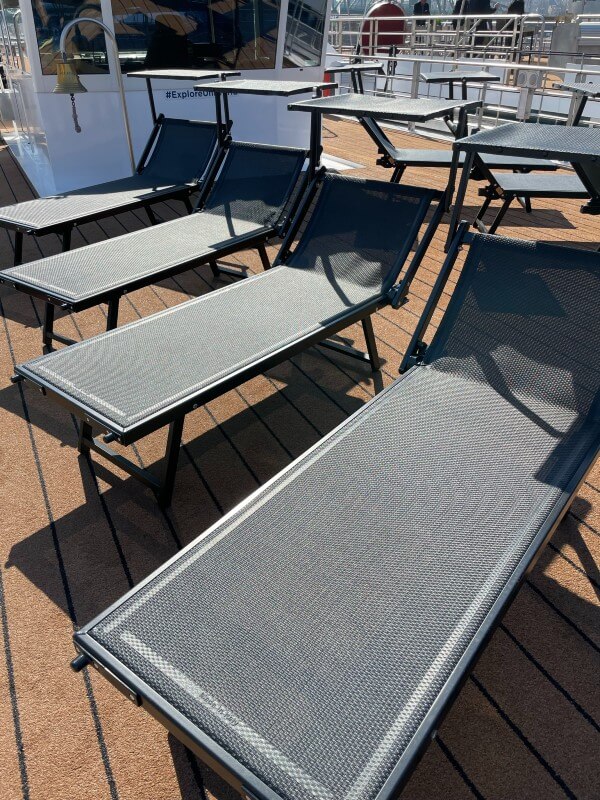
Other guests said they had returned from briefly collecting drinks or using onboard facilities to find tags waiting for them, despite relatives remaining nearby.
Those experiences led some passengers to argue that 30 minutes was too short, particularly for families, people with reduced mobility or anyone facing queues at bars, food outlets and toilets.
One commenter explained that a disability could make even a trip to the nearest toilet take around half an hour. Others pointed out that parents may need additional time to help children in and out of the pool.
Suggested alternatives ranged from a 45-minute limit to a full hour.
Some passengers also questioned whether the system was being applied consistently. While several people praised the enforcement aboard Azura and said they had seen a similar approach working on Arvia, others claimed empty loungers had remained untouched for more than an hour.
One guest aboard Ventura said reserved loungers had made finding a chair particularly difficult, but that they had not seen staff remove any towels despite the published policy.
Another passenger recalled seeing chairs reserved throughout port days, with towels placed on them in the morning and their occupants not appearing until after lunch.
That apparent variation may be partly explained by how the tagging process works. Crew cannot know exactly when every passenger leaves a chair, so the time written on the card records when the empty lounger was first noticed rather than the precise moment it became vacant.
This means one chair may be tagged within minutes, while another could already have been empty for some time before staff reach it.
The tag shown in the original post also indicates that belongings are not necessarily removed as soon as the notice is attached. The initial time allows crew to establish whether the chair remains unattended when they return.
For a passenger who had already been away for several minutes before the first check, the total absence before removal could therefore be longer than the advertised grace period.
Where Should Cruise Lines Draw The Line?
The debate ultimately revealed broad support for tackling long-term lounger reservations, but far less agreement over what should count as an acceptable absence.
For some passengers, a lounger should be surrendered whenever its occupant goes for breakfast or lunch. They argue that a chair is a shared facility rather than a space that becomes a guest’s property for the day.
Others believe passengers who have genuinely been using a lounger should be allowed to leave for a meal and return afterwards, particularly when travelling with relatives who may wish to eat together.
There was greater agreement that quick toilet breaks, short swims and trips to collect food or drink should not result in belongings being removed.
The difficulty for crew is distinguishing between a guest who has stepped away briefly and one who has placed a towel on a chair before disappearing for several hours.
A visible tagging system provides a record and a grace period, but it can also feel unnecessarily aggressive when a notice appears only minutes after someone leaves.
Despite those concerns, the overall response to the post suggested that many cruise passengers would rather see the rules enforced too enthusiastically than not enforced at all.
With deck space limited and demand highest on warm-weather sea days, the argument over how long a lounger can reasonably remain empty is unlikely to disappear.
The latest discussion has instead shown that the fiercest disagreement is no longer about whether cruise lines should act, but about how much time passengers should be allowed before a lonely lounger becomes available to somebody else.
NEW DEALS JUST RELEASED!
Don’t miss the latest P&O Cruises offers…

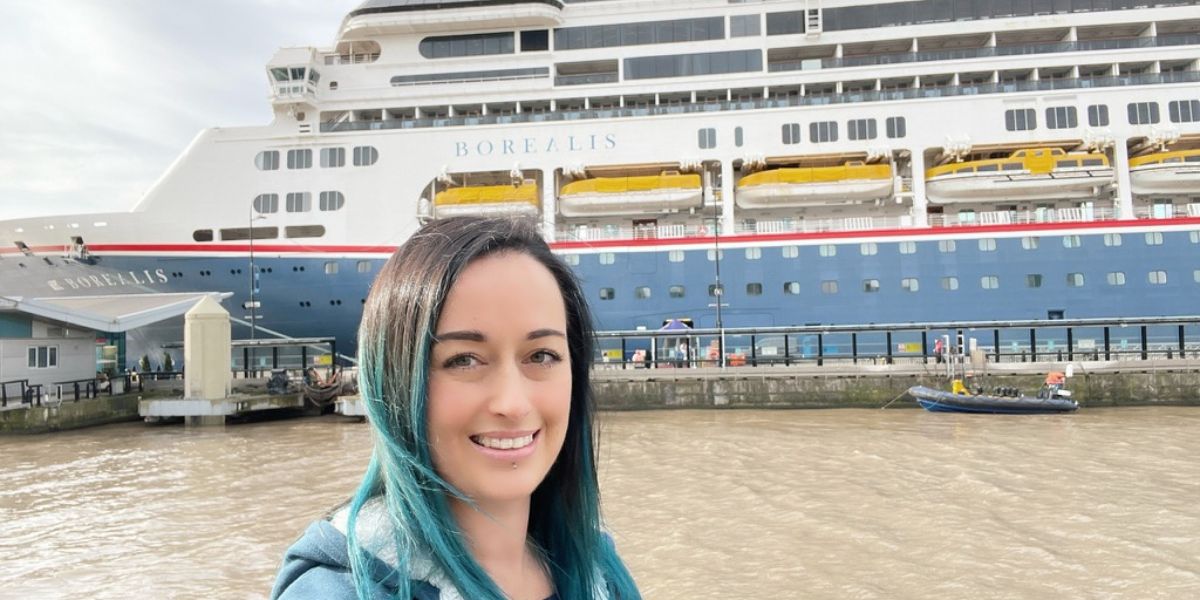


Regarding lounge chair use, one possible solution is to hand out tags to all passengers with their boarding papers, which they can later attach to loungers. Whenever they leave the lounger unattended, they affix the tag to it and remove it when they get back.
Perhaps then the staff would be able to time it better by monitoring the tag itself. If there is no tag on an unused lounger, the staff can remove any items and make the lounger immediately available for use.