Francesco Schettino, the former captain of the Costa Concordia cruise ship that sank in 2012, killing 32 people, has been released from prison after serving more than nine years of his sentence.
The 66-year-old left Rebibbia prison in Rome shortly before 8pm on Friday 20th November 2026, after a court approved an alternative arrangement allowing him to serve the remainder of his sentence outside prison.
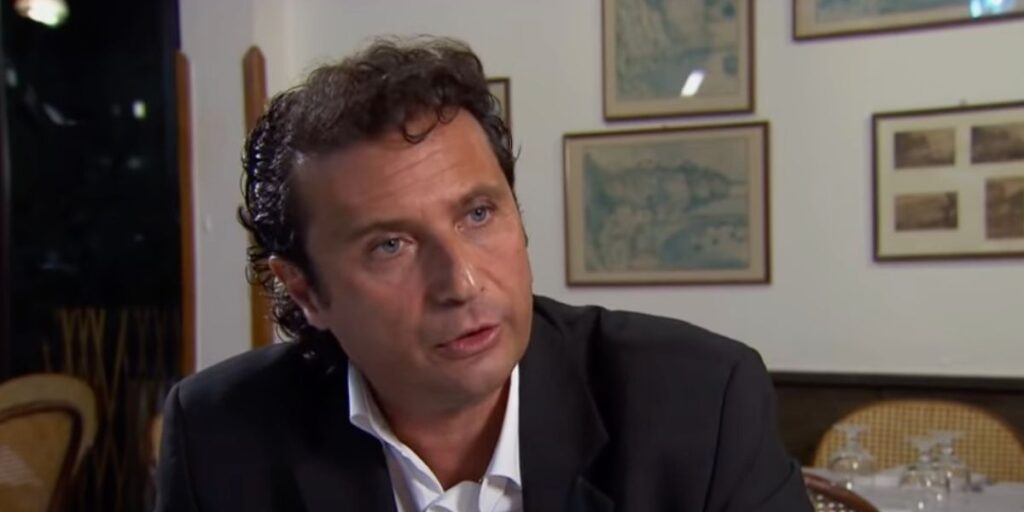
Schettino was sentenced to 16 years and one month following the disaster off the Italian island of Giglio, one of the deadliest cruise ship incidents in modern history.
The decision by Rome’s Surveillance Court followed an assessment of his behaviour in prison and participation in rehabilitation programmes.
His release does not overturn his conviction or mean that his sentence has ended. Instead, he will remain subject to supervision and restrictions while living and working outside prison.
Schettino Will Work And Volunteer Under Supervision
Under the conditions of his release, Schettino will live in the Campania region of southern Italy, where he will take up paid employment with a private employer.
He is expected to work eight hours a day in an administrative role and undertake regular voluntary work as part of his rehabilitation programme.
He will also be subject to restrictions on his movements, including a requirement to remain at his residence between 10pm and 6am.
The arrangement, known in Italy as affidamento in prova ai servizi sociali, allows eligible prisoners to serve the remaining portion of their sentences in the community under supervision.
Unlike a semi-liberty arrangement, which requires prisoners to return to prison after working outside, Schettino will not have to return to his cell each evening.
However, he must comply with the conditions imposed by the authorities. Any serious breach could result in the arrangement being revoked and his return to prison.
His lawyer, Francesca Carnicelli, welcomed the court’s decision, explaining that prison officials had given an extremely positive assessment of his conduct and rehabilitation.
During his imprisonment, Schettino had previously been allowed to participate in supervised work programmes outside his cell.
These included helping to digitise records relating to the 1980 Ustica aviation disaster and carrying out administrative work for Rome’s Surveillance Court.
Italian media have also reported that Schettino has accumulated reductions to his sentence for good behaviour, bringing his expected completion date forward to July 2030.
That is approximately two years earlier than previously anticipated.
Schettino had earlier pursued a different form of conditional release, but withdrew an application for semi-liberty in April 2025 following difficulties involving the employment arrangements proposed to the court.
The Costa Concordia Disaster That Killed 32 People
The events that led to Schettino’s imprisonment took place on 13th January 2012, when the Costa Concordia struck rocks near the island of Giglio, off the coast of Tuscany.
The Costa Cruises vessel had departed from Civitavecchia, near Rome, with approximately 4,200 passengers and crew members on board.
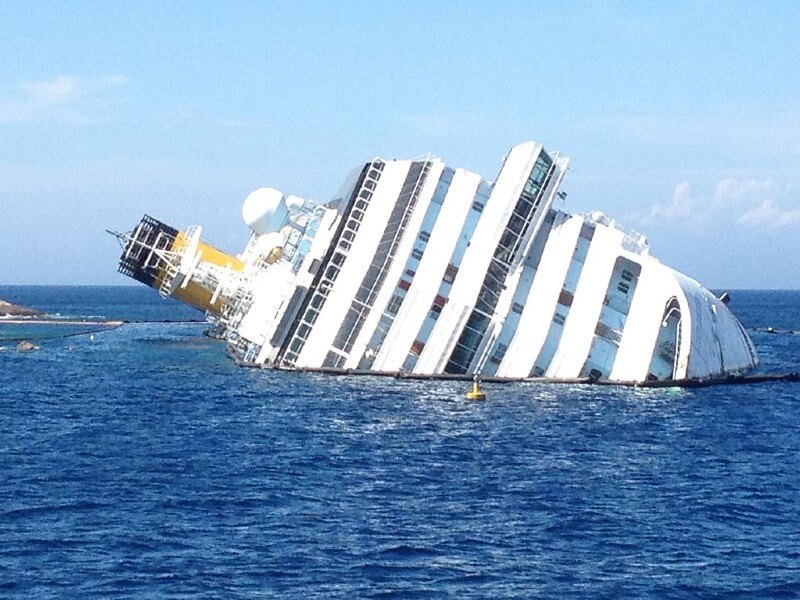
Schettino had taken the ship unusually close to shore during a manoeuvre known as an inchino, or sail-by salute, when it struck submerged rocks.
The collision tore a large opening in the port side of the hull, allowing water to flood into the ship and causing a loss of electrical power.
The vessel eventually came to rest on its side near the island, with parts of the ship submerged.
Passengers and crew faced a chaotic evacuation, with many forced to escape in darkness as the vessel listed heavily.
Thirty-two people lost their lives.
Schettino’s actions during the emergency became a central part of the subsequent investigation and court proceedings.
He was widely criticised for leaving the vessel before the evacuation had been completed.
One of the most widely remembered moments came when Italian coastguard officer Gregorio De Falco ordered Schettino to return to the stricken ship during a telephone exchange.
The exchange attracted international attention and became one of the defining episodes of the disaster.
Following a lengthy legal process, Schettino was convicted of offences including multiple manslaughter, causing a shipwreck and abandoning the vessel.
His sentence of 16 years and one month was upheld by Italy’s highest court, the Court of Cassation, on 12th May 2017.
He entered Rebibbia prison that same day.
Schettino was also banned from working in maritime professions for five years.
The wreck of the Costa Concordia remained off Giglio for more than two years before an enormous salvage operation successfully raised and refloated the vessel in 2014.
It was subsequently transported to Genoa for dismantling.
The disaster prompted renewed international scrutiny of cruise ship navigation, emergency procedures and passenger safety.
Nearly 15 years after the sinking, Schettino’s release marks a significant development in the legal aftermath of a tragedy that remains one of the most notorious in the cruise industry’s history.
Although he is now permitted to live outside prison, his conviction remains in force, and he must continue serving his sentence under supervision until its expected completion in 2030.
TODAY’S BEST CRUISE DEALS!
Don’t miss these offers…