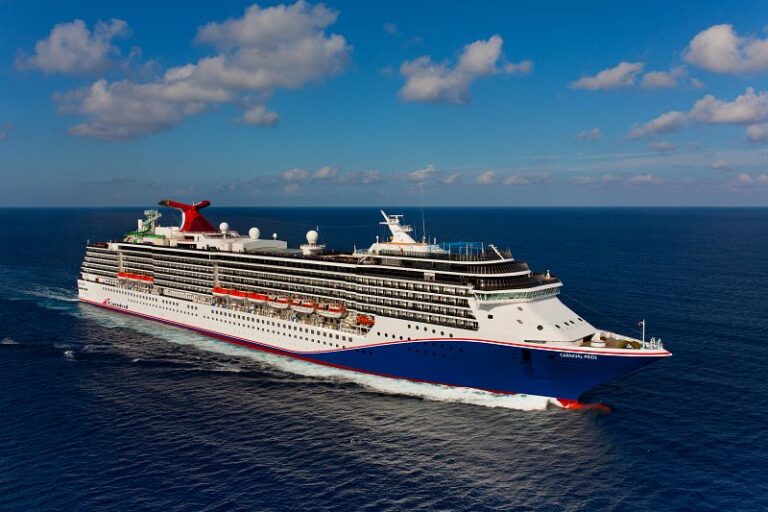
A Maryland resident has been federally indicted for assault following an incident aboard Carnival Pride during a February 2025 Bahamas sailing from Baltimore, though authorities have released limited information about the circumstances surrounding the alleged attack.

Antoine Coleman, a 38-year-old man from Bladensburg, Maryland, was formally indicted on assault charges stemming from an incident that occurred whilst Carnival Pride was operating its regular seven-night Bahamas itinerary from Baltimore.
The indictment was announced on Wednesday, 25th November 2026, by Kelly O. Hayes, U.S. Attorney for the District of Maryland, alongside Special Agent in Charge Jimmy Paul from the FBI Baltimore Field Office and Colonel Nicholas R. Augustine of the Maryland Transportation Authority Police.
The announcement came nearly two years after the alleged incident took place, though no explanation has been provided for the significant delay between the February 2025 assault and the recent indictment.
Such lengthy investigative periods are not uncommon in maritime cases, which often involve complex jurisdictional issues and coordination between multiple law enforcement agencies.
Limited Information Released About Alleged Assault
Federal authorities have disclosed remarkably few details about the nature of the alleged assault. The indictment states only that “Coleman assaulted Victim 1 whilst aboard the Carnival Cruise Line vessel Carnival Pride,” without elaborating on the circumstances, severity, or type of assault involved.
Officials have not revealed whether the incident resulted in injuries to the victim, any property damage, or whether Coleman was arrested at the time of the alleged assault.
The nature of the assault – whether it involved simple assault, aggravated assault, sexual assault, or domestic violence – remains undisclosed in public documents.
Additionally, authorities have not released information about potential contributing factors, such as whether alcohol consumption may have played a role in the incident.
The relationship between Coleman and the alleged victim, if any existed, also has not been made public.
Carnival Pride’s Baltimore Operations And Itinerary
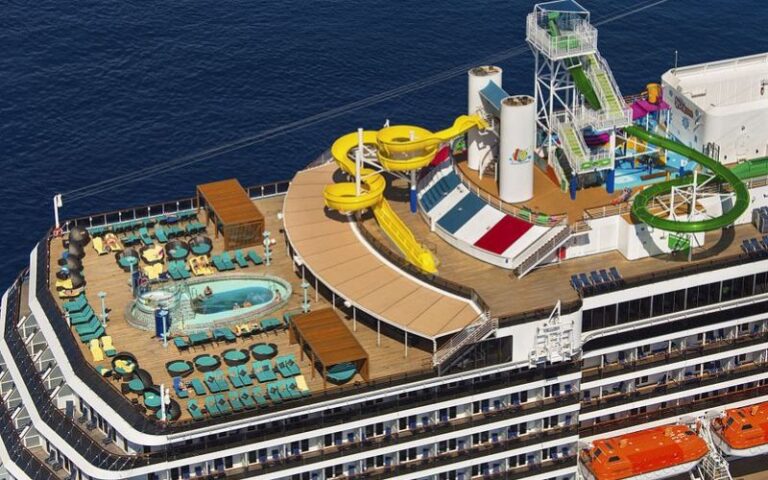
At the time of the alleged February 2025 incident, Carnival Pride was homeported at Baltimore, Maryland, offering seven-night cruises to the Bahamas. The 88,500-gross-tonne vessel accommodates 2,134 guests in double occupancy and has served the Baltimore market for extended periods throughout her service history.
Carnival Pride continues to operate from Charm City today, maintaining a schedule of weeklong Bahamas sailings that call at Nassau, the brand’s exclusive Celebration Key destination, and RelaxAway, Half Moon Cay.
The ship’s Baltimore homeporting provides convenient cruise access for passengers throughout the Mid-Atlantic region, eliminating the need for flights to traditional Florida departure ports.
In February 2025, when the alleged assault occurred, Carnival Pride’s itinerary would have differed slightly from current offerings.
Celebration Key, Carnival’s newest private destination in the Bahamas, did not open to guests until July 2025, so the ship would have been calling at alternative ports.
The itinerary likely included Nassau and Half Moon Cay, which have long been staples of Carnival’s Bahamas programming, possibly with additional stops at Freeport or Princess Cays.
Understanding Federal Maritime Jurisdiction And Legal Process
Maritime incidents occurring on cruise ships fall under federal jurisdiction when vessels are sailing in international waters or when American-flagged ships are involved.
This jurisdictional framework means that assaults and other crimes aboard cruise ships are prosecuted in federal courts rather than state or local courts, often resulting in more severe potential penalties.
It is crucial to note that an indictment represents a formal charge, not a finding of guilt. Coleman is presumed innocent until proven guilty in a criminal proceeding, as guaranteed by the American legal system.
The indictment indicates that a grand jury found sufficient evidence to bring charges, but Coleman has not been convicted of any crime related to this incident.
If convicted of the assault charges, Coleman faces a maximum sentence of one year in federal prison.
However, the Maryland U.S. Attorney’s Office has noted that actual sentences for federal crimes typically fall below maximum penalties.
Should Coleman be found guilty, the specific sentence would be determined by a federal district court judge, who would consider numerous factors including the severity of the assault, any injuries sustained, Coleman’s criminal history, and other relevant circumstances.
Federal sentencing guidelines provide judges with frameworks for determining appropriate punishments, though judges retain discretion within those guidelines.
Factors that could influence sentencing include whether the victim suffered serious bodily injury, whether a weapon was used, and whether Coleman accepts responsibility for his actions.
Carnival Cruise Line’s Response And Safety Protocols
Carnival Cruise Line has not issued any public statement regarding either the February 2025 incident or the recent indictment of Coleman.
This silence is consistent with the cruise line’s typical approach to legal matters involving individual guests, as companies generally refrain from commenting on ongoing criminal investigations or proceedings.
Cruise lines maintain comprehensive security operations aboard their vessels, including trained security personnel, surveillance systems, and established protocols for responding to incidents.
When assaults or other crimes occur, cruise ship security teams are required to report serious incidents to the FBI and Coast Guard, as mandated by the Cruise Vessel Security and Safety Act of 2010.
This federal legislation requires cruise lines operating from U.S. ports to maintain crime logs, report serious crimes to federal authorities, and implement various safety measures including surveillance systems in public areas, security personnel training, and victim assistance protocols.
The law was enacted following concerns about underreporting of crimes on cruise ships and inadequate support for victims.
Pattern Of Incidents Across The Cruise Industry
Whilst cruise ships remain statistically safe environments, incidents such as assaults do occur with unfortunate regularity across the industry.
The concentration of thousands of people in close quarters, often with alcohol consumption as part of the cruise experience, can occasionally lead to confrontations and criminal behaviour.
Several high-profile cases have emerged in recent years demonstrating that such incidents affect multiple cruise lines and can involve various circumstances.
In March 2026, two women faced federal charges following an altercation aboard Carnival Spirit that reportedly stemmed from a dispute over whether both belonged in the Diamond and Platinum priority queue at Guest Services – an incident that highlighted how even seemingly trivial disagreements can escalate into criminal matters.

More seriously, in June 2026, a 46-year-old man from Maine received a 12-month federal prison sentence after assaulting his girlfriend aboard an undisclosed cruise ship that departed from New York in December 2024.
This case illustrated the serious consequences that domestic violence incidents aboard cruise ships can carry, with federal prosecutors treating such crimes with the same gravity as those committed on land.
In August 2026, two cruise guests were arrested in Port Canaveral after allegedly storming another guest’s stateroom aboard an unnamed cruise vessel.
The incident demonstrated that cruise ship security must address not only public altercations but also invasions of passengers’ private accommodations.
Incidents Involving Crew Members Raise Additional Concerns
Assault incidents are not limited to passenger-on-passenger crimes. Crew members have also been implicated in serious incidents, raising additional concerns about passenger safety and the cruise industry’s vetting and supervision procedures.
In May 2026, a crew member was terminated from Virgin Voyages’ Valiant Lady following an alleged sexual assault that occurred whilst the ship was in dry dock.
This incident highlighted that cruise lines must maintain vigilance regarding crew conduct even when vessels are not carrying passengers on regular sailings.
Crew member incidents pose unique challenges for cruise lines, as employees live and work aboard ships for extended contracts, often lasting several months.
The close quarters and isolated nature of ship life can create environments where inappropriate behaviour may occur, necessitating robust human resources policies, training programmes, and reporting mechanisms.
Cruise lines conduct background checks on crew members, though the thoroughness of these checks can vary depending on crew members’ countries of origin and the availability of criminal records in different jurisdictions.
The international nature of cruise ship employment, with crew members hailing from dozens of countries, complicates efforts to screen applicants comprehensively.
Law Enforcement Coordination And Victim Support
Both local and federal authorities take cruise ship incidents seriously, with the FBI maintaining jurisdiction over crimes occurring in international waters involving U.S.-flagged vessels or American citizens.
The Coast Guard also plays a role in investigating maritime incidents and ensuring cruise lines comply with reporting requirements.
Coordination between multiple agencies – including the FBI, Coast Guard, port authorities, and local police where ships dock – is essential for effectively investigating and prosecuting cruise ship crimes.
The Maryland Transportation Authority Police’s involvement in announcing Coleman’s indictment reflects this multi-agency approach, as the MDTA Police provide law enforcement services at Baltimore’s cruise terminal.
Victims of crimes aboard cruise ships have access to various support services, including onboard medical care, counselling resources, and assistance from victim advocates.
The Cruise Vessel Security and Safety Act requires cruise lines to employ victim advocates and maintain relationships with shoreside support organisations.
However, victims and their families have sometimes criticised cruise lines for inadequate support and communication following incidents.
Advocacy groups continue to push for enhanced passenger protections and more transparent reporting of cruise ship crimes.
Industry-Wide Implications And Passenger Awareness
The Coleman indictment serves as a reminder that cruise passengers should remain aware of their surroundings and take common-sense safety precautions, just as they would in any public environment.
Whilst cruising remains an overwhelmingly safe form of travel, passengers should secure their staterooms, avoid excessive alcohol consumption, and report suspicious behaviour to ship security.
Cruise lines continue to refine their safety and security measures in response to incidents and regulatory requirements.
Enhanced surveillance technology, improved crew training, and more robust incident response protocols have been implemented across the industry in recent years.
The timing of this indictment, coming nearly two years after the alleged incident, may raise questions about the efficiency of maritime law enforcement investigations.
However, complex cases involving multiple jurisdictions, witness interviews, evidence collection from international waters, and coordination between various agencies can require extended periods to build prosecutable cases.
As the case against Coleman proceeds through the federal court system, it will serve as another example of how seriously authorities treat cruise ship crimes and the potential consequences facing those who commit assaults or other offences whilst at sea.
Don’t overpay for your Carnival cruise!
Compare Carnival cruise deals from different travel agents and find the lowest prices, with the cheapest cruises shown first.
Free to compare • No obligation to book