
Norovirus has a reputation as the “cruise ship virus” – but cruise ships account for only around 1% of reported norovirus outbreaks, according to the CDC.
The illness can certainly ruin a few days of your holiday. It spreads easily and can cause vomiting, diarrhoea, nausea and stomach pain, although most people recover within a few days.
But the idea that cruise ships are crawling with norovirus simply isn’t accurate. In fact, there are good reasons why we tend to hear so much about outbreaks at sea.
So, how likely are you to catch norovirus on a cruise – and what can you do to avoid it?
Norovirus on Cruise Ships
Norovirus is caught by having contact with an infected person, either directly, or by touching contaminated surfaces. Norovirus outbreaks can occur on cruise ships when people bring the virus onto the ship and pass it on to others.
Cases of norovirus on cruise ships are reported more commonly than on land because cruise ship passengers are required to report cases to the ship’s medical team. On land, most people recover at home without seeking medical help.
This has resulted in norovirus being incorrectly called ‘the cruise ship disease’ or the ‘cruise ship illness’.

Norovirus Can Happen Anywhere
Whilst cruise ships have a reputation for norovirus outbreaks, the virus is common on land too, particularly in places where lots of people are in close contact, such as schools, hospitals, care homes and hotels.
Read on for all the latest statistics about cruise ship norovirus.
Cruise Ship Norovirus Statistics
The Likelihood of Getting Norovirus on a Cruise
Despite its reputation, norovirus outbreaks on cruise ships are relatively uncommon. In fact, the CDC says that cruise ships account for only around 1% of all reported norovirus outbreaks.
Cruise ship outbreaks tend to make headlines because illness is closely monitored and reported on board, making cases much more visible than they are on land.
See the CDC’s latest cruise ship outbreak data here.
Cruise Ships With Norovirus Outbreaks
The CDC’s Vessel Sanitation Program records outbreaks of gastrointestinal illness on cruise ships within its jurisdiction.
In 2025, the CDC recorded 23 gastrointestinal illness outbreaks on cruise ships, 19 of which were confirmed as norovirus. Holland America Line had the most confirmed norovirus outbreaks, with six across Volendam, Rotterdam and Eurodam.
Other confirmed norovirus outbreaks in 2025 included:
- Celebrity Cruises – Celebrity Eclipse
- AIDA Cruises – AIDAdiva
- Oceania Cruises – Oceania Insignia
- Royal Caribbean – Serenade of the Seas, Navigator of the Seas and Radiance of the Seas
- Viking – Viking Polaris and Viking Mars
- Seabourn – Seabourn Encore
- Cunard – Queen Mary 2
- Princess Cruises – Coral Princess (twice)
(Source – CDC 2025 cruise ship outbreak data)
One of the largest outbreaks by percentage of passengers affected was aboard Cunard’s Queen Mary 2 between 8th March and 6th April 2025. The CDC reported that 266 of 2,538 passengers became ill, or 10.5%.
Of course, an outbreak can happen on any cruise ship, just as norovirus can spread in schools, hospitals, hotels and other places where lots of people gather. These statistics don’t mean that the ships or cruise lines listed are less hygienic than those that didn’t report an outbreak.
It’s also important to understand the limits of the CDC data. The Vessel Sanitation Program only publishes outbreaks on ships within its jurisdiction, generally involving voyages that include both US and foreign ports. An outbreak will usually appear on its public list when 3% or more of passengers or crew report gastrointestinal illness symptoms.
So, this isn’t a complete list of every norovirus outbreak on every cruise ship around the world.
The Worst Norovirus Outbreak on a Cruise Ship
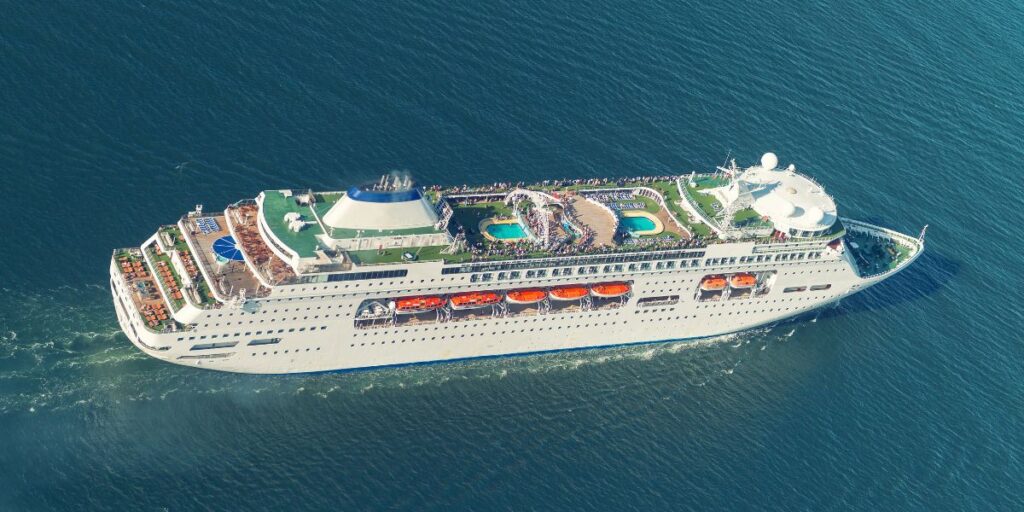
The worst outbreak of norovirus on a cruise ship occurred onboard Royal Caribbean’s Explorer of the Seas in January 2014. On this 10-night cruise, 634 out of 3071 (20.6%) passengers or crew reported being ill.
How to Avoid Norovirus on Cruise Ships
Here are four tips for avoiding norovirus on cruise ships.
1. Wash Your Hands
The most effective way to prevent norovirus on a cruise is with regular and thorough handwashing. It is particularly important that you do this after using the bathroom and before and after eating, drinking or smoking.
The most effective way to clean your hands is to wet them with water, apply liquid soap, lather, rinse and dry.
When I was on board a cruise ship during a norovirus outbreak, this flyer about the correct handwashing procedure was distributed to all passengers in their cabins.

2. Use Hand Sanitiser
Alcohol hand gels are not as effective as soap and water, but they are useful at times when soap and water isn’t available.
There will be hand sanitiser available at stations all over the ship, but it’s also a good idea to carry your own. To avoid having to rummage in your bag, hand sanitiser bracelets are an excellent option.


See hand sanitiser bracelets on Amazon.com (if you’re in the US)
See hand sanitiser bracelets on Amazon.co.uk (if you’re in the UK)
3. Avoid Touching Surfaces
Your freshly-washed hands are only clean until you touch something, so you should avoid touching surfaces that are regularly touched by other people.
It’s important that you turn off taps and open bathroom doors using a paper towel to keep your freshly-washed hands clean.
You should also avoid touching elevator buttons with your fingers, and instead use a knuckle or elbow.
Only touch staircase railings if you need to do so for stability. If you’re unsure, you can hover your hand above the railing, so that it’s there if you need to grab it.

4. Avoid Shaking Hands
Shaking hands with other cruisers is something you should avoid. This is particularly important at mealtimes, as this is when it’s easy to transfer any virus from your hands to your mouth.
Since 2020 (COVID), shaking hands is not as common as it used to be, and declining a handshake is not something that should cause embarrassment.

Stopping the Spread of the Virus
When norovirus is reported on a cruise ship, the staff will put measures in place to stop the spread of the virus.
Measures to control norovirus outbreaks include:
- Advising passengers that others are experiencing symptoms of gastrointestinal illness and giving information about what everyone can do to prevent it from spreading
- Regularly sanitising every area of the ship with a powerful disinfectant called Virox
- Assigning extra staff to monitor entrances of eating areas to ensure that every passenger washes their hands
- Removing items such as salt and pepper shakers and butter dishes from tables and replacing them with individual sachets
- Stopping the use of self-service drinks machines and instead having staff dispense drinks for guests
- Serving guests at buffets rather than allowing self-service
If these measures are not successful in halting the spread of the disease, in rare cases, it is possible for all passengers to be confined to certain areas of the ship, or to their cabins, or even for the cruise to end early.

Code Red: What It Really Means
Cruise ship staff use secret codes to avoid causing alarm. If you hear CODE RED, it means that there is a serious outbreak of illness on the ship. For a less severe outbreak, you may hear CODE YELLOW.
The exact number of cases needed for each alert level varies by cruise ship. It may be a certain number of cases or a certain percentage of passengers and crew on the ship.
Read more: Secret Codes On Cruise Ships Explained
What to Do If You Catch Norovirus on a Cruise
1. Report It
As soon as you become unwell, it’s vital that you return to your cabin and call reception to report it.
They will advise you about what to do next and arrange a phone call with one of the ship’s nurses, who can give you medical advice. The medical team will phone regularly to check how you are feeling.
2. Isolate Yourself
You must stay in your cabin until 24 hours after any vomiting or diarrhoea has stopped.
Your cabin will be regularly sanitised by specially-trained crew members. If you require any additional housekeeping, you can call reception, and someone will be with you quickly. You can also have any items of clothing cleaned free of charge if needed.
3. Rest And Recover
Whilst quarantined in your cabin, you can order from room service free of charge. There is a specially planned menu to assist with recovery, which includes bland items such as toast, porridge, soup, sandwiches, grilled chicken breast, salad and chips. Your meals will be served on disposable plates.

As you are not permitted to leave the ship during the isolation period, if you have booked shore excursions with the cruise line, the cost of these will be refunded to you.
If you have booked excursions independently, you may be able to cancel them if you give 24 hours’ notice. If you are unable to do this, you may be able to claim on your travel insurance, depending on the policy details.
Suggested read: Why You Need Cruise Insurance (Not Just Regular Travel Insurance)

Final Word
Norovirus can make for a miserable few days, but its reputation as a “cruise ship illness” is misleading. Cruise ships account for only a small proportion of reported outbreaks, and cases at sea are closely monitored when they do occur.
The best defence is also surprisingly simple: wash your hands properly and often, particularly before eating and after using the bathroom.
And if you do start feeling unwell, don’t try to carry on with your holiday as normal. Report your symptoms, follow the medical team’s advice and give yourself time to recover – you’ll also be helping to stop the virus spreading to everyone else on board.
TODAY’S BEST CRUISE DEALS!
Don’t miss these offers…

I had norovirus on Arvia last May confined to cabin no medical advice given just to stay in cabin staff phoned to check I was there meals, who wants to eat when ill and menues were not changed to suit anyway I am always washing my hands and use a rollator so do not as a rule touch handrails annoyed previous cruise had the virus staff as well as holidaymakers. At least Fred Olsen pay comp not P +O though