The Italian Coast Guard successfully airlifted an ill passenger from Royal Caribbean’s Odyssey of the Seas on 16th October 2026, in challenging conditions that included 25mph winds and waves exceeding six feet.
The 64-year-old guest was evacuated from the vessel whilst it was sailing 120 miles east of Sicily in the Ionian Sea and transported to hospital in Catania for urgent medical treatment.

The Guardia Costiera posted footage of the complex medical evacuation on Sunday, 18th October 2026, showcasing the precision and skill required for such operations at sea.
The brief 30-second clip shows the rescue helicopter Nemo 10, an AW139 aircraft operated by the Catania Coast Guard Air Base, approaching the moving cruise ship before executing the delicate extraction.
The video clearly demonstrates the challenging nature of the operation, with Odyssey of the Seas visibly cutting through choppy waters whilst maintaining course.
One rescue specialist descended to the ship’s deck with a passenger litter, securing the ill guest before both were hoisted back to the hovering aircraft above.
Operation Conducted During Full Day At Sea Between Port Calls
According to passengers on the ship’s Facebook group for the 11th October 2026 sailing, the airlift took place at approximately 2pm local time on Friday, 16th October.
At that moment, Odyssey of the Seas was experiencing a full day at sea between port visits, having departed Mykonos on Thursday, 15th October, and heading towards Naples for its final scheduled port call on Saturday, 17th October.
The 4,198-guest vessel was operating a seven-night Greece and Italy itinerary sailing roundtrip from Civitavecchia (Rome), one of Royal Caribbean’s popular Mediterranean offerings from the port that serves as the gateway to Italy’s capital city.
This particular itinerary has proven consistently popular with guests seeking to explore iconic destinations across both countries in a single voyage.
Adverse Weather Conditions Added Complexity To Evacuation
The Italian Coast Guard’s official caption accompanying the video highlighted the difficult circumstances under which the rescue was performed.
Waves in the Ionian Sea measured more than two metres (approximately 6.5 feet) high, whilst northerly winds reached 22 knots, equivalent to 25 miles per hour.
These conditions would have created significant motion for both the cruise ship and the hovering helicopter, making synchronisation between the two vessels absolutely critical for a safe evacuation.
The rescue crew had to account for the ship’s forward momentum, the helicopter’s position relative to wind direction, and the vertical movement caused by the swells passing beneath the vessel.
Cruise ship crew members can be seen in the footage providing essential assistance by maintaining tension on a tagline attached to the litter.
This crucial technique helps stabilise the litter as it’s winched upward, preventing it from spinning dangerously and ensuring the passenger remains as comfortable and secure as possible during the ascent to the aircraft.
Guest Successfully Transferred To Cannizzaro Hospital For Treatment
Following the successful airlift from Odyssey of the Seas, the 64-year-old passenger was transported directly to Cannizzaro Hospital in Catania, Sicily, where they were handed over to the care of medical staff.
The facility is one of Sicily’s major hospitals and is equipped to handle serious medical emergencies requiring advanced treatment.
No further information has been released regarding the specific nature of the passenger’s illness or their current medical condition.
This lack of detail is standard practice for medical evacuations, as cruise lines, coast guards, and medical facilities all prioritise patient confidentiality and the privacy of family members, friends, and travelling companions.
Maritime medical evacuations are relatively uncommon but occur when a passenger’s condition requires treatment beyond what the ship’s medical centre can provide.
Cruise ships typically carry qualified doctors and nurses, along with medical equipment suitable for stabilising patients, but they are not equipped for complex procedures or long-term intensive care.
Technical Considerations Behind Helicopter Winch Operations At Sea
Numerous commenters on the Italian Coast Guard’s Facebook post questioned why the rescue helicopter couldn’t simply land on Odyssey of the Seas rather than conducting a winch operation.
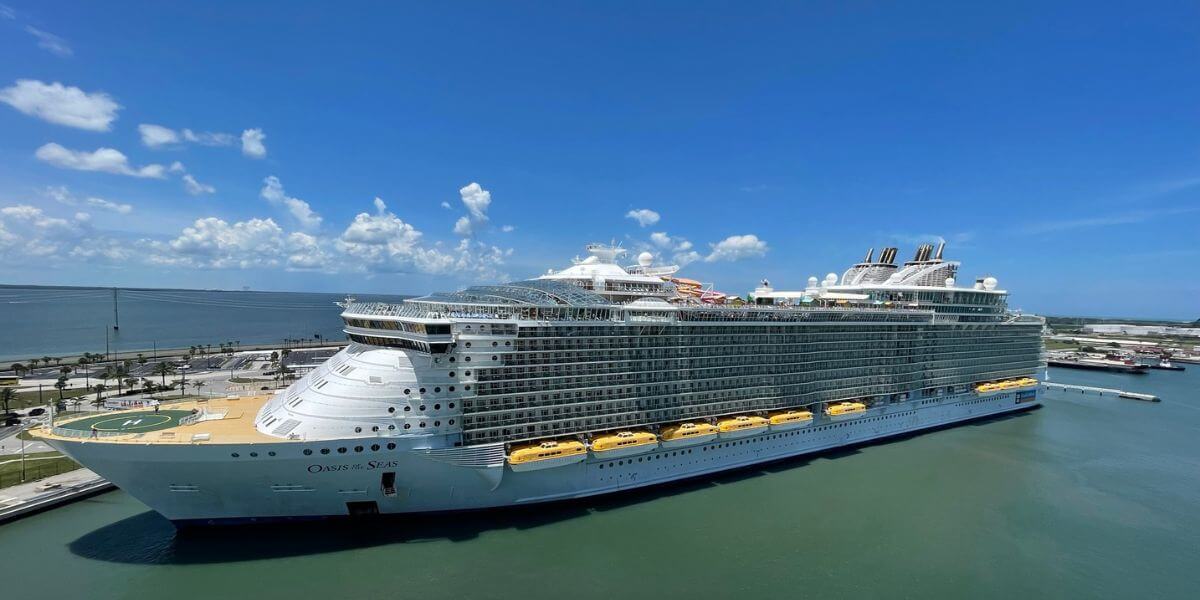
The 167,704-gross-ton vessel does indeed feature what appears to be a landing pad on her bow, leading to understandable confusion about the evacuation method chosen.
However, the marked area on cruise ships like Odyssey of the Seas is not designed or certified for helicopter landings whilst the vessel is underway.
When a ship is moving through the water, even relatively calm seas create unpredictable motion that makes landing a helicopter extraordinarily dangerous.
Small swells, sudden wind shifts near the water’s surface, and the ship’s own wake all contribute to an unstable landing platform.
With highly trained emergency crews like those from the Italian Coast Guard, using a winch system for litter evacuations is actually the safer and more reliable option.
The helicopter can maintain a hover position, making constant micro-adjustments to stay aligned with the ship whilst the rescue specialist and patient are transferred vertically.
Winch Evacuations Prove Faster For Critical Medical Emergencies
Beyond safety considerations, winch evacuations can actually be faster in critical medical situations.
Rather than requiring the ship to slow significantly or stop entirely – which could take considerable time for a vessel of Odyssey of the Seas’ size – the helicopter can conduct the operation whilst the ship maintains a steady course and speed.
Once the patient is aboard the aircraft, the helicopter can immediately depart for the nearest suitable medical facility without waiting for landing procedures or ground operations.
This time advantage can prove crucial when every minute counts for a seriously ill passenger requiring advanced medical intervention.
The Italian Coast Guard, like maritime rescue services worldwide, conducts regular training for these precise scenarios.
Their crews are specialists in maritime search and rescue operations, and incidents like this demonstrate the vital role they play in keeping those at sea safe when medical emergencies occur far from shore.
Odyssey Of The Seas Recently Involved In Separate Overboard Incident
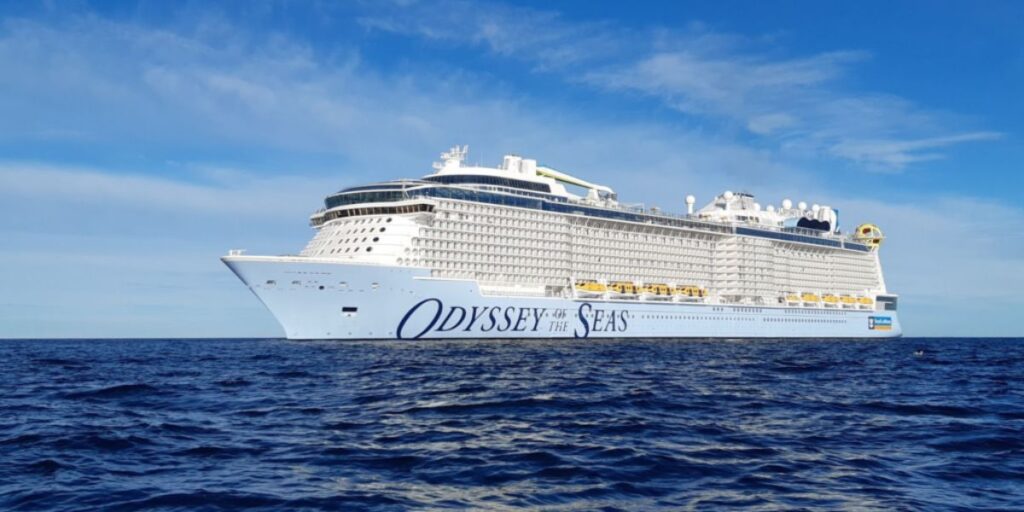
This medical evacuation comes just days after Odyssey of the Seas featured in international headlines for another emergency situation.
On Friday, 9th October 2026, a female passenger went overboard from the ship, sparking an extensive search and rescue operation.
In what proved to be a remarkable outcome, the woman was successfully rescued approximately 20 hours later by the Hellenic Coast Guard.
Such successful outcomes for overboard incidents remain relatively rare, making her survival particularly noteworthy within maritime safety circles.
The two separate incidents occurring within a week of each other are purely coincidental, as medical emergencies and overboard situations are entirely unrelated types of maritime incidents.
Odyssey of the Seas continues to operate her scheduled itineraries, and such emergencies, whilst dramatic, occur across the cruise industry rather than being specific to any particular vessel.
Royal Caribbean maintains comprehensive safety and medical protocols across its fleet, and the cruise line works closely with coast guard authorities in all regions where its ships operate.
The swift coordination demonstrated in this latest evacuation highlights the effectiveness of established emergency response procedures between cruise operators and maritime rescue services.
Gratitude For Emergency Personnel Who Serve At Sea

The successful outcome of this medical evacuation once again demonstrates the professionalism and skill of coast guard personnel who stand ready to assist vessels at sea.
The Italian Coast Guard’s Catania Air Base crew, operating as Nemo 10, executed a textbook rescue under challenging conditions that would test even the most experienced maritime aviators.
For the ill passenger and their family members, the swift response and expert execution of this airlift likely proved life-saving, ensuring they received the advanced medical care required for their serious condition.
The coordination between Odyssey of the Seas’ crew, who prepared the passenger for evacuation and assisted during the operation, and the Coast Guard rescuers exemplifies the maritime community’s commitment to safety at sea.
As cruise ships continue to sail waters around the globe, carrying millions of passengers annually to destinations worldwide, the readiness of emergency services like the Italian Coast Guard provides essential reassurance.
Their availability, training, and willingness to launch into adverse conditions when needed represents a vital safety net for all those who travel by sea.
Want the best Royal Caribbean deal?
Get the best price and expert help to plan your cruise