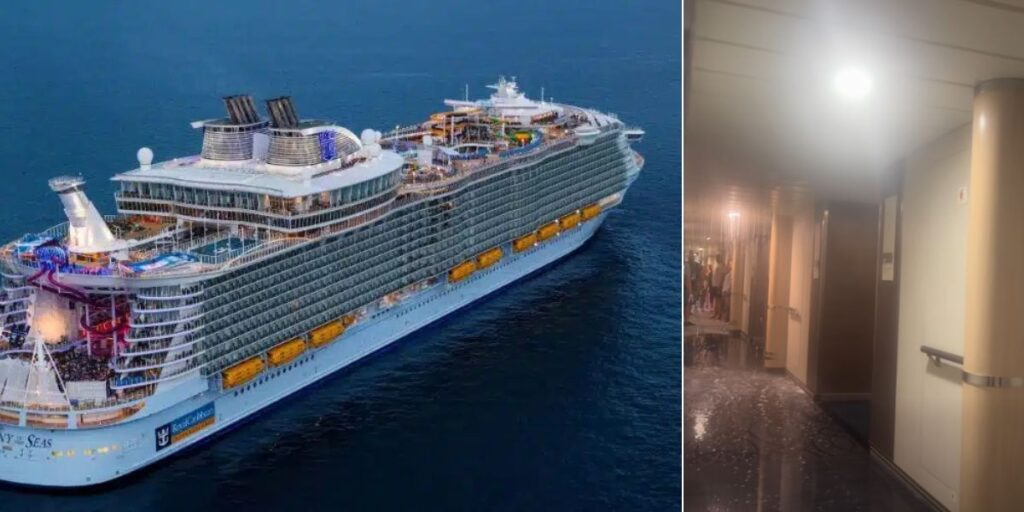
A burst water line aboard Royal Caribbean’s Harmony of the Seas sent steaming water flooding through a passenger corridor on the morning of 29th September 2026, though swift crew response contained the damage to just two cabins.
The incident occurred on the fourth day of a five-night Western Caribbean sailing, shortly before the ship’s scheduled arrival in Cozumel.
The flooding began shortly before 7:00 a.m. as guests were preparing for the day’s port call.
A passenger captured dramatic video footage showing water flowing like a river down a carpeted hallway on the 226,963-gross-tonne vessel, with the current running past multiple stateroom doors.
The guest who filmed the incident noted that the water was hot enough to produce visible steam on her phone camera during recording.
Despite the temperature of the water, she reported no injuries or burns resulting from the flooding.
Veteran Cruiser Documents Rare Shipboard Malfunction
The passenger who shared the footage on social media described the incident as unprecedented in her extensive cruising experience.
“That’s a first for me in 92 cruises!” she wrote, highlighting the unusual nature of such shipboard malfunctions.
Despite the dramatic appearance of the flooding, the experienced cruiser maintained perspective on the situation.
She emphasised that whilst visually striking, the incident represented an uncommon occurrence rather than a systemic problem aboard modern cruise ships.
The guest also took care to praise Royal Caribbean’s response team.
“The crew is handling it really well,” she noted in her initial post about the flooding.
Limited Cabin Damage Despite Dramatic Flooding
According to the passenger’s account, the flooding’s impact was relatively contained despite the volume of water visible in the corridor.
She estimated that only two staterooms suffered actual water intrusion during the incident.
The limitation of damage to such a small number of cabins suggests that crew members were able to isolate and address the broken line quickly.
Modern cruise ships feature sophisticated systems with multiple shut-off valves designed to contain such incidents to specific sections of the vessel.
Harmony of the Seas, which entered service in 2016 as the largest cruise ship in the world at the time, features complex plumbing and water distribution systems serving thousands of guests across 16 passenger decks.
The ship’s infrastructure includes freshwater systems, greywater systems, and various heating and cooling lines running throughout the vessel.
Rapid Cleanup Operation Demonstrates Crew Preparedness
The ship’s crew demonstrated impressive efficiency in addressing the flooding and beginning restoration work.
Less than two hours after the initial incident, the affected corridor had been cleared of standing water and cleanup operations were well underway.
A follow-up image shared by the same passenger showed the dramatic transformation of the affected area.
Carpet had already been removed from inside at least one flooded stateroom, and industrial drying fans had been deployed to prevent moisture damage and mould growth.
The photograph also showed a crew member actively working inside the affected cabin.
This rapid response is crucial in maritime environments, where trapped moisture can quickly lead to more serious structural issues if not addressed promptly.
Royal Caribbean’s ships carry specialised equipment and trained personnel specifically for such emergencies.
The cruise line’s maintenance teams regularly drill for various scenarios, including water intrusion events, to ensure they can respond effectively when incidents occur.
Timing Coincides With Cozumel Port Call
The flooding occurred on what was the fourth day of a five-night Western Caribbean itinerary.
Harmony of the Seas had departed Port Canaveral, Florida, on 26th September 2026, and made a call at Perfect Day at CocoCay, Royal Caribbean’s private island destination in the Bahamas, on 27th September.
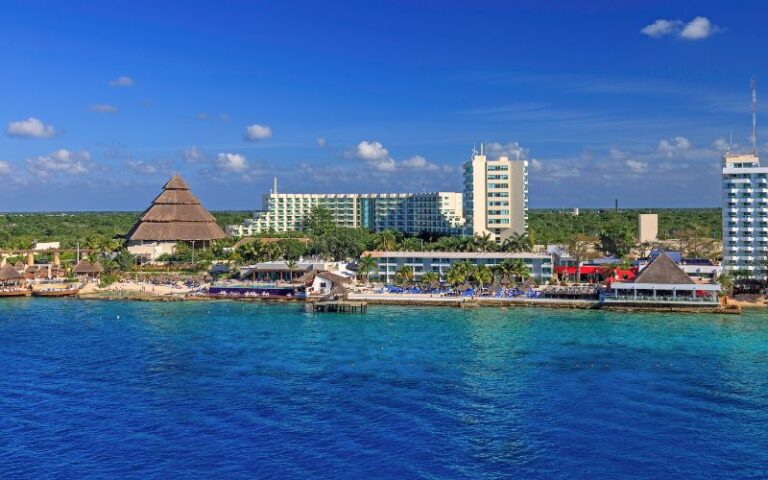
Based on the ship’s published schedule, the incident took place shortly before the vessel’s arrival in Cozumel, Mexico.
This would have been the final port call of the sailing before Harmony of the Seas returned to Port Canaveral on 1st October 2026.
The timing of the incident during the early morning hours meant that most guests were likely still in their cabins preparing for the day’s activities.
This potentially limited the number of people who had to navigate around the flooding in the corridor.
Royal Caribbean has not issued any public statement regarding the incident.
The cruise line typically does not comment on individual operational matters unless they result in itinerary changes or significant guest impact.
No Impact on Published Sailing Schedule
Despite the flooding, no alterations to Harmony of the Seas’ itinerary were announced.
The ship proceeded as scheduled to Cozumel and was expected to complete the sailing on time.
This indicates that the broken line, whilst causing localised disruption, did not compromise any critical ship systems.
Modern cruise vessels feature redundant systems precisely to ensure that isolated mechanical failures do not impact overall operations.
The affected guests were likely relocated to alternative accommodation aboard the ship whilst repairs and restoration work continued in their original staterooms.
Royal Caribbean typically offers compensation to guests whose cruises are disrupted by such incidents, though the specific arrangements for these passengers have not been disclosed.
Burst Pipes Represent Ongoing Industry Challenge
Whilst the passenger who documented this incident described it as uncommon in her experience, burst pipes and water line failures have occurred with some regularity across the cruise industry.
Harmony of the Seas was not even the first Royal Caribbean vessel to experience such an incident in 2026.
In July of the same year, another Oasis-class ship, Allure of the Seas, experienced a similar flooding event when a burst pipe flooded a guest cabin.
Video of that incident also circulated on social media, showing the extent of water intrusion into passenger accommodation.
Just a month later in August 2026, Quantum of the Seas suffered yet another water line failure.
On that occasion, the broken pipe created an impromptu waterfall cascading down a stairwell near the Royal Esplanade, one of the ship’s main thoroughfares.
The frequency of these incidents aboard Royal Caribbean vessels in 2026 raises questions about maintenance protocols and the ageing of ship systems.
However, it’s worth noting that Royal Caribbean operates one of the world’s largest cruise fleets, with dozens of ships at sea carrying hundreds of thousands of passengers weekly.
Water Line Failures Affect Multiple Cruise Lines
The challenge of maintaining complex plumbing systems is not unique to Royal Caribbean.
Other major cruise operators have experienced similar incidents, demonstrating that burst pipes represent an industry-wide maintenance concern.
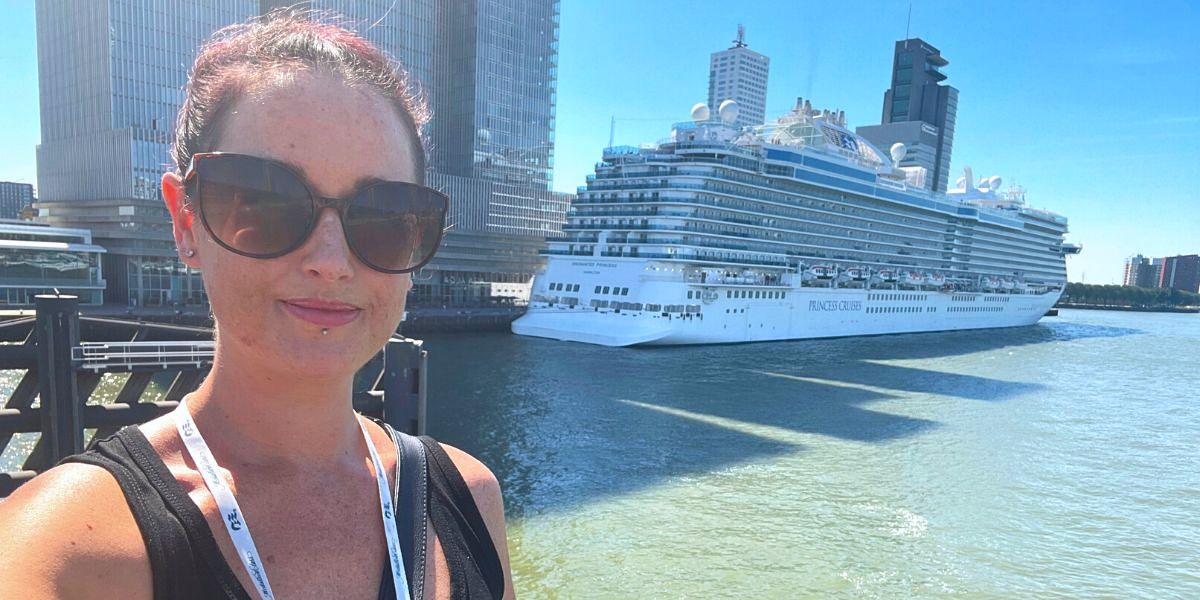
Princess Cruises’ Enchanted Princess suffered a burst pipe in May 2026 that affected Decks 4 and 5, creating what passengers described as an unexpected water feature.
The incident required similar emergency response and cleanup operations.
MSC Cruises also dealt with a burst pipe incident aboard MSC Seaview in January 2026.
That event similarly resulted in flooding that required immediate crew intervention and passenger relocation.
Even earlier, in January 2025, guests aboard P&O Cruises’ Azura discovered their cabin flooded due to a failed water line.
These incidents across multiple cruise lines and ship classes suggest that maintaining the complex network of pipes aboard modern cruise vessels presents ongoing challenges for the industry.
The issue is complicated by the fact that cruise ships operate continuously in harsh marine environments, with systems under constant use.
Salt air, vibration from engines and wave action, and the simple wear and tear of serving thousands of guests daily all contribute to stress on plumbing infrastructure.
Understanding The Complexity Of Shipboard Water Systems
Modern cruise ships like Harmony of the Seas operate sophisticated water distribution networks that would rival small cities.
These systems must deliver fresh water for drinking, cooking, bathing, and sanitation to thousands of guests and crew members across multiple decks and hundreds of cabins.
Additionally, ships maintain separate systems for heated water, chilled water for air conditioning, wastewater collection, and various specialised applications.
The total length of piping aboard a large cruise ship can extend for many kilometres.
These systems operate under varying pressure conditions and must function reliably despite the ship’s constant motion and exposure to saltwater corrosion.
Pipes may be subjected to thermal expansion and contraction as ambient temperatures change, adding further stress to joints and connections.
Regular maintenance and inspection programmes aim to identify potential failures before they occur, but the sheer scale and complexity of these systems means that unexpected failures remain a possibility.
When incidents do occur, the response and recovery process becomes the critical factor in minimising guest impact.
Want the best Royal Caribbean deal?
Get the best price and expert help to plan your cruise