
This is a sponsored post for TUI River Cruises.
Cruise ships have been getting bigger for years, but lately it feels like we’ve reached a completely different level.

The newest mega-ships can carry several thousand passengers and come packed with waterparks, dozens of places to eat, huge entertainment venues and entire neighbourhoods. They’re incredible, but they also raise an obvious question.
Have cruise ships become too big?
Why Cruise Ships Keep Getting Bigger
There are some very good reasons cruise lines build enormous ships, and I completely understand why people love them.
More space means they can offer far more than a traditional swimming pool, theatre and main dining room. We’ve gone from being impressed that a cruise ship had a climbing wall to ships with waterparks, rollercoasters, go-karts, surf simulators and whole districts filled with shops, bars and restaurants.
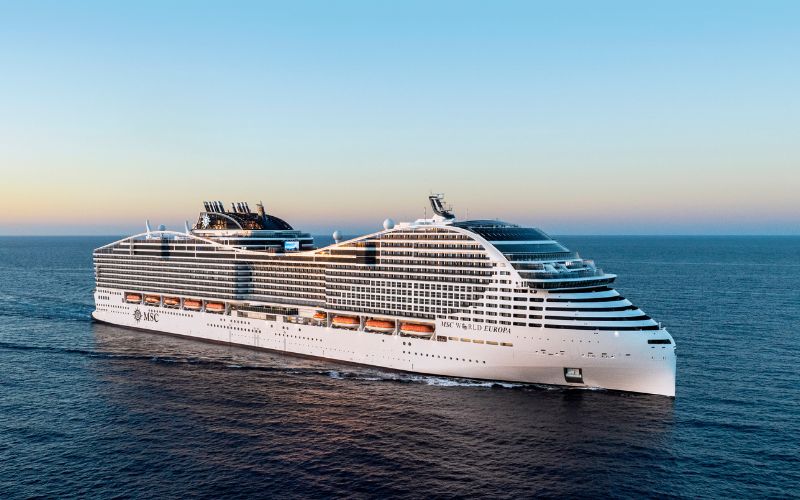
I’ve sailed on some enormous cruise ships and there’s something exciting about walking onboard and realising you could spend a week exploring without discovering everything. For families especially, having that much entertainment in one place can be brilliant.
A family with children of different ages can have waterslides, kids’ clubs, arcades and shows all on the same holiday, while the adults still get proper restaurants, spas and quieter bars. You can cruise with a large multigenerational family and everyone can spend the day doing completely different things before meeting for dinner.

Size can also give cruise lines room to create areas aimed at different types of guests. Instead of one pool deck trying to please everyone, you might have family areas, adults-only spaces and quieter places tucked away elsewhere.
There’s a lot to love about that.
But Bigger Ships Come with Bigger Crowds
The obvious downside is that all of those facilities come with thousands of other people wanting to use them.
A well-designed mega-ship can spread passengers around remarkably effectively, and I’ve definitely been on large ships that didn’t feel anywhere near as busy as I’d expected. But there are certain times when it’s almost impossible to hide the number of people onboard.

Embarkation morning, breakfast before a port day, lifts immediately after a show and getting off the ship can all suddenly remind you that you’re sharing your holiday with a small town.
You may also need to plan more than you expect.
On some ships, getting exactly the holiday you want means booking restaurants, shows and activities in advance. That’s not necessarily a problem, but it is very different from simply wandering around and deciding what you fancy doing next.
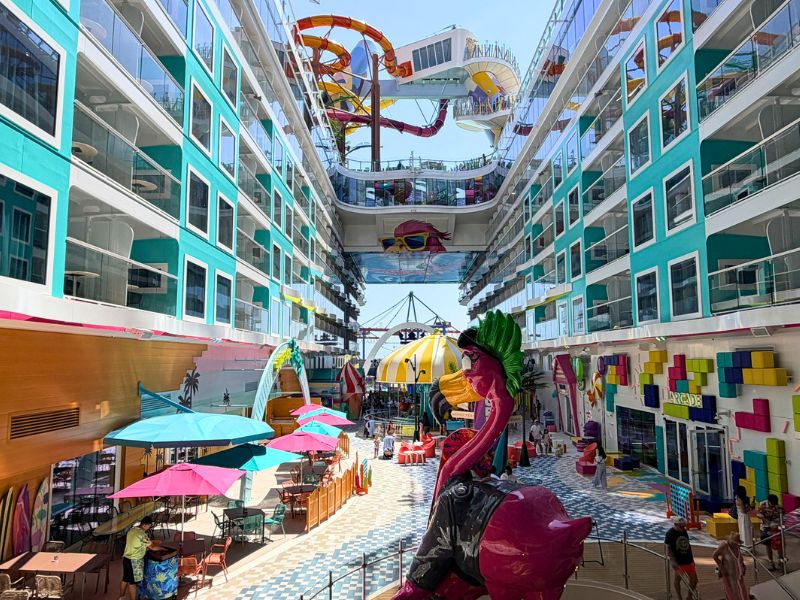
And then there’s the walking…
Having 20 decks filled with different venues sounds wonderful until you realise you’ve left something in your cabin and you’re currently about half a mile away from it.
Sometimes You Could Almost Forget You’re on a Cruise
One of the most interesting changes is that the biggest cruise ships aren’t really just transport between destinations anymore. They’re destinations themselves.
That’s why cruise lines can sell itineraries with several sea days and still have people actively looking forward to those days. If you’ve booked a ship because you want to try the waterpark, see the shows, work your way through the restaurants and spend an afternoon beside the pool, being at sea isn’t something to tolerate between ports.
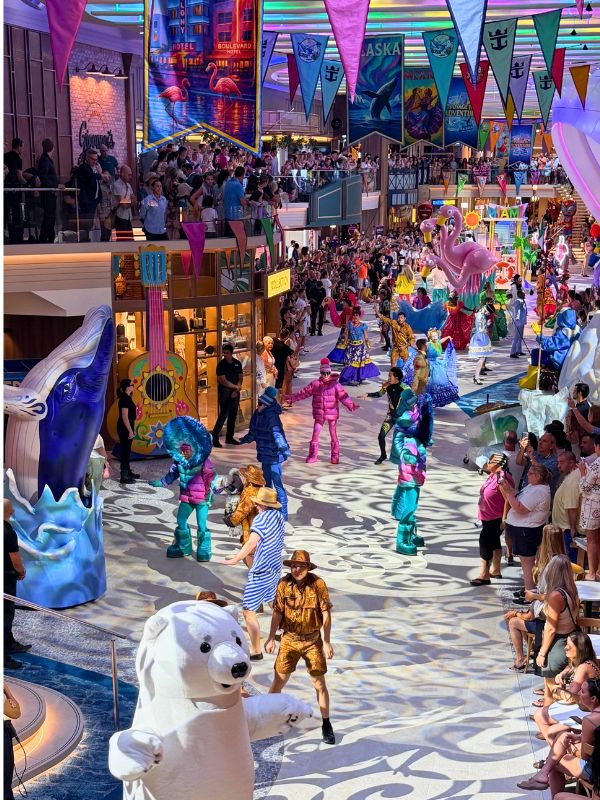
Again, I’m not saying that’s a bad thing. Sometimes I absolutely want the ship to be the star of my holiday.
But it is a very different style of cruising from the idea of waking up somewhere new every morning and using the ship primarily as your comfortable way of getting there.
And the bigger ships become, the more that difference matters.
Some Cruise Ships Are Simply Too Big for Certain Ports
There’s another consequence of building ever-larger ships that isn’t as obvious when you’re admiring the latest onboard attraction. They can’t go everywhere.
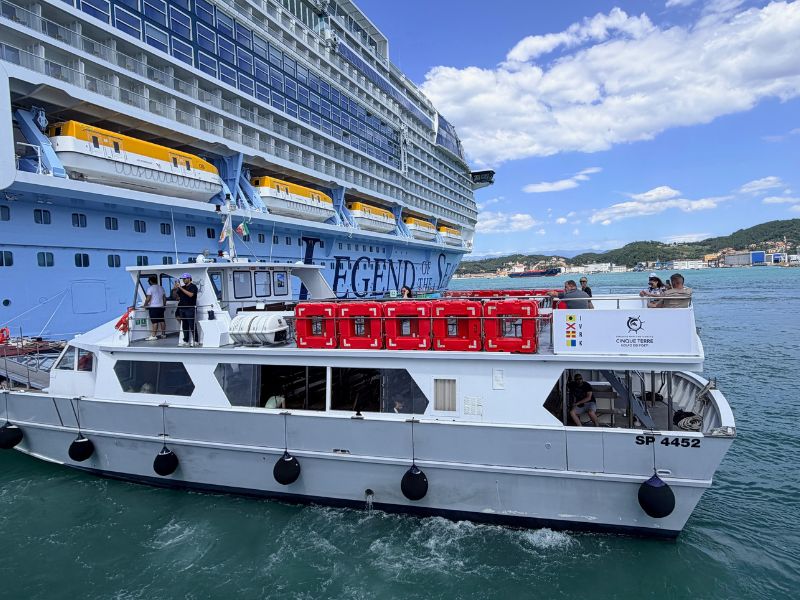
Ports have physical limitations. Berths have maximum lengths, channels have certain depths, bridges have height restrictions and some harbours simply weren’t designed for ships of the size we’re seeing today.
Venice is an extreme example, although its restrictions are also about protecting the historic city and lagoon rather than ship size alone. Ships over 25,000 GT, longer than 180 metres or exceeding other specified limits are prohibited from using the waterways through the San Marco Basin and Giudecca Canal, which means the large cruise ships most of us are familiar with can’t sail into the historic centre as they once did.

Elsewhere, large ships may need to use an industrial or out-of-town cruise terminal, tender passengers ashore or simply leave particular destinations off their itineraries altogether.
So, while getting a bigger ship gives cruise lines more space to build things onboard, it can actually reduce the number of places that ship can easily visit.
And that’s where looking at the complete opposite end of cruising gets interesting.
River Cruise Ships Couldn’t Be More Different
If a mega-ship is designed to bring the resort with you, a river cruise ship is really designed to bring you to the destination.

TUI River Cruises’ ships carry a tiny fraction of the number of people you’d find on the newest ocean ships. TUI describes its ships as intimate, with ships typically hosting between 111 and 190 passengers at most, so you’re talking about a completely different scale of holiday.
You don’t need a map to find your cabin and you’re unlikely to spend five minutes debating which bank of lifts will get you closest to dinner.
But the biggest difference is what happens when you step ashore.

River cruise ships can often dock right in the destination you’re actually there to see. TUI says that most of its ports are in the heart of the destination, so rather than arriving at a huge cruise terminal and then working out how to get into town, you can often simply walk off and start exploring.
It’s difficult to imagine a greater contrast with the largest ocean ships.
One type of cruise needs increasingly sophisticated ports capable of handling thousands of passengers and a ship several hundred metres long. The other can sail along the Rhine, Danube, Moselle, Douro or Nile and put you close to cities, towns and villages that an ocean mega-ship couldn’t dream of reaching.
If one of the main reasons you cruise is because you love seeing different places, that’s quite compelling.
NEW DEALS JUST RELEASED!
Don’t miss the latest TUI River Cruises…
You Still Get to Visit Lots of Places
I think there’s sometimes an assumption among ocean cruisers that river cruises are slow holidays where you spend most of the week gently sailing past scenery.
There certainly is plenty of scenery, but the itineraries can actually be incredibly destination-heavy.

TUI River Cruises offers itineraries across Europe’s major rivers as well as the Nile, with cruises visiting multiple destinations while you only unpack once. Depending on the itinerary, you might be exploring Amsterdam one day, Cologne another and then smaller places you may never have considered booking a standalone holiday to.

That’s one of the things I really like about the basic concept of river cruising.
The ship doesn’t need to contain an enormous list of attractions because every time you look outside, the destination is right there. Even the time spent sailing feels different when you’re watching castles, vineyards, towns and countryside passing a few metres from the ship rather than looking out over open sea.
Smaller Doesn’t Have to Mean Formal or Restrictive
Another misconception is that moving from a mainstream ocean cruise to a river cruise must mean accepting a much more formal or regimented holiday.
That’s not the approach TUI River Cruises takes.
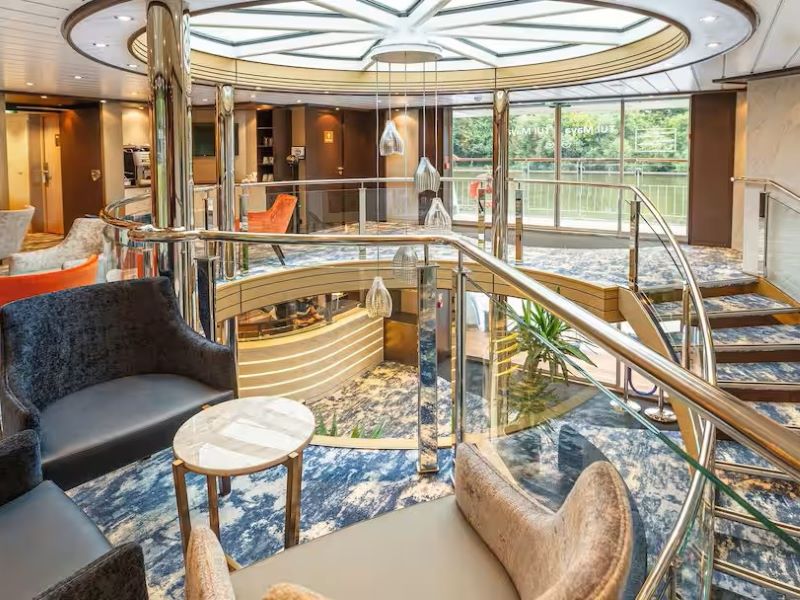
The atmosphere onboard is designed to be relaxed and modern, and there aren’t set dining times, so you don’t have to report for dinner at the same allocated time and table every evening. TUI’s European ships offer a choice of restaurants and lounges, giving you some flexibility despite the ships obviously being much smaller than an ocean liner.
The smaller number of passengers changes the atmosphere too.
You’re far more likely to recognise the crew and other guests after a couple of days, and TUI says there’s around one crew member for every four guests across its river ships.
That’s a very different feeling from being one face among several thousand.
Smaller Doesn’t Necessarily Mean Paying for Everything Extra
There’s another reason some ocean cruisers may never seriously look at river cruises: the headline price.
Comparing one cruise fare with another can be misleading, though, because what you’re actually getting for that money varies enormously.

With a standard TUI River Cruises package, direct return flights from UK airports, airport transfers, luggage, three meals per day, selected drinks with meals, onboard tips and even WiFi are included. European sailings are Full Board Plus as a minimum, while the Nile cruises are All Inclusive as standard.
That makes the overall cost much easier to understand than simply comparing the cheapest cabin prices and assuming the lower number represents the cheaper holiday.

I always think that’s worth doing with any cruise. Work out what you’re genuinely going to spend by the time you’ve added flights, transfers, drinks, gratuities, WiFi and anything else you consider essential, and then compare.
The answer can look quite different.
A River Cruise Isn’t a Shrunken Mega-Ship
Of course, none of this means somebody who adores the biggest ocean ships should immediately swap their next cruise for a river sailing. They are fundamentally different holidays.
If the highlight of your cruise is racing down waterslides, watching a massive West End-style production or choosing between 20 different restaurants, that’s exactly what the mega-ships are brilliant at providing. You shouldn’t choose a smaller ship and then complain that somebody forgot to attach a rollercoaster to the top deck.

River cruising puts much more emphasis on the journey and the destinations.
There’s still food, drinks and entertainment onboard, and TUI’s ships have restaurants, lounges and outdoor deck space, but the ship doesn’t need to keep you occupied every minute because tomorrow morning you could be stepping straight into another European city.
That’s not necessarily better or worse. It’s just a completely different reason for going on a cruise.
So, Have Cruise Ships Become Too Big?
I’m not sure there is one correct answer.
The biggest cruise ships are extraordinary pieces of engineering and they offer holidays that simply couldn’t exist on smaller vessels. If you want endless entertainment, enormous choice and enough to do that you barely need to step ashore, I’d completely understand choosing one.

But size always involves compromises. More passengers can mean more crowds, more planning and considerably more walking, while the dimensions of the ship can limit where it is physically able to go.
And if what you really love about cruising is waking up somewhere different, walking off the ship and exploring, it might be worth looking in completely the opposite direction.
A river ship carrying a little over a hundred people is never going to compete with a mega-ship on the number of attractions onboard.
But when it comes to getting you right into the heart of the places you’ve travelled to see, being smaller can be a very big advantage.
NEW DEALS JUST RELEASED!
Don’t miss the latest TUI River Cruises…

We’ve just come off P&O Aurora. In Kusadasi the Norwegian Viva was moored next to us. It was huge and completely dwarfed Aurora. Talking to a couple of passengers they said it was so crowded, took ages to get anywhere on the ship, and the main thing was it was so noisy (loud music, chatter, entertainment etc). They had trouble trying to find a quiet place to sit, even in their cabin.
Companies seem to be ordering these monoliths to cater for a younger family-oriented crowd and ignore those who want a quieter experience. In my mind yes, these ships are becoming too big.
Thanks, Karen. Being able to find a quiet spot is a big part of a holiday for many people. Your experience shows why the atmosphere on board matters just as much as the facilities. Jenni
I always sail with P&O. I love Ventura you can see everything on board. Not long came back from sailing on the ARVIA. A beautiful ship but for the older person such as myself. It was too big. We got lost on a few occasions but although having spent 2. Weeks on board there were places on board I didn’t find.
Have Cruise Ships Become To Big?
It’s a good question! let me put it another way, The big cruise ships that are currently built or being built, are too big for me!
I have cruised many times since 20 years ago and in the main I enjoyed all of them. But they were then all fairly traditional and cruises that were formal, but casual at the same time. Yes, there were the formal dinners etc and people chose to normally dress smarter in the evenings, whereas now anything goes dress wise, and on the new bigger ships, they remind me of a new version of the old holiday camp. The last larger ship I travelled on was in 2019 – the P&O Britannia. That I enjoyed, Step into post Covid and the 2020’s, it all changed and once I experienced the Iona, it finished me with the super large ships. Is it me, have I changed or is it the ships have changed? It could me me of course, but I now witness a change in the cruise ships DNA, and now it is all about everything -allegedly, bigger, better and no longer catering for the older generation, but a very family oriented clientele. Now that OK, if the Cruise companies see a big market for the family cruise, and I don’t begrudge them that, but the fact of the matter is – Have Cruise Ships Become To Big? For me the answer is a YES.
We were on MSC Virtuosa last week, it’s massive compared to others we’ve been on like P&O, Cunard, Marella and Ambassador, I can see the attraction and it’s relatively new so all shiny and sparkly and the size is impressive, however, try and get a seat at any of the bars in the evening or navigate from the theatre to the lifts via the main bar area, it’s gridlocked, if you are a family then this is probably the best option with lots of kids activities but if you’re looking for a peaceful holiday and want to feel standards in dress codes and cuisine are high and enforced then these ‘big boats’ are probably not for you, we will stick with the other cruise companies in the future.
P.S. If you suffer a food allergy don’t sail with MSC, the menu and food options were very poor.