
The Titanic is disappearing.
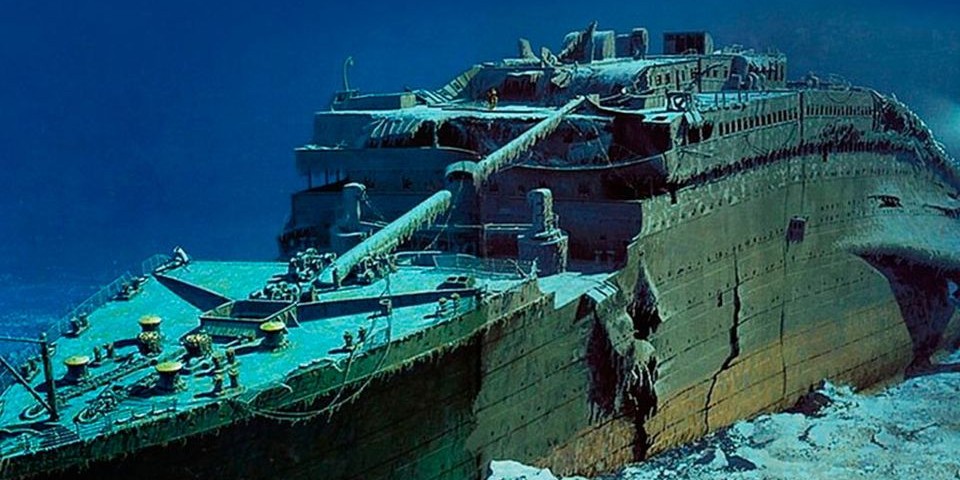
Right now, the world’s most famous shipwreck is slowly being eaten away at the bottom of the Atlantic. Some parts are still surprisingly recognisable. Others have already collapsed completely. Experts say the wreck may not survive for much longer.
That’s why one question keeps coming up: why don’t we just raise it?
It sounds simple in theory. After all, smaller ships have been recovered from the seabed before. But with Titanic, there’s one enormous problem most people don’t realise… and it changes everything.
So could the Titanic ever be brought back to the surface, or is the wreck destined to vanish forever?
Past Titanic Retrieval Projects
While the Titanic itself has not been raised, thousands of artefacts from the wreck have been retrieved and preserved. This includes personal items of the passengers, parts of the ship, dinnerware, and even a section of the hull.
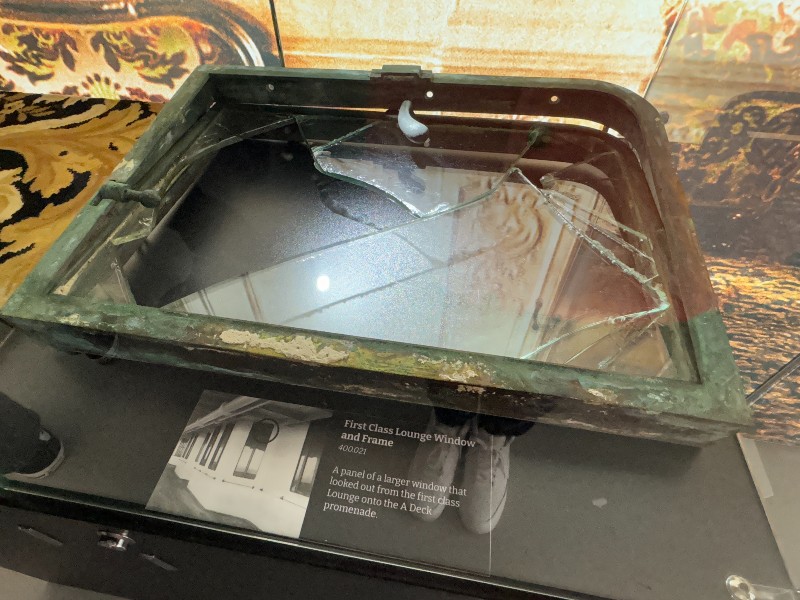
I recently visited The Titanic Exhibition in Bristol and saw lots of things that had been brought up from the bottom of the ocean, like this window frame…
Since 1985, when the wreck was located, RMS Titanic Inc., the company that has the salvage rights to the Titanic, has conducted several expeditions to retrieve artefacts.
These artefacts are displayed in various exhibitions and Titanic Museums around the world, such as Orlando, Las Vegas, London and Sweden.
One of the largest pieces ever recovered is a section of the ship’s hull known as the “Big Piece.”
It was brought to the surface in 1998 during an expedition led by RMS Titanic Inc. The section is approximately 12 by 26 feet (3.7 by 7.9 meters) and weighs about 15 tons.
However, the salvage of these items has not been without controversy. Many believe that the wreck site should be left undisturbed out of respect for those who lost their lives in the disaster.
The Possibility of Raising the Titanic to the Surface
Raising the whole of the Titanic from the bottom of the ocean wouldn’t be possible for several logistical reasons.
1. Depth and Pressure of the Ocean
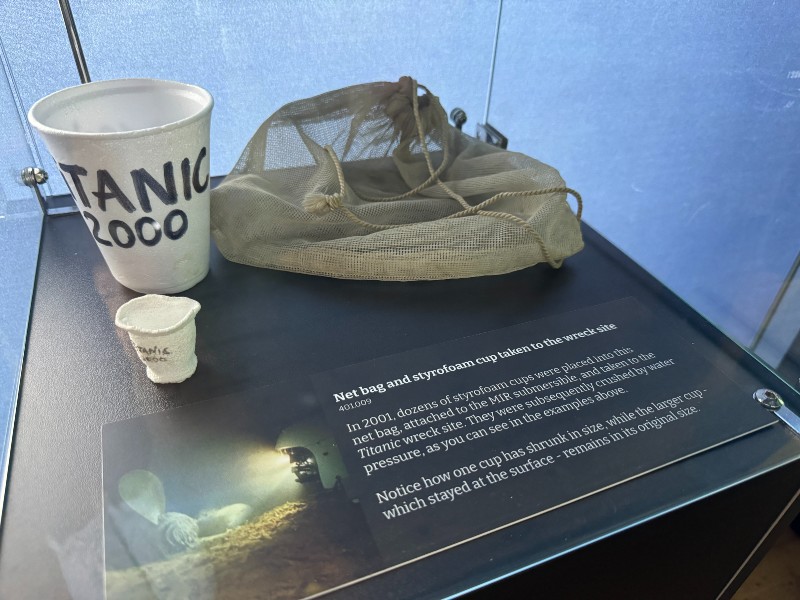
The Titanic lies approximately 12,500 feet (2.37 miles, 3.81 kilometres) below the ocean’s surface. At this depth, the pressure is more than 370 times greater than at sea level, making operations incredibly challenging.
This photo of a styrofoam cup that was taken down to the Titanic in a net bag demonstrates just how great the force of the water is when you venture so deep into the ocean…
2. Size and Weight of the Vessel
The Titanic was a massive ship, measuring about 882 feet (269 meters) in length and weighing approximately 52,310 tons. Lifting an object of this size and weight from such a depth would require technology and resources beyond what currently exists.
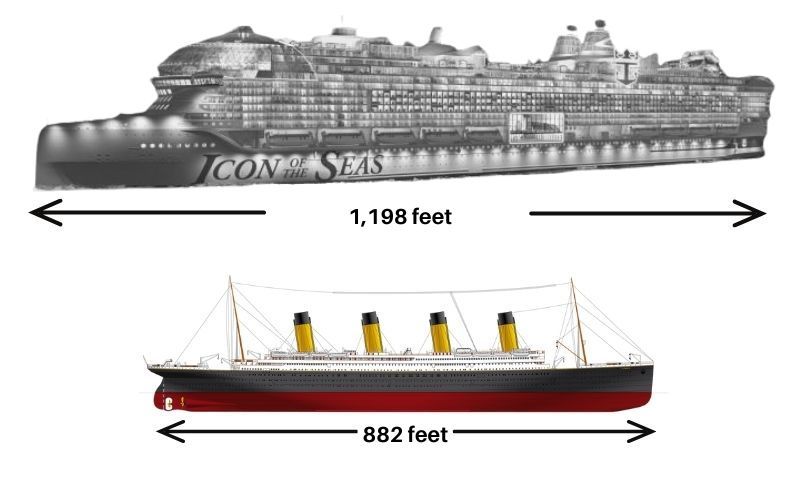
Suggested read: Icon of the Seas Vs Titanic
3. Fragility of the Wreck
This is the part most people don’t realise.
The Titanic isn’t sitting on the seabed as one solid, preserved ship. After more than 100 years underwater, large parts of it have become incredibly fragile.
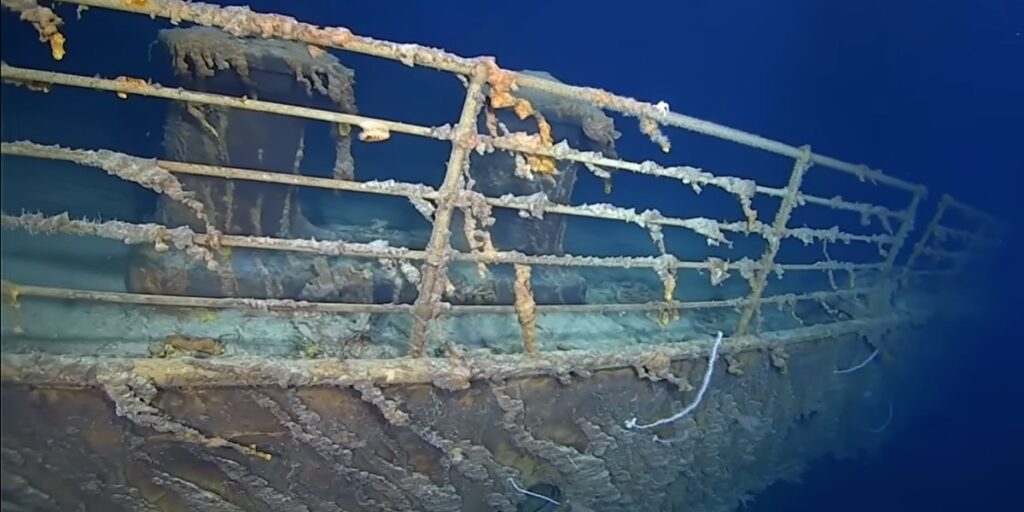
The wreck is covered in “rusticles” – rust formations created by bacteria that slowly eat away at the metal. Ocean currents, salt water and deep-sea pressure are all causing the ship to deteriorate faster every year. In recent expeditions, explorers discovered that some famous parts of the wreck had already collapsed.
That creates a huge problem.
If engineers tried to attach cables or lifting equipment to the hull, there’s a very real chance sections of the ship would simply break apart under their own weight.
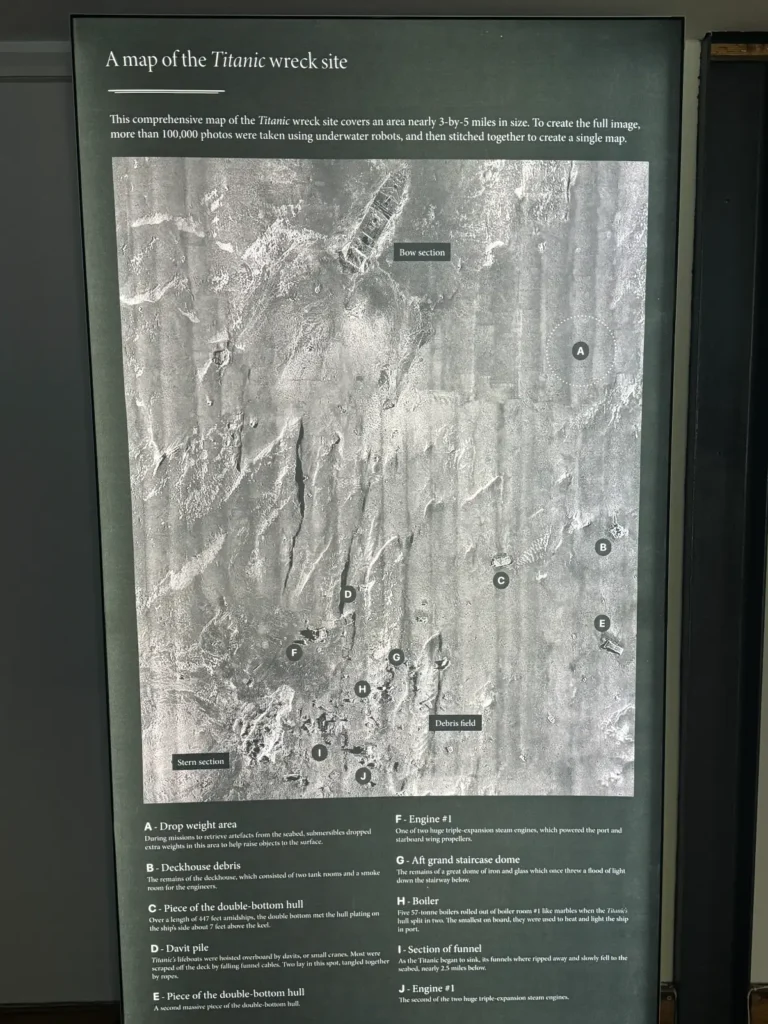
The Titanic is also split into two enormous sections lying around 600 metres (2,000 feet) apart, surrounded by a huge debris field scattered across the ocean floor. Any recovery attempt would be massively complicated.
In other words, trying to raise Titanic could end up destroying the very thing people are hoping to preserve.
4. Cost
The expense of such an operation would be astronomical, likely running into billions of dollars.
Given the points above, it’s highly doubtful that any organisation or government would be willing to undertake such a cost for a venture fraught with so many potential difficulties.
Ethical Considerations About Raising the Titanic
Of course, logistics are not the only reasons why the Titanic hasn’t and will likely never be raised. The idea also brings several ethical considerations to the forefront. Here are the things that we must consider…
1. Respect for the Dead
The Titanic is the final resting place for over 1,500 people. Many people believe that, out of respect for the deceased and their descendants, the site should not be disturbed.
It is viewed by many as a maritime grave that deserves the same respect and sanctity we afford to land-based cemeteries.

2. Historical Integrity
The wreck of the Titanic is a significant archaeological site, and its context at the bottom of the ocean provides valuable historical information.
Most archaeologists believe that the Titanic and its artefacts should be preserved in situ. They argue that the focus should be on conservation and documentation rather than physical removal.
Removing items from the site can disrupt this context and has even been described as historical vandalism.
3. Commercial Exploitation
There are concerns that raising the Titanic or its artefacts can lead to their commercial exploitation. Artefacts can be sold to the highest bidder and many Titanic exhibitions make large profits. The Titanic Museum in Belfast made £4.2m of profits in 2019 alone.
Critics argue that this commodifies a human tragedy and disrespects the memory of those who lost their lives.
4. Prioritisation of Resources
Some people argue that the resources used to raise the Titanic could be better spent on other pursuits, such as preserving other historical sites, advancing scientific research, or addressing social needs.
When so many people are struggling to afford food or to heat their homes, spending billions on raising a shipwreck would be very hard to justify.
The Bottom Line
The allure of the Titanic remains powerful and continues to captivate the collective imagination. However, the complexities of raising the ship from the ocean floor are vast.
The impossible logistical challenges and a host of ethical considerations suggest that the Titanic will forever remain where it sank on that fateful night in 1912.
As technology advances, we may find new ways to explore and learn from this poignant historical site without disturbing its rest. But, as to the question of whether the Titanic will ever be raised, the consensus, as it stands today, is a resounding ‘no’.
The Titanic, it seems, is destined to remain an emblem of human ambition and tragic loss, silently holding court at the bottom of the ocean.

I just hate that soon she will be gone and that only the mega rich have gotten the chance to see her in person. Even if I could afford to take a submersible down to her and wasn’t too terrified of dying that way, viewing her through a small window barely illuminated just wouldn’t be the same as being able to view her openly and possibly even touch her (that sounds wrong, lol). If anything, it would at least be nice to have an exact replica of her made and turned into a hotel/museum. That way you could get as close to experiencing what it was like to walk her halls all those years ago without needing a time machine.